




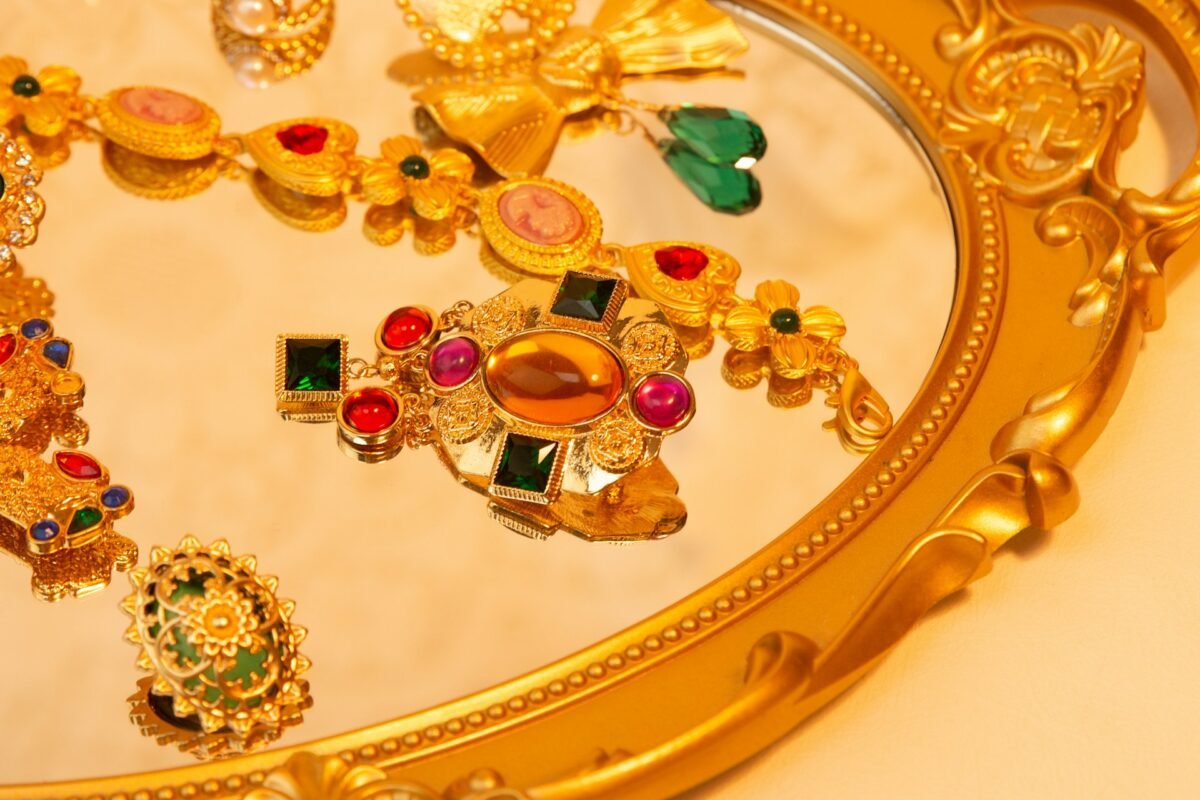

Vintage jewelry embodies a touch of history and craftsmanship from the past.
These pieces are certainly appreciated by a multitude of people for their beauty and timelessness.
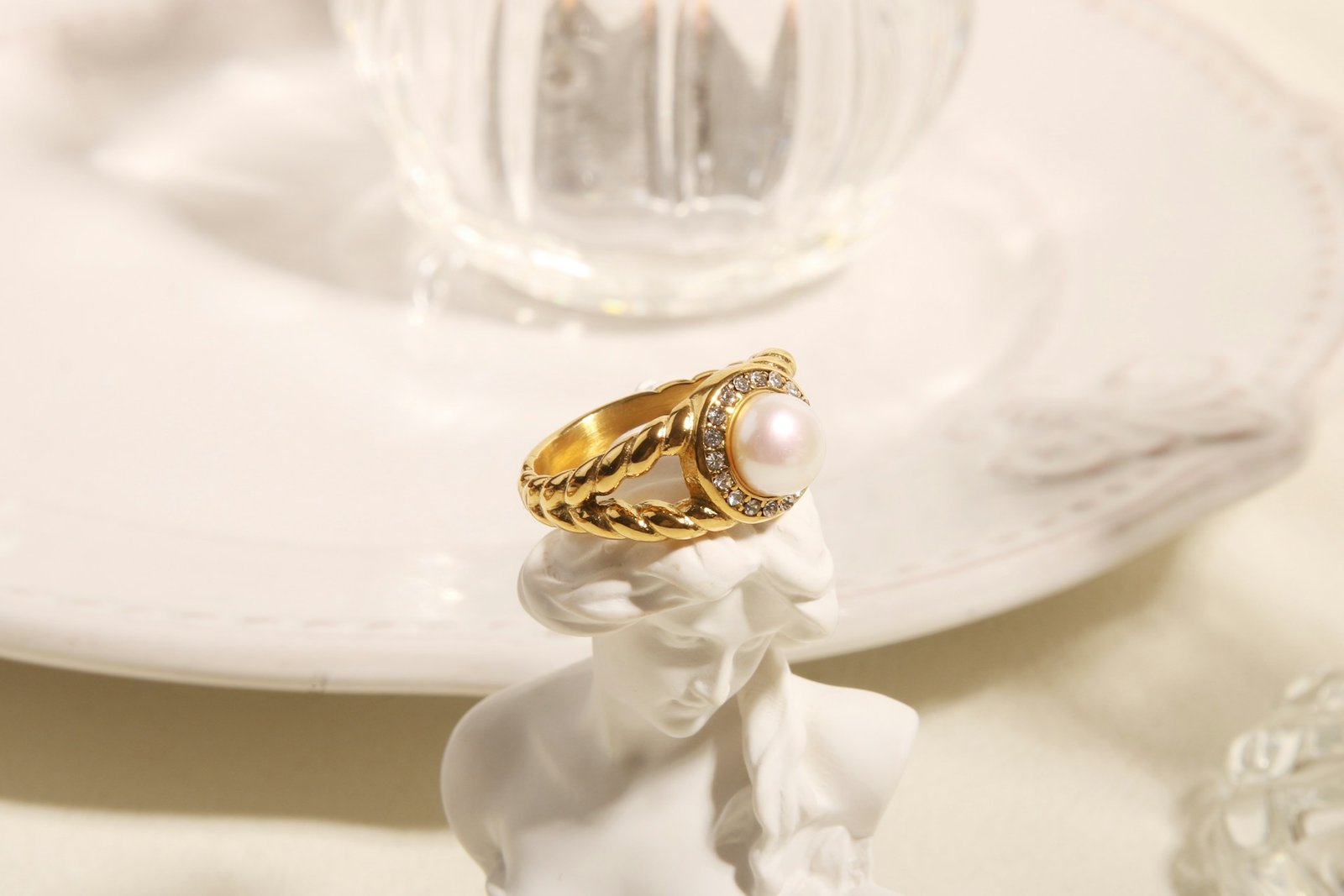
Spotting real vintage jewelry is not just a matter of observing it well; you need correct techniques, too. With the right knowledge, anyone can learn to distinguish authentic pieces from reproductions. This skill is valuable for collectors, sellers, and enthusiasts alike.
Knowing all the tricks of the trade, enthusiasts can tell the real deal from the average pieces and thus enjoy their special kind. For those interested in vintage jewelry identification, learning these methods can enhance your collecting experience. The following sections cover key areas to examine when evaluating older pieces. From hallmarks to gemstones, each detail offers clues about authenticity.
Recognizing Hallmarks and Stamps
Authentic vintage jewelry often has a hallmark, stamp, or metal grade or origin. These marks can be on the clasp, inscribed inside the band, or next to the setting. Using a magnifying glass to inspect these markings is suggested. Hallmarks assist in identifying the nation of origin, the time period, and sometimes the maker. Cross-referencing these marks against guides helps authenticate a piece.
Understanding Common Materials
Jewelry made several years ago has different materials from contemporary jewelry. Gold, silver, and platinum were favorably chosen for their durability and classiness. You can also sense the age of the metal from its weight and by looking at its finish. Certain decades were the epochs of early plastics: Bakelite or celluloid. It takes practice to learn to tell these materials apart, and in the case of early plastics, a short rub or even a sniff test can be useful for identification.
Observing Design Features
Each of the eras had varying jewelry styles. Earlier pieces are often romantic with complex engravings and Victorian motifs. Art Deco promotes geometric designs with vibrant hues. Mid-century jewelry can often be abstract in form or whimsical in style. It helps to establish a date, as well as verify the authenticity of a piece, by comparing these with similar characteristics from reference photographs. Even collectors develop an eye for these stylistic clues over time.
Inspecting Craftsmanship Quality
In the past, skilled craftsmen handcrafted jewelry with a quality finish. High-quality craftsmanship is indicated by finely detailed pieces, tight stone settings, and a solid clasp mechanism. Machine-made pieces became more common later in the twentieth century. If you examine the back or underside of a piece, you might see some hand-finishing marks or tool impressions. This kind of detail tells you about the age and authenticity of a piece.
Evaluating Gemstones and Settings
The gemstones found in old jewelry have their own distinctive traits. Natural stones will show a few blemishes or uneven cuts because of hand-faceting. According to the Smithsonian National Museum of Natural History, gemstone characteristics can reveal important information about a piece’s origin and age. Vintage pieces also often featured paste stones made of glass. Additional information comes from the stone settings. Older examples can have closed back settings, foil backing, or unusual prong shapes. These features are evaluated more closely using loupes or microscopes by experts.
Be on the Lookout for Signs Of Wear and Repair
Real antique jewelry often exhibits minor signs of wear and tear. Typical marks are faded engravings or worn prongs, or a slight patina. Such wear can impart character and say something about part of the piece’s history. You may find repaired or modified items, such as a replaced clasp or resizing, sold together. Detecting these indicators through careful inspection helps verify age, even as it discloses how these items were loved and cherished.
Researching Provenance and Documentation
Provenance simply means the ownership history of a given work. Supporting documentation, such as receipts or appraisals, must back up claims of authenticity. Context sometimes shows us family stories or photographs. These records add value to a piece and its collectability when available. Experts say in such instances, documentation is key to preserving a piece’s provenance.
Consulting Trusted Professionals
Self-education is important, but consulting experienced professionals provides some reassurance. People who appraise, jewelers, and antique specialists have the tools, capability, and expertise to provide an accurate assessment. Their services may include testing metal content using sophisticated means like X-ray fluorescence analysis. Consulting experts can substantiate findings and avoid expensive errors.
Staying Informed with Continuous Learning
Research into vintage jewelry is an area still in progress. The dynamic nature of the field relies on discoveries, shifting trends, and updated reference materials. Visiting exhibitions, reading specific literature, or participating in a collecting association can expand knowledge. Those who remain intrigued and involved cultivate a keener eye for real items.
Conclusion
Recognizing vintage jewelry takes time, patience, and an open mind. Collectors can also be confident in their assessments using these expert techniques. Each genuine article has a story that needs to be told and passed down for generations. Like this, vintage jewelry will always be cherished and still provide a source of delight to those who can see beauty in it. With practice and curiosity, anyone can become skilled at identifying these timeless treasures.