





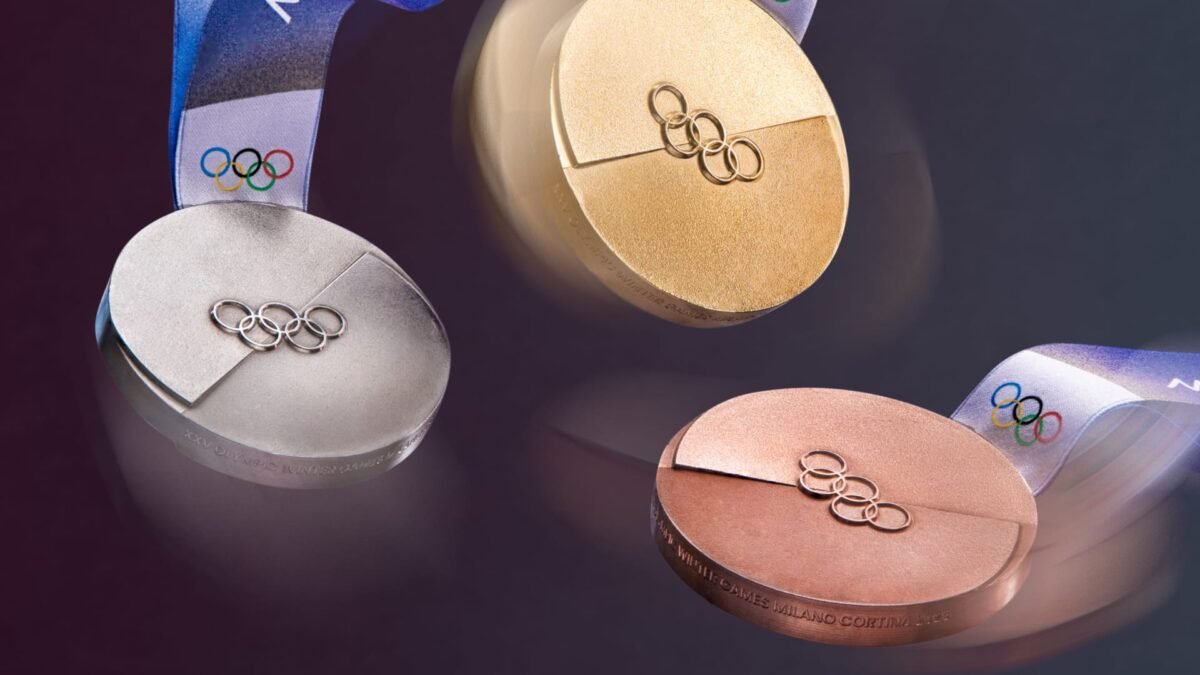

The Milan Cortina 2026 Winter Olympics and Paralympics (XXV Winter Olympic Games) concluded and organizers showcased the Games’ newly designed medals. Precious metals firm Dillon Gage has calculated what one of the world’s most recognizable prizes would be worth if it were made entirely of solid gold.
Despite their name, Olympic gold medals are not solid gold.
Under International Olympic Committee rules, they are made primarily of silver and plated with a thin layer of gold. Using the size and weight specifications of the 2026 medals, Dillon Gage estimated the theoretical value of a solid-gold version of the medal based on current precious-metal prices.
According to the firm’s calculations, a medal with the same dimensions as the Milan Cortina silver medal would have an estimated volume of about 47.6 cubic centimeters and would contain approximately 919 grams of gold if cast entirely in gold. At a gold spot price of $4,967.90 per troy ounce, that medal would be worth about $146,800 based on metal content alone.
Milano Cortina 2026 Olympic Medals
Based on current spot prices, Dillon Gage also calculated the approximate metal value of the actual medals awarded at the Milan Cortina 2026 Games:
- Gold medal: 500 grams of .999 silver and 6 grams of .9999 gold, with a combined metal value of approximately $2,357.56, using silver priced at $87.00 per troy ounce and gold at $4,967.78 per troy ounce.
- Silver medal: 500 grams of .999 silver, with an approximate metal value of $1,398.96, based on a silver spot price of $87.00 per troy ounce.
- Bronze medal: 420 grams of copper, with an approximate metal value of $5.46, based on a copper price of about $5.90 per pound.
“The value of gold medals is a curious inquiry we receive, especially around the time of the Olympics,” said Terry Hanlon, president of Dillon Gage Metals.
“It’s one of the most recognizable medals in the world, so it’s natural for people to wonder what it’s made of and what it’s actually worth. While Olympic gold medals are not solid gold, the silver content alone carries far more value today than it did just a few years ago, reflecting how much precious-metal markets have changed.”
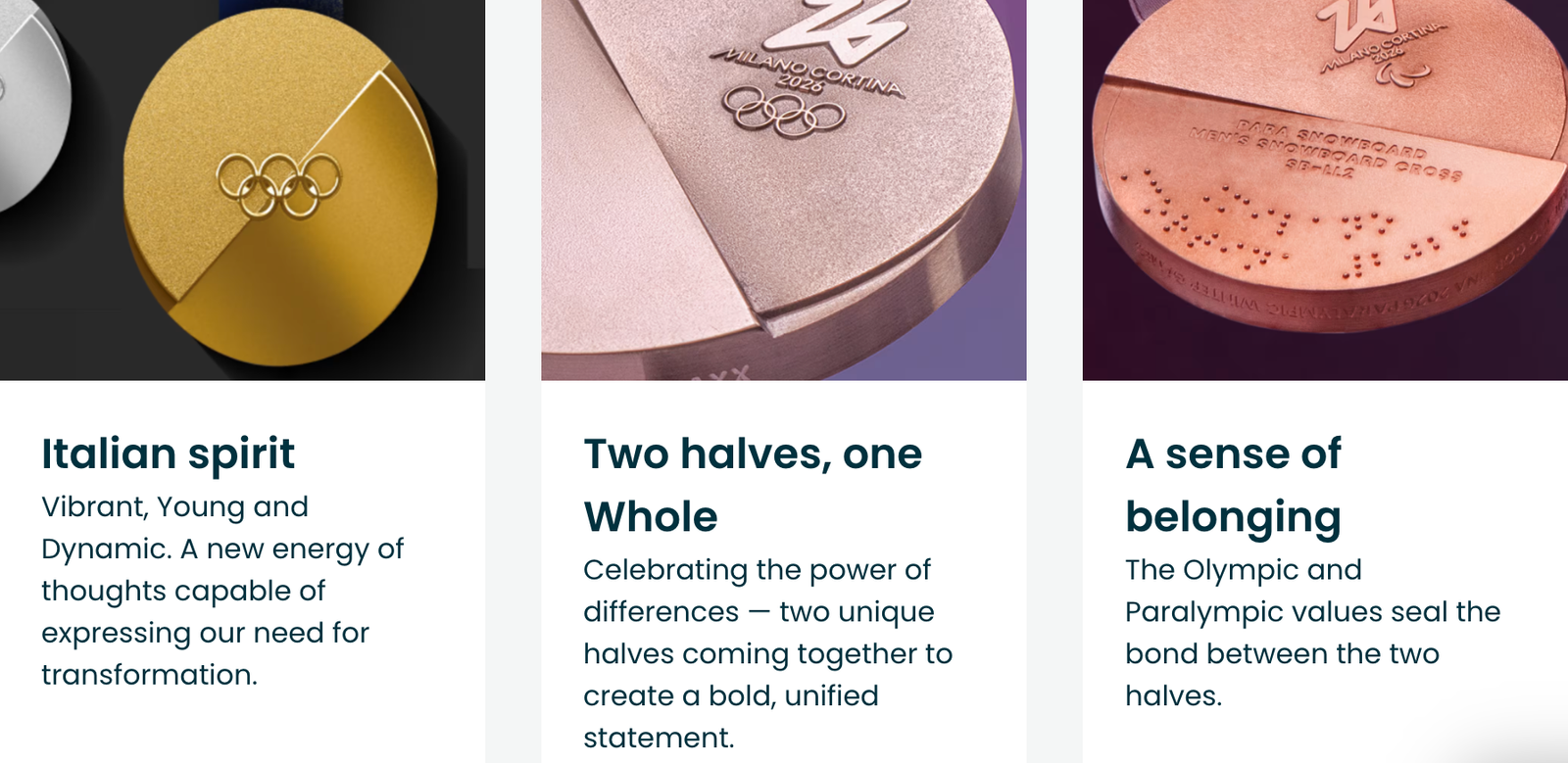
The Milan Cortina 2026 medals were designed by a multidisciplinary team lead by Raffaella Paniè and produced by the Italian State Mint and Polygraphic Institute (IPZS). The medals feature a split-surface and places emotion and teamwork at its core, symbolizing not only the union of the two host cities, Milan and Cortina, but also the collective effort behind every victory. The two halves of the medal reflect the Olympic and Paralympic values coming together, representing an athlete’s journey and the coaches, teammates, family members and support teams who helped make that achievement possible.
Each medal measures 80 millimeters in diameter and 10 millimeters thick. Silver medals are composed of 500 grams of pure silver, while gold medals consist of silver cores plated with gold. Organizers have emphasized sustainability in the production process, using recycled metals, renewable energy and FSC-certified packaging. And while the hypothetical value of a solid-gold medal may reach six figures, Dillon Gage noted that Olympic medals are not intended to be valued for their metal content.
No matter the price of gold or silver, the opportunity to compete on the Olympic stage remains priceless. Dillon Gage Metals said it wishes all athletes success and extends its support to competitors from every nation participating in the Games.