





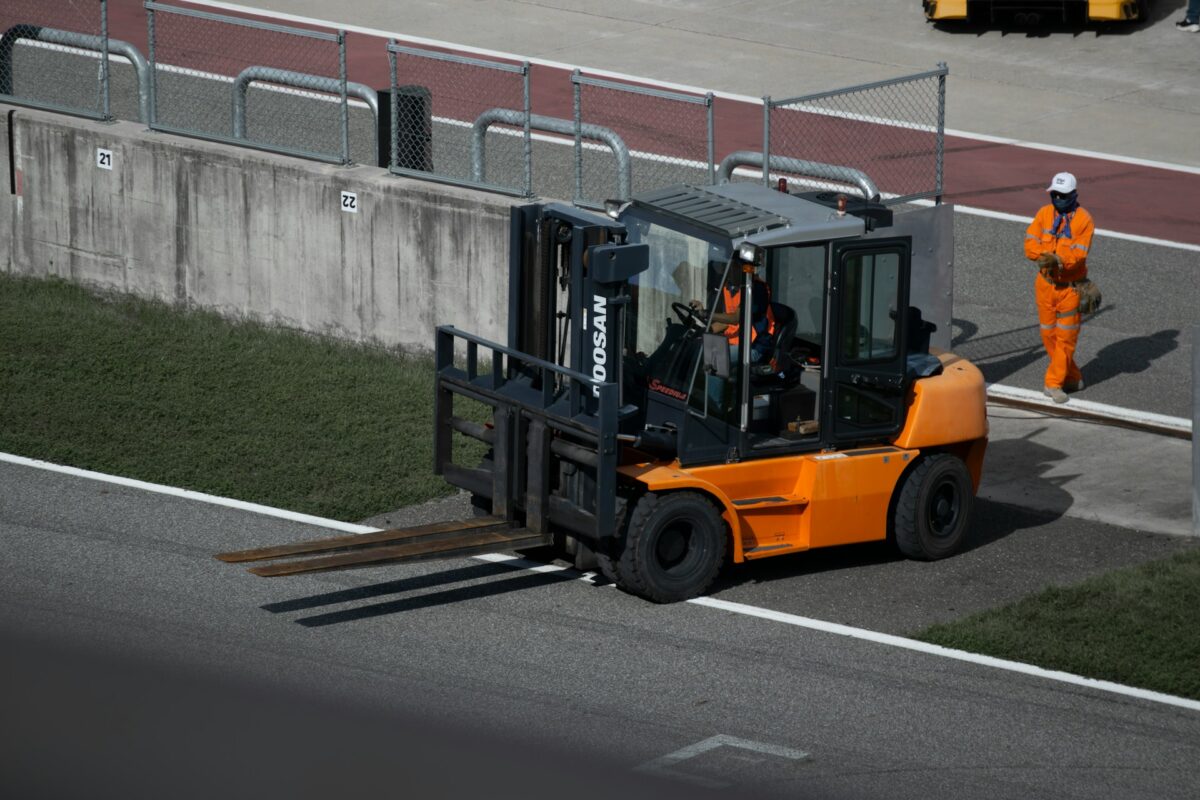

Electric forklifts get most of the attention now, and on a clean warehouse floor that’s fair enough.
Take the work outside, into a timber yard, a quarry or a building site after rain, and the picture changes quickly.
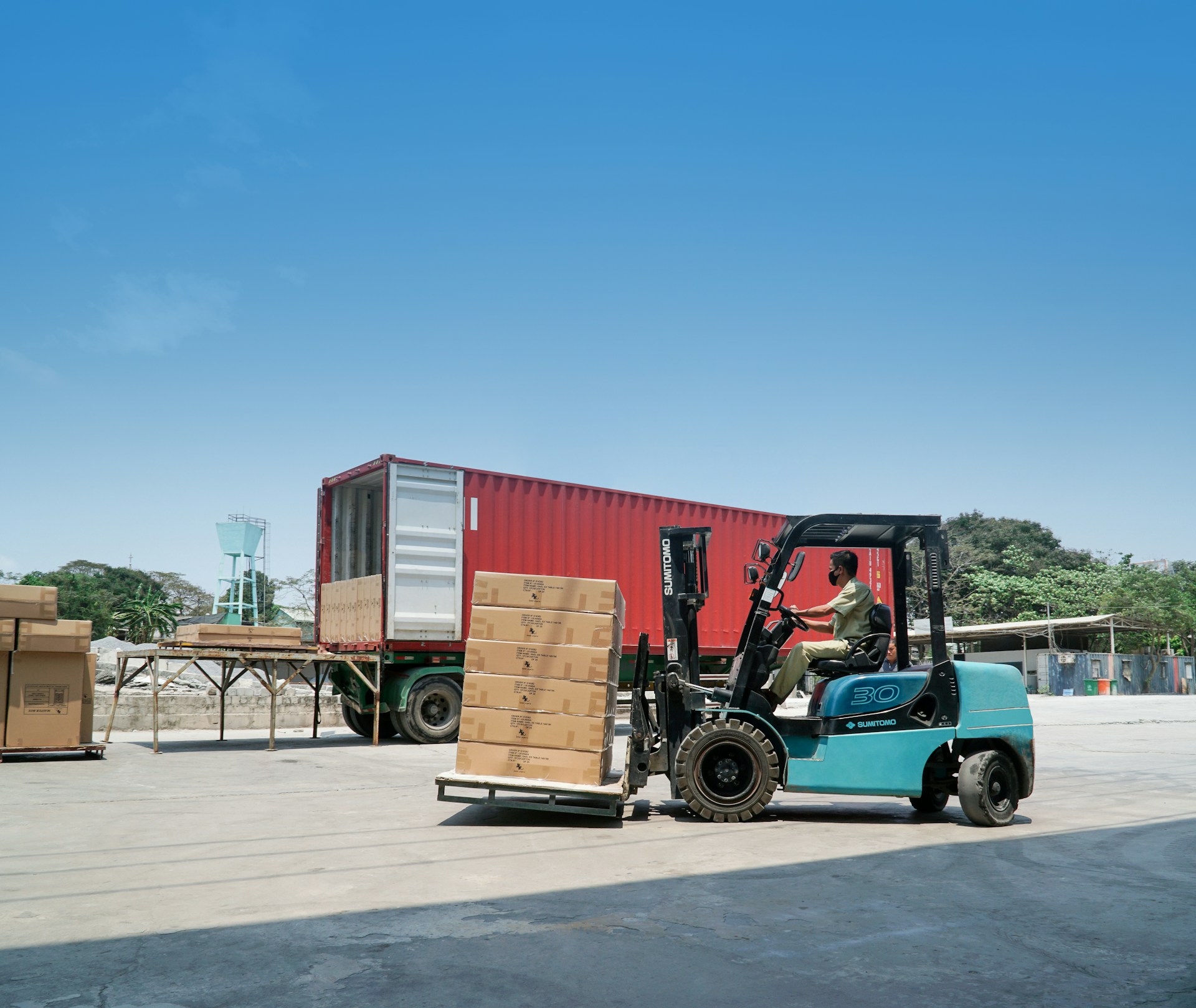
That’s where diesel still earns its place. For heavy loads, rough ground and long shifts in the open, a diesel forklift is often the most practical machine for the job.
Built for Torque and Heavy Loads
Diesel engines produce strong torque at low revs, which is exactly what a forklift needs when it’s pulling away with a full load or climbing a ramp. The power comes in early and stays steady, even when the machine is working hard all day.
That’s a big reason diesel dominates the upper end of the capacity range. Once you get into the 7-tonne class and beyond, handling steel, precast concrete, shipping containers or large timber packs, diesel is still the common choice.
Smaller diesel units in the 2.5 to 3.5 tonne range are also popular on outdoor sites that need a general-purpose machine able to cope with the conditions.
Handling Rough and Uneven Ground
Outdoor sites are hard on equipment. Gravel, potholes, mud, slopes and loose surfaces all test a forklift’s traction and stability.
Diesel forklifts are commonly paired with pneumatic tyres and higher ground clearance, and some are built as dedicated rough-terrain models with four-wheel drive. That setup handles yards and construction sites far better than a warehouse-spec machine on solid tyres.
Weather matters too. Diesel machines are generally well suited to working through heat, dust and rain, which suits Australian outdoor conditions for much of the year.
Refuelling Without the Downtime
Runtime is one of diesel’s practical advantages. Refuelling takes minutes, and the machine is straight back to work.
For multi shift operations, that removes the need for charging windows, spare batteries or dedicated charging bays. On remote or temporary sites without reliable power, diesel may be the only realistic option anyway, since fuel can be delivered or stored on site.
Where Diesel Makes the Most Sense
Diesel forklifts work best in open air, high demand environments. Typical applications include:
- Timber yards and sawmills
- Construction and civil sites
- Building and landscape supply yards
- Ports, freight terminals, and container handling
- Agriculture, including vineyards, and produce handling
- Steel, concrete, and heavy manufacturing yards
In each case, the work is outdoors, the loads are heavy or awkward, and the machine needs to keep running without long breaks.
Where Diesel Isn’t the Right Fit
Diesel isn’t the answer everywhere. Exhaust emissions make diesel forklifts unsuitable for enclosed spaces, cold rooms and most warehouse or food handling environments. Electric models are the better choice there, and LPG often suits sites that move between the dock and the yard.
Noise is another factor for sites near residential areas or with early starts.
Many businesses run a mix, with electric units indoors, and a diesel machine in the yard. The right answer comes from looking at where the forklift will actually work.
New vs Used Diesel Forklifts
A new diesel forklift from our forklift for sale range gives you the latest engine technology, often including cleaner running engines with exhaust after treatment, plus a full manufacturer warranty.
A quality used diesel can be good value, particularly for businesses adding a second machine or working to a tighter budget. Diesel forklifts are built to last, and a well-maintained unit can have plenty of working hours ahead.
When looking at used forklifts for sale, check:
- Engine hours and service records
- Starting, smoke and oil leaks
- Mast, chains, forks, and hydraulic hoses
- Tyre wear and brake condition
- The length and scope of any warranty
Keeping a Diesel Forklift Running
Diesel forklifts are strong. They still need regular maintenance. Outdoor work brings in dust, mud and water so air filters, fuel filters, cooling systems and tires often need frequent care than on an indoor machine.
Regular servicing keeps the engine working protects the hydraulics and finds small issues before they stop a machine in the middle of a shift. For companies that depend on one or two machines that’s the difference between a repair and days of lost work.
Finding Diesel Forklifts in Melbourne
For companies in Melbourne and throughout Victoria seeking diesel forklifts Heavy Lift Forklifts sells used forklifts, including diesel models from 1.5 tonnes up to 16 tonnes and more. The family-owned company has been based in Bayswater since 2003.
Before a used forklift goes up for sale, the team services it in full and checks the engine, hydraulics and safety systems. Each machine then comes with a drivetrain warranty of three months to one year, depending on the unit.
The Right Machine for Outdoor Work
Electric forklifts will keep improving, and for many indoor applications they already make more sense. Outdoors, with heavy loads, rough ground and long days, diesel is still hard to beat.
If your forklift spends most of its life in the yard rather than the warehouse, a diesel machine deserves a serious look.