





St. George wakes up sunny something like 300 days a year, which is the entire pitch. No weather roulette, no canceled hikes, no soggy tent.
But the sunshine is honestly the least interesting thing about it. The real reason I keep pointing people toward this corner of southwestern Utah is that it sits at the center of an absurd number of completely different landscapes, all reachable before lunch. You want lava fields? Twenty minutes. Slot canyons? Under an hour. A national park that pulls millions of visitors a year? Also under an hour.
Most travelers treat St. George as a gas stop on the way to Zion. That’s a mistake, and it’s the one this whole piece is built to fix. You’ll get the geography that makes the town work as a hub, the neighborhoods worth your time, and a plan for where to actually sleep so you’re not driving an hour back to a hotel every night.
Where exactly is St. George, and why does it matter
St. George sits in Washington County, tucked into the far southwest corner of Utah where the Mojave Desert, the Great Basin, and the Colorado Plateau all sort of bump into each other. That collision is why the scenery changes so fast when you drive. You’re not getting one landscape here. You’re getting three, stacked on top of each other.
Interstate 15 runs straight through town, which makes the logistics easy. Las Vegas is roughly two hours south. Zion National Park’s south entrance is about 45 minutes east. The north rim of the Grand Canyon is a longer haul but doable as a day trip if you leave early and pack lunch.
Here’s my read on it: the towns closer to Zion, like Springdale, are prettier in a postcard sense but they’re also more expensive, more crowded, and more limited on services. St. George gives you a real grocery store, a real hospital, actual restaurants, and easy access to everything without the park-traffic tax. That trade is worth it.
What to actually do once you’re there
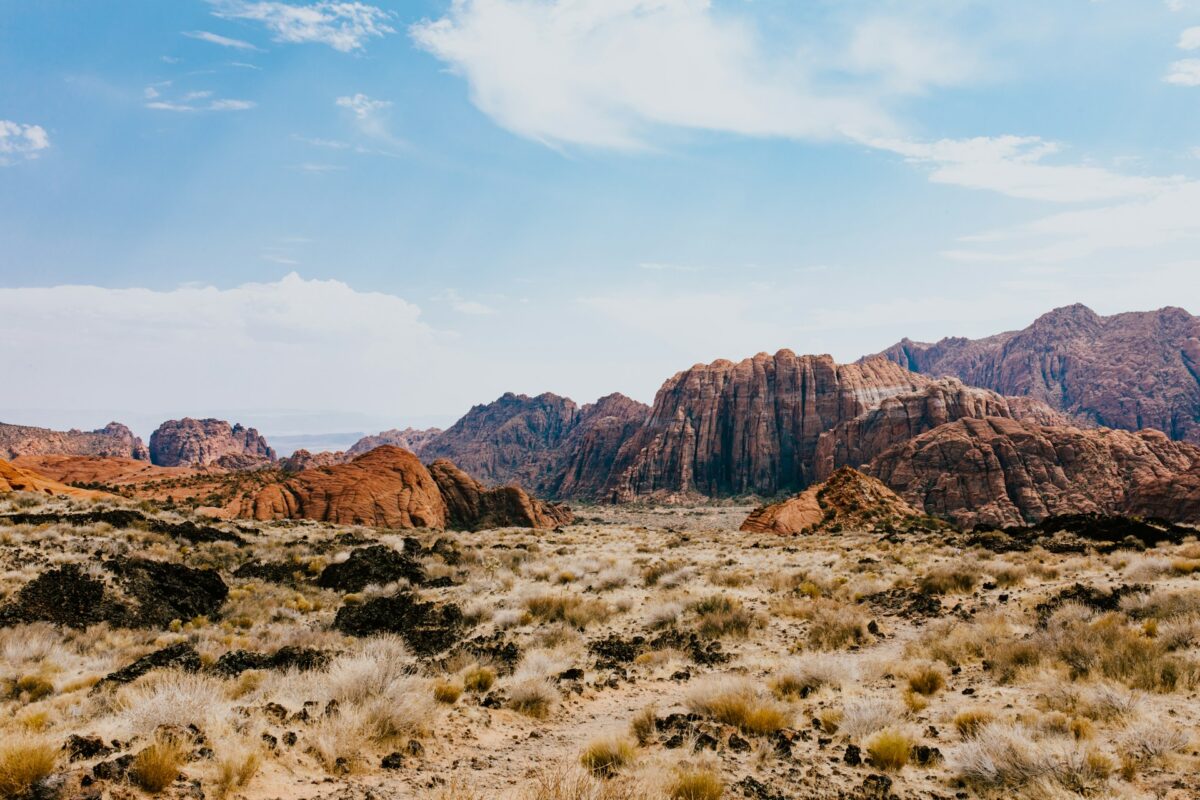
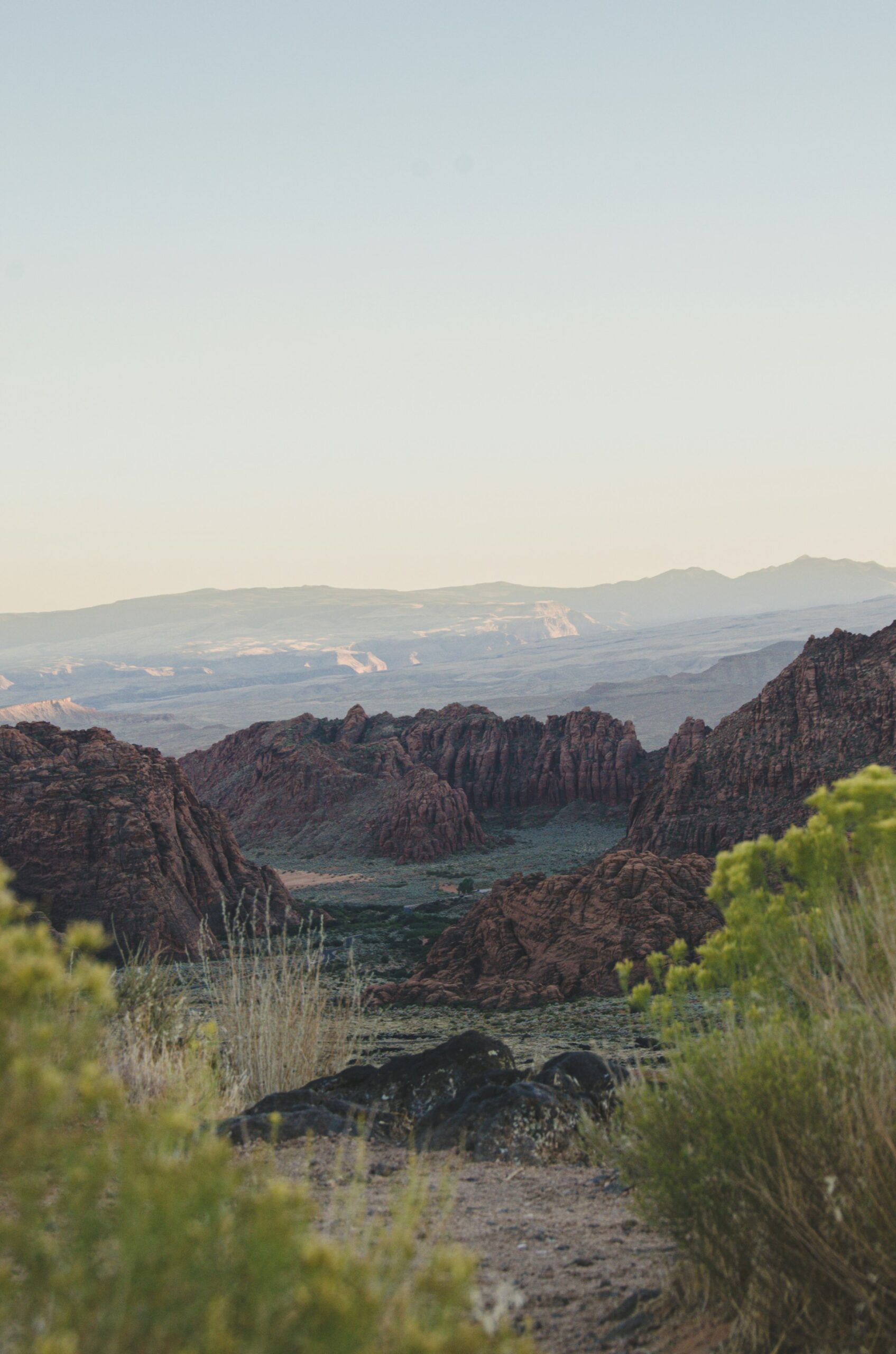
Snow Canyon State Park is the local heavyweight, and it’s only about 15 minutes from downtown. Red and white sandstone, a couple of lava tubes, and a trail network that works whether you’ve got two hours or a full day. The Petrified Dunes trail is the one I’d pick if you only have time for a single walk. Short, weird, and genuinely unlike anything else nearby.
Sand Hollow sits a bit south of town and does the opposite thing entirely. It’s a reservoir with red sand beaches, so you get swimming and paddling in the middle of the desert. Off-roaders love it. So do people who just want to float on a paddleboard and stare at rock formations.
Then there’s the stuff nobody plans for. The Dinosaur Discovery Site on the east side of town preserves actual Jurassic-era tracks in the rock, and it’s small enough to knock out in an hour. Pioneer Park gives you a short scramble up to a sandstone knob with a full valley view, which is the best free sunset in town. And Tuacahn Amphitheatre stages Broadway-scale shows in an outdoor canyon setting, which sounds gimmicky until you’re sitting there watching a set piece against a live red cliff.
Zion, without the Zion-sized headache
Zion is the reason most people come, and it’s also the reason most people leave frustrated. Parking fills. Shuttles back up. The main canyon gets genuinely packed by mid-morning in peak season. The fix is straightforward: treat the park as a day trip from a base outside the park. Get in early, do your hike, and leave before the afternoon crush. According to the National Park Service, Zion consistently ranks among the most visited parks in the entire system, so the crowd math isn’t a rumor. It’s structural.
What most first-timers don’t realize is how much public land surrounds the park. The Bureau of Land Management manages enormous tracts across southern Utah, and a lot of it is open, uncrowded, and just as dramatic as the postcard spots. If the shuttle line makes you twitch, you’ve got options.
Sleeping well matters more than you think out here
This is the part of trip planning people rush, and it’s the part that decides whether the whole week feels easy or exhausting. The distance between the town and the surrounding recreation areas is bigger than it looks on a map, and driving it twice a day gets old fast.
If you’re traveling with an RV, a trailer, or a rig you don’t want to break down and set up daily, the smart move is a single base with a real hookup and a real shower. A good rv resort near St. George gives you that, plus the flexibility to leave your setup parked while you drive the tow vehicle to a trailhead. You’re not repacking every morning. You’re not hunting for a site at dusk.
If you’re in a hotel instead, stay downtown near Main Street. You’ll get walkable dinner options and quick access to the freeway on-ramp. What you won’t get is dark sky. And dark sky is a genuine asset here.
Chasing the night sky
St. George has grown fast, and light pollution has crept in with it, but drive 20 or 30 minutes out of the valley and the sky opens up in a way that flat-out surprises people from the East Coast. On a moonless night you can see the Milky Way band with your naked eye. That’s not a metaphor. It’s just what happens when you’re this far from a major metro.
Bring a red flashlight, a blanket, and patience. Give your eyes 20 minutes to adjust and don’t check your phone. The reason most people think stargazing is boring is that they never actually waited long enough for their pupils to do the work.
A practical three-day shape
Here’s the itinerary I’d hand a friend, in order. If you’ve got more time, stretch days two and three.
| Day | Morning | Afternoon | Evening
|
|---|---|---|---|
| One | Settle in, stock the fridge, walk downtown | Snow Canyon, Petrified Dunes trail | Pioneer Park sunset |
| Two | Leave early for Zion, hike the main canyon | Lunch in Springdale, drive back | Tuacahn show if it’s running |
| Three | Sand Hollow, paddle or swim | Dinosaur Discovery Site | Drive out for dark sky |
Three notes on that table. Day one is deliberately light because travel days wipe people out and Snow Canyon at golden hour is a better first impression than a rushed hike. Day two hinges entirely on leaving before sunrise, so set the alarm and don’t negotiate with yourself. Day three you can flip depending on heat; Sand Hollow is brutal at 2 p.m. in July and perfect at 9 a.m.
Timing your trip
Spring and fall are the sweet spots. March through May gives you wildflower pockets and daytime highs that make hiking pleasant. October and November bring cooler air and thinner crowds, which is my personal favorite window.
Summer is genuinely hot. Triple digits are normal in July, and the move is to hike at dawn, swim midday, and do town stuff in the afternoon. Winter is mild compared to basically everywhere else in Utah, so it’s a legit option if you want solitude and don’t mind shorter days.
What I’d skip
The helicopter tours over the canyon are expensive and short. The themed dinner shows downtown are fine if you have kids and a sense of humor about it. And honestly, don’t try to do Zion, Bryce, and the north rim in the same trip unless you have a full week. You’ll spend it in the car and remember the seats more than the scenery.
Pick fewer places. Stay longer. That’s the whole strategy, and it’s the one thing almost nobody does on their first Southwest trip.
So here’s the question worth sitting with before you book anything: are you planning a vacation, or are you planning a checklist? St. George rewards the first kind of traveler, and it punishes the second. Base yourself well, wake up early, and let the desert set the pace.