


Sleepwear has become one of the most interesting corners of off-price fashion because the category is doing more than selling comfort. That shift can be seen in fabric choices, print scale, fit and even in the return of silhouettes that once felt old fashioned. The Mumu is one example, but the bigger story is how sleepwear is being re-edited for a customer who wants softness ease and personality without losing practicality. Fabric usually tells the story first. A buttery poly-spandex jersey can fall cleanly from the shoulder, move well through the body and give even a simple sleep silhouette a more fluid finish. Brushed blends bring a cozier hand, lightweight knits can work better for short sets, while fabrics with more weight and recovery suit longer nightgowns or relaxed pajama bottoms.
The fabric should lead the silhouette, and in off-price that matters even more because the starting point is often existing goods, cancelled production or surplus yardage rather than a blank design board. A soft printed jersey may become a notch collar pajama set while another lot may work better as a capri sleep set, an oversized relaxed fit tee, or a loose nightgown with more sweep. The strongest product development comes from understanding the fabric first and allowing the hand-feel, stretch, weight and drape to guide the final shape of the garment.
Print can give sleepwear an entirely different personality, especially when motif scale, spacing and ground color are treated as part of the garment architecture. Tiny florals can soften a silhouette, geometrics can make it feel cleaner, while stars, dots, novelty motifs and seasonal artwork can bring character without pushing the product into something that feels juvenile.
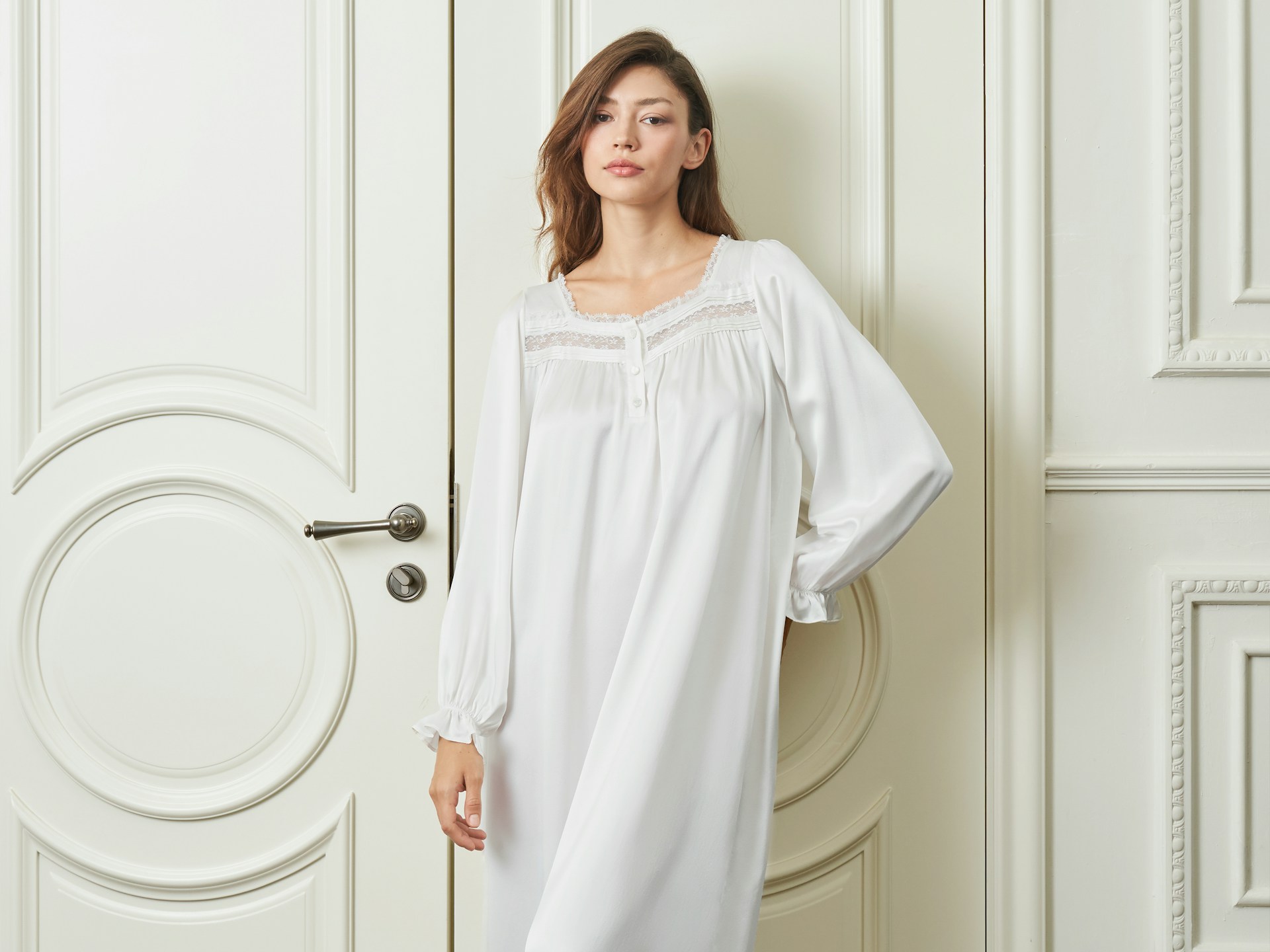
Off-price buyers already know how much print can influence sell-through, because a weak motif can age a garment quickly while the right one can make a basic body feel fresh. Color works in the same way, since sleepwear does not behave like outerwear, activewear or fashion tops. A shade that looks strong on a jacket can feel too aggressive across a full nightgown, while softer grounds, warmer mid-tones, washed florals and approachable seasonal shades usually sit more naturally in the category.
Fit on the other hand, is just as important because comfort should never become an excuse for poor proportion. A sleep garment still needs balance, with armholes sitting properly, necklines holding their shape and pants offering enough ease without looking sloppy. Longer gowns need movement through the hem while still hanging cleanly, and that balance between comfort and shape is often what makes an older silhouette feel relevant again.
The Mumu, for example, already offers much of the ease women look for in sleepwear but the opportunity comes from refining it through better fabric, cleaner proportion and a stronger print story. The same thinking can be applied to button-front pajama sets, pull-on capri sets and simple sleep tees, where familiar bodies can still feel current when the fabrication, print direction and styling are handled with more precision.
Off-price brings its own creative pressure, with available yardage changing, quantities moving, costs staying tight and prints often already set. That makes editing just as important as designing because the job becomes deciding which body suits which fabric, print, and color story feels right for the season. Together, this helps to contribute to a coherent sleepwear assortment.
Surplus fabric can be especially useful here, since deadstock or excess yardage from previous ladieswear orders does not have to remain locked to its original category. With the right hand-feel, stretch and print, it can move into sleepwear and take on a completely different retail life. That is where design thinking becomes valuable in off-price, where the category does not always need more product so much as sharper choices around fabric matching, print judgement, proportion and what the customer will wear after the garment leaves the rack.