




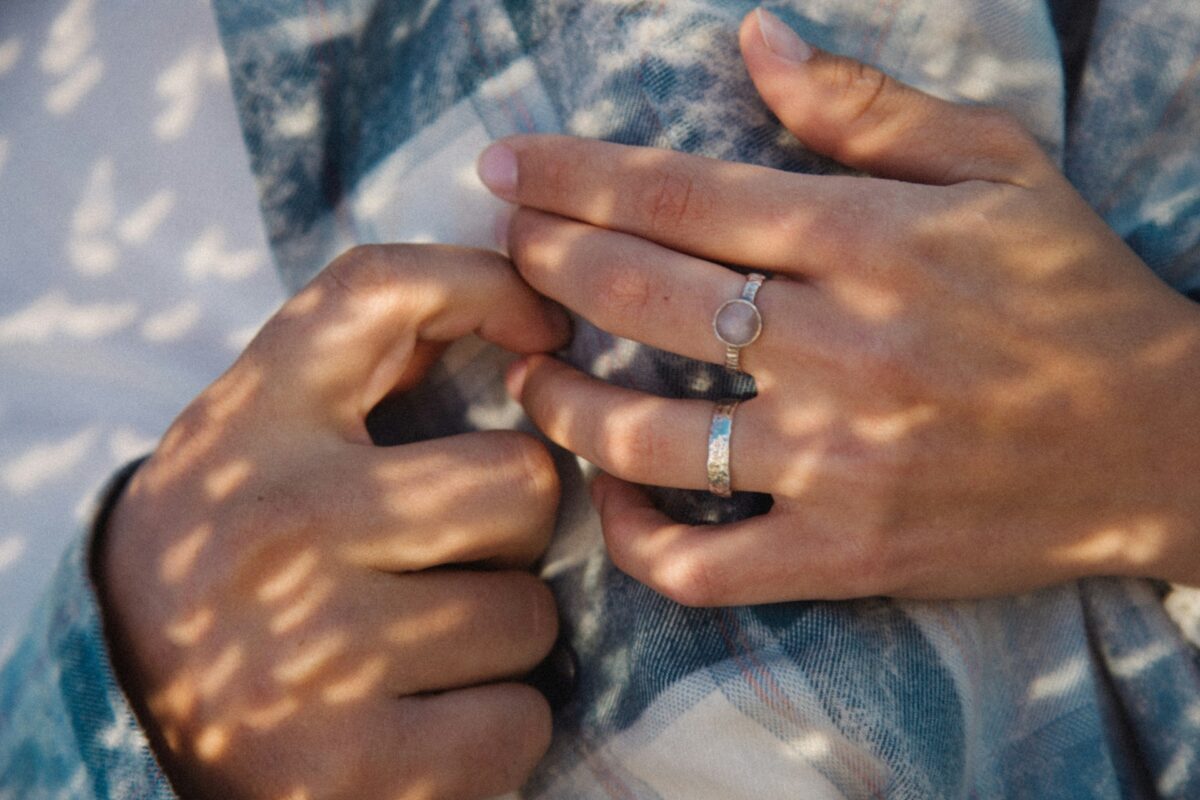

Your jewelry box probably contains rings you purchased at different times.
Perhaps one was a birthday gift, while another marks a special anniversary. Instead of wearing these pieces separately, you can bring them together through ring stacking.
The idea is simple: combine rings of different widths and metals to suit your style. You do not need matching sets or expensive purchases to get started. However, a few small details can make your combinations more comfortable. Here is how to build a ring stack you will actually enjoy wearing.
1. Start With One Ring You Already Love
Before choosing additional pieces, pick the ring you wear most frequently. This could be a family heirloom or one of your favorite diamond rings.
Your main ring will help you decide which bands belong beside it. A large center stone generally works better with thinner supporting bands. For example, pair a solitaire ring with a narrow gold band. The plain band adds contrast without competing with the diamond.
Try these simple combinations:
- One solitaire with a thin polished gold band.
- One wide ring paired with two narrow bands.
- One textured ring beside a smooth metal band.
Alt text: V-shaped yellow gold diamond ring designed for stacking with other jewelry.
2. Mix Gold Colors Without Making Everything Match
You can combine yellow gold with white gold quite successfully. Rose gold introduces another option when your collection needs variety. Start with two metal colors rather than combining everything immediately. For example, place a white gold band beside a yellow gold diamond ring.
A third ring can repeat either metal color. This helps connect the pieces visually without requiring identical designs. Remember that different metals can wear against one another. The Gemological Institute of America advises considering hardness and contact between stacked rings.
3. Experiment With Different Ring Shapes
Not every ring needs a straight band or round stone. Curved bands can fit around raised settings or decorative center stones. Explore different diamond ring styles before choosing your next addition. Some settings require specially shaped bands to avoid unwanted contact.
A halo ring already has several diamonds surrounding its center stone. Pairing it with a simple curved band can keep the arrangement balanced. For a more structured combination, try these options:
- A round center stone paired with a V-shaped band.
- An emerald-cut diamond accompanied by a narrow straight band.
- A curved diamond band paired with a plain ring.
Alt text: Yellow gold halo diamond ring with smaller diamonds surrounding the central setting.
4. Choose Different Band Widths
Wearing three equally wide rings can take up considerable finger space. Mixing narrow and medium bands gives you more room to experiment.
Begin with your widest ring and add one narrow band. Check the arrangement while opening and closing your hand.
Your everyday diamond ring should never restrict normal finger movement. Wider stacks may also require a slightly different fit.
5. Make Your Engagement Ring Part of the Stack
Your engagement ring can become the main feature of your arrangement. Begin with your wedding band before introducing additional designs.
A brilliant cut diamond ring pairs beautifully with a plain band. You can also consider a curved diamond band when the setting requires extra space.
Some diamond ring designs have raised baskets that prevent adjacent bands from fitting closely. Ask your jeweler to inspect the contact points before stacking them.
Ring Stacking Combination Guide
| Ring combination | Best styling approach | What to check |
| Solitaire + plain band | Minimal everyday styling | Setting clearance |
| Halo + curved band | Formal jewelry | Stone contact |
| Yellow + white gold | Mixed-metal styling | Metal wear |
| Wide + thin bands | Contemporary outfits | Finger comfort |
| Three narrow bands | Casual wear | Overall fit |
| Diamond + textured band | Evening styling | Surface rubbing |
6. Avoid These Common Ring Stacking Mistakes
A ring arrangement should work during normal daily activities. Before leaving home, check these practical details.
- Too many wide bands: Your fingers need enough space to bend.
- Loose settings: Nearby rings can rub against diamond prongs.
- Different metal hardness: Repeated friction can damage softer surfaces.
- Incorrect sizing: Several rings together may fit tighter than one.
The GIA also recommends checking fit and maintaining rings regularly to reduce damage from stacking.
7. Build Your Collection One Ring at a Time
You do not need to purchase several new pieces together. Start by experimenting with the jewelry you already own.
For your next purchase, consider a band that complements multiple outfits. A narrow diamond band can work beside different center stones.
Alt text: Delicate diamond band suitable for layering with gold rings.
FAQ
1. Can you stack rings made from different metals?
Yes, you can combine yellow gold with white or rose gold. However, consider metal hardness and repeated friction before wearing them together daily.
2. How many rings should you wear on one finger?
Two or three rings provide an easy starting point. Your finger length and combined band widths should guide the arrangement.
3. Can stacking damage expensive diamond jewelry?
Yes, direct contact can gradually wear down metal or settings. Have your jeweler examine any combination involving raised stones or delicate prongs.
4. Should you wear the largest ring first?
Starting with your largest design can simplify the styling process. Add smaller bands around it after checking their fit.
Let Your Jewelry Tell Your Story
Ring stacking gives your existing jewelry a fresh purpose. You can combine sentimental pieces with newer designs without following strict fashion rules.
Begin with two rings and experiment with different arrangements. Over time, you will discover which combinations suit your hands and daily routine.


