





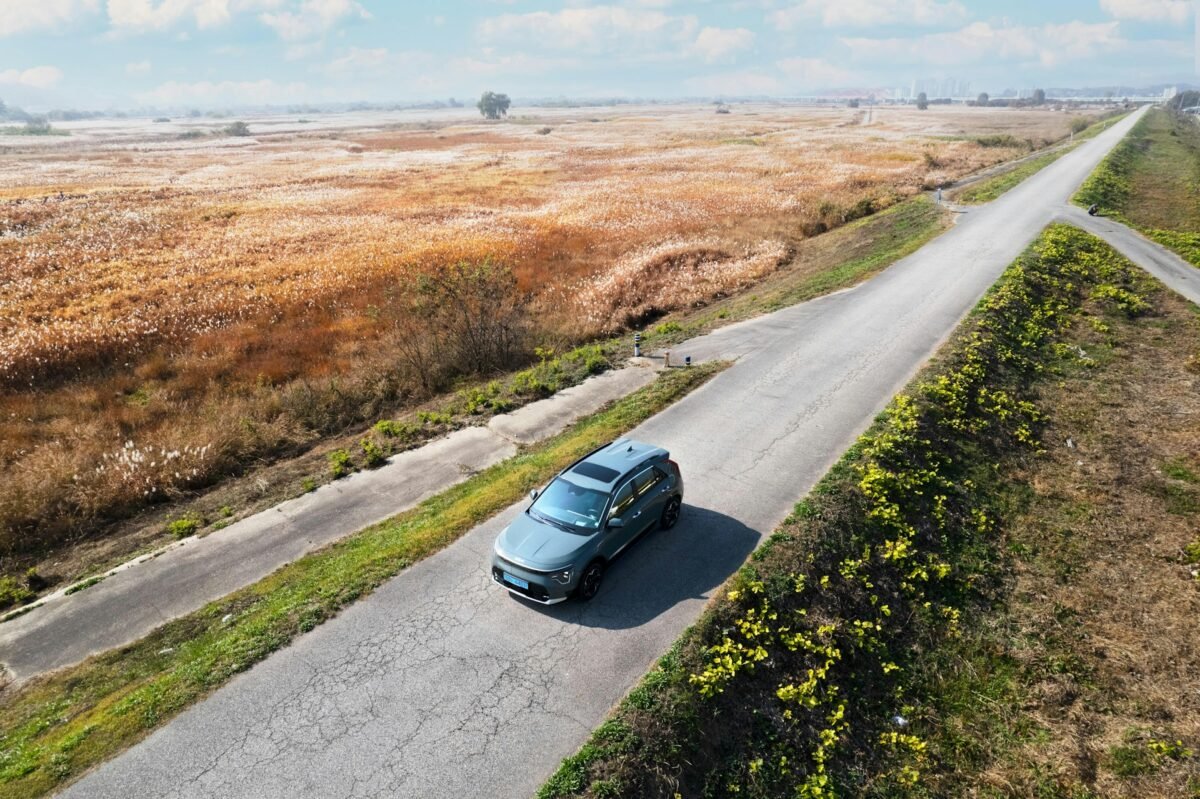

Every driver has experienced it: the unease of navigating an unfamiliar roundabout or the inexplicable calm of a tree-lined country lane.
While 82% of UK road users feel safe, fatal collisions seemed to increase in 2024.

These reactions aren’t random, but they’re rooted in how road design and human psychology interact, shaping our alertness, reactions and decision-making behind the wheel.
How visual cues influence driving speed and attention
Road design communicates with drivers through a language of visual signals. Research from Frontiers in Public Health shows that elements like lighting quality, lane width and road markings affect how we process information whilst driving.
Wider lanes can unconsciously encourage faster speeds, whilst narrower roads with painted edge lines create a perception of reduced space that naturally slows drivers down. Street lighting also influences our sense of safety and alertness. Similarly, chevron signs on bends aren’t just directional aids, but they also help drivers gauge appropriate speeds by providing visual anchors that break up monotonous stretches of tarmac.
These subtle environmental cues work on a subconscious level, affecting our behaviour before we’ve consciously registered them. Our confidence can even override awareness of skill gaps, since 64% of drivers believe they’d be able to pass their driving test again despite relying on reversing tools for assistance.
Why certain environments trigger stress or fatigue
Not all roads affect drivers in the same way. Motorways, despite their relative safety statistically, can induce a hypnotic state through monotonous scenery and constant speeds. This familiarity can result in overconfidence, amplifying risks in high-speed environments. For example, National Accident Helpline found men rated themselves as the safest drivers despite being responsible for 76% of all road fatalities.
According to Brake, the road safety charity, driver fatigue contributes to approximately one in five crashes on major roads. The cognitive demands shift between road types: residential streets require constant vigilance for pedestrians and parked cars, whilst high-traffic urban zones bombard drivers with competing stimuli, like traffic lights, pedestrian crossings, cyclists and unpredictable vehicle movements. This sensory overload elevates stress hormones and mental fatigue, particularly during peak hours when decision-making opportunities multiply exponentially.
The hidden impact of driver habits and cognitive load
Modern driving involves managing multiple information streams simultaneously. Mobile phones, sat-nav systems, passengers and even adjusting the radio create competing demands on our attention. This cognitive load increases when we’re tired, stressed or unfamiliar with our surroundings. Mental fatigue reduces reaction times and impairs judgement, even when drivers feel alert. Habitual routes can lead to “autopilot” driving, where we arrive at destinations with little memory of the journey, which is a phenomenon that highlights how much of driving occurs below conscious awareness.
Understanding what happens after a collision
When accidents do occur, understanding the immediate aftermath is essential. Besides guaranteeing everyone’s safety and exchanging details, many drivers are unaware of their rights regarding compensation for injuries or vehicle damage. Those involved in car accident claims often benefit from specialist support to go through insurance processes and medical assessments, particularly when dealing with the psychological impact of road trauma.
Recognising how road environments affect our driving psychology can make us more conscious, safer drivers and better prepared should the unexpected occur. Honest self-assessment is key, and drivers who acknowledge their limitations tend to be safer. Incorporating this way of thinking could keep you safer when out on the road.