



Walk into any modern classroom and you’ll notice something different from the schools we grew up in. Sure, there are still desks and whiteboards, but the walls tell a different story.
Student artwork covers entire sections at eye level, scientific diagrams stretch from floor to ceiling, and learning materials have a crisp, professional quality that makes everything feel more important somehow.
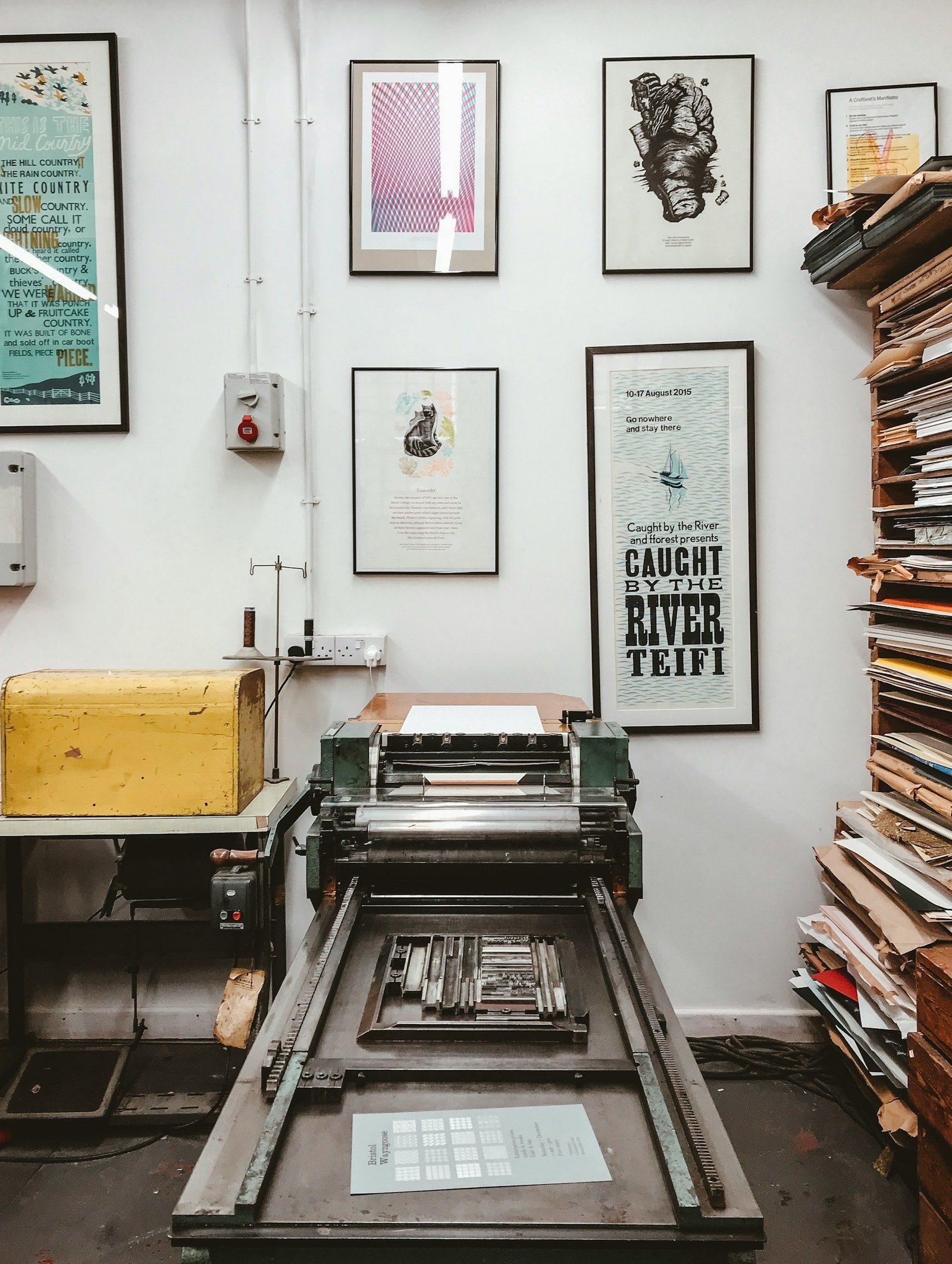
This transformation isn’t happening by accident. Schools are discovering that large-format printing capabilities change not just how classrooms look, but how students learn and engage with their education. It’s one of those simple technologies that creates ripple effects throughout the entire learning experience.
Why Visual Learning Actually Works for Kids
Research consistently shows that students retain information better when it’s presented visually, but the reality in most classrooms tells a more complex story. Kids today are surrounded by high-quality visuals everywhere except school, where budget constraints often mean small, pixelated printouts and faded posters that have seen better years. Large-format visuals work because they match the scale of how children naturally interact with their environment.
A kindergartner learning about the solar system doesn’t just want to see a tiny picture of Jupiter – they want to stand next to a poster where Jupiter towers over them, making the concept of “largest planet” feel real and tangible. The cognitive science behind this is pretty straightforward. When information is presented at a larger scale, it engages more of our peripheral vision and creates stronger memory associations.
Students remember the lesson about photosynthesis not just because they learned the steps, but because they stood in front of a wall-sized diagram where they could trace the path of sunlight with their finger. Visual learners, who make up about 65% of the population, especially benefit from large format displays. But even students who learn better through other methods often find that big visuals help them organize and connect information in ways that smaller materials simply can’t achieve.
Creative Ways Teachers Use Large Format Printing
Teachers are getting creative with large format printing in ways that go beyond traditional posters. Some print student artwork at poster size, transforming a simple drawing into something that feels museum-worthy and gives kids real pride in their work.
- Math teachers create life-sized coordinate planes that students can walk on, making abstract concepts like plotting points feel like a physical game.
- History teachers print timelines that stretch across entire classroom walls, allowing students to literally walk through different time periods.
- Science teachers have found that printing lab results and data visualizations a large scale helps students spot patterns they might miss on regular paper.
When a graph shows temperature changes over time at poster size, students can see trends and anomalies that weren’t obvious before. Language arts teachers use large-format printing for collaborative storytelling projects, where each student contributes a page that gets printed large and displayed as part of a classroom book. The physical presence of their work motivates students to put more effort into both writing and illustration.
Student Projects That Come to Life on Paper
Nothing changes a student’s relationship with their work quite like seeing it printed at professional quality and display size. A middle schooler’s research project about climate change carries different weight when it’s presented as a large format infographic rather than a standard 8.5×11 report. Having access to a poster printing machine means teachers can turn student work into something that feels permanent and important. Students approach their projects differently when they know the final result will be displayed prominently in the classroom or hallway.
Project Ideas That Work Well at Large Scale:
- Student-created maps for geography lessons
- Scientific diagrams and lab observations
- Creative writing paired with original artwork
- Math problem-solving strategies displayed step-by-step
- Historical timeline projects with visual elements
The process of creating work specifically for large-format display also changes how students approach their projects. They think more carefully about layout, color choices, and visual hierarchy because they know their work will be seen from across the room. Group projects particularly benefit from large-format printing. When a team of students creates a poster about renewable energy, having it printed professionally gives their collaboration a sense of importance and permanence that encourages better teamwork and more thorough research.
Making Learning Materials That Kids Remember
Teachers who use large-format printing report that students engage differently with classroom materials when they’re displayed at proper scale. A periodic table that takes up half a wall becomes a reference that students actually use, rather than something they squint at from their desks. The key is understanding which materials work best at large scale. Dense text doesn’t benefit much from being bigger, but diagrams, charts, maps, and visual processes become much more effective when students can see details clearly from anywhere in the classroom.
Interactive elements work particularly well with large-format materials. Teachers create posters with QR codes that students can scan for additional information, or design displays where students can add their own contributions using sticky notes or markers. Seasonal and thematic decorations also take on new life when printed at large scale. Instead of small, store-bought bulletin board decorations, teachers can create custom materials that directly support their curriculum while making the classroom environment more engaging.
Getting the Most Bang for Your School’s Buck
The math on large-format printing for schools often surprises administrators. While the initial investment in equipment seems significant, the per-poster cost drops dramatically compared to outsourcing printing, especially when you factor in the time and transportation costs of using external services. Schools typically see the biggest return on investment when multiple teachers share access to the printer. A single machine can serve an entire grade level or subject area, with teachers coordinating their printing schedules to maximize usage. The real savings come from being able to print materials on demand. Teachers can update and reprint materials as their curriculum evolves, rather than being stuck with outdated posters for years. They can also customize materials for different class sizes or learning needs without worrying about minimum order quantities.
Budget-conscious schools often start by identifying their highest-impact printing needs – usually maps, charts, and student work displays – and calculate the annual cost of outsourcing those materials. The numbers usually make a compelling case for bringing the capability in-house, especially when you add in the educational benefits of having students participate in the printing process.