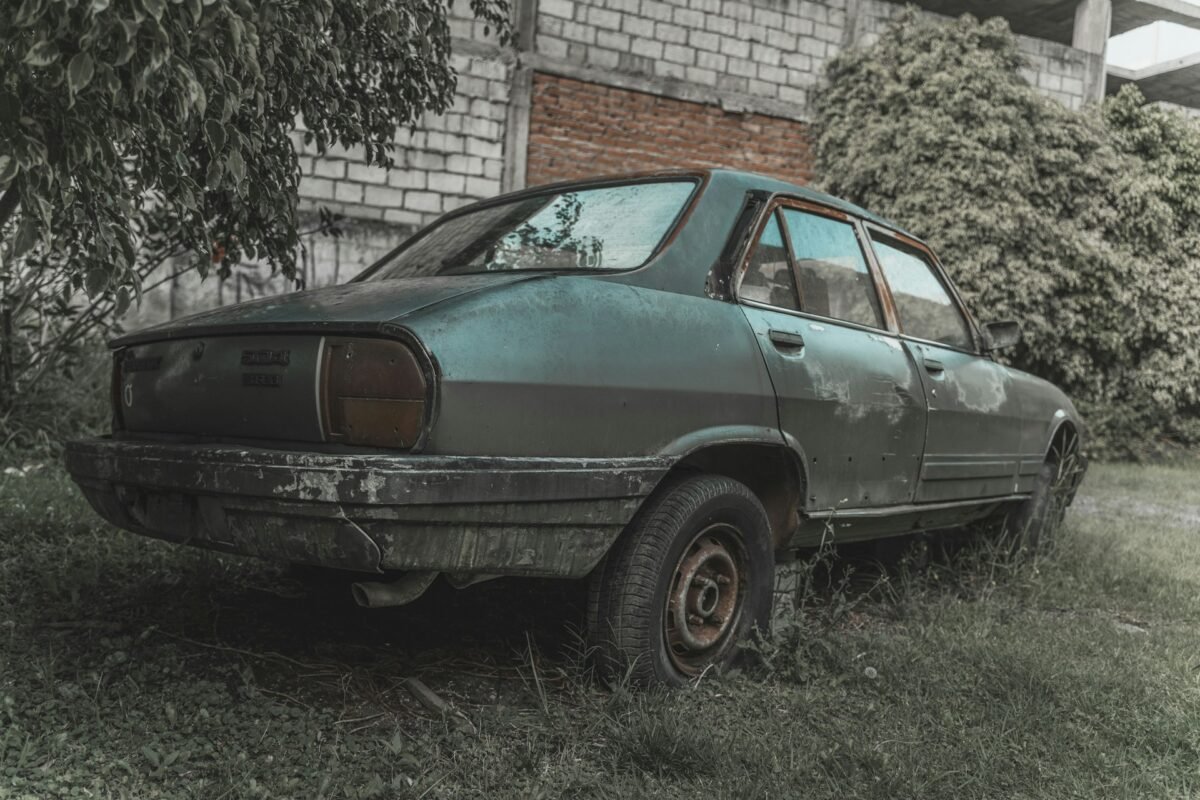

When a vehicle hits something head-on, the force doesn’t stop at the bumper.
The impact travels through the radiator support and into the engine bay, affecting multiple systems simultaneously.

Understanding what typically breaks helps anyone estimate repair costs accurately before bidding.
Front-end impacts push radiator supports backward, damaging accessories, cracking intake manifolds, and breaking motor mounts. Engines pushed backward on their mounts create misalignment in accessory drives and stress other components. Cooling system damage appears most frequently — radiators crack or puncture, hoses tear, and cooling fan assemblies break. These failures allow coolant to leak, and if the vehicle ran after the collision, the engine might have overheated.
Overheated engines show warped cylinder heads and head gasket failures, allowing coolant to mix with oil, visible as milky residue on the oil cap or dipstick. Air conditioning condensers in front of radiators also suffer damage, costing $150-300 to replace, while compressor damage can add $400-800. Serpentine belt damage occurs when collision forces misalign pulleys, but checking this requires starting the engine, which isn’t possible at most salvage auto auctions.
Transmission and Drivetrain Issues
Rear-end collisions on rear-wheel-drive vehicles damage driveshafts, transmission tail housings, or differential mounts. The impact pushes the rear axle forward, compressing or damaging the driveshaft. A bent driveshaft creates vibration that worsens with speed.
Transmission mounts break from collision forces even when external damage looks minor. Broken mounts allow excessive engine and transmission movement that stresses CV joints, exhaust connections, and shift linkage. Symptoms include clunking sounds during acceleration and harsh shifting.
All-wheel-drive and four-wheel-drive systems face additional vulnerabilities. Transfer cases can crack from impact. Front differentials suffer similar damage to rear units. Repairing all-wheel-drive systems costs more due to additional components.
Automatic transmissions on high-mileage vehicles often have pre-existing wear. The collision becomes the final event that pushes marginal transmissions into failure. Distinguishing between collision damage and age-related failure matters for understanding actual repair needs.
Suspension Component Damage
Side impacts and curb strikes damage suspension components beyond what’s visible externally. Control arms bend from impact forces. These bends prevent proper wheel alignment even after replacing other parts. Bent control arms must be replaced — they can’t be straightened safely.
Steering knuckles crack from severe impacts. Cracks might not be visible without close inspection. A cracked knuckle fails unpredictably, creating a dangerous loss of control. Replacement is the only safe solution.
Shock absorbers and struts leak after impact damage. External damage appears as dents or scrapes, but internal damage reveals itself through oil leaking from the shock body. Shocks don’t repair — leaking units require replacement.
Subframes on unibody vehicles bend from significant impacts. A bent subframe affects all attached suspension and steering components. Everything might be properly replaced and adjusted, but if the subframe is bent, nothing aligns correctly.
Steering System Problems
Steering racks crack or develop internal damage from front impacts. External inspection might not reveal internal problems. Symptoms include difficulty turning, unusual noises, or fluid leaks from rack boots.
Power steering pumps fail when hoses get damaged and fluid drains. Running the power steering system without fluid damages internal pump components. A vehicle that experienced front-end damage and shows low power steering fluid likely has pump damage beyond just replacing hoses.
Tie rods bend easily from impact. Even minor curb strikes or low-speed collisions bend these components. Bent tie rods prevent achieving proper alignment specifications. Visual inspection from underneath reveals most tie rod damage — they should appear straight with no curves or kinks.
Brake System Complications
Brake lines run along frame rails and suspension components. Impact damage crushes, cuts, or disconnects these lines. Steel brake lines corrode over time, and collision forces break already-weakened lines. Complete brake line replacement costs $400-800, depending on vehicle complexity.
ABS wheel speed sensors mount to steering knuckles or suspension components. Impact damage breaks these sensors or their wiring. ABS systems won’t function properly with failed sensors, and warning lights illuminate on the dashboard. Each sensor costs $50-150.
Brake calipers and rotors suffer damage from side impacts. A wheel pushed inward by collision forces stresses brake components. Calipers might crack or seize. Rotors warp or crack.
Master cylinders fail when impact forces stress brake pedal assemblies. Internal seals tear, causing reduced braking performance or complete brake failure. These failures might not be apparent until the vehicle is driven after repairs.
Exhaust System Damage
Undercarriage impacts bend or crack exhaust components. Catalytic converters, mufflers, and exhaust pipes all suffer from ground strikes or collision forces. A damaged catalytic converter costs $300-1,200 to replace, depending on vehicle type.
Exhaust hangers and mounts break from impact. Broken hangers allow exhaust components to drag on the ground or contact the undercarriage during driving. These mounting failures create rattling noises and can damage other components.
Flex pipes in exhaust systems crack from stress. These flexible sections absorb engine movement and thermal expansion. Impact damage or age causes cracks that create loud exhaust leaks. Flex pipe replacement costs $150-400.
Fuel System Issues
Fuel lines run underneath vehicles where impact damage can rupture them. Damaged fuel lines leak gasoline, creating fire hazards and making vehicles unsafe to operate. Complete fuel line inspection matters before attempting to start or drive any collision-damaged vehicle.
Fuel pumps fail when vehicles run out of gas or operate with contaminated fuel. A collision-damaged vehicle sitting for months might have contaminated fuel that damages the pump. Fuel pump replacement costs $300-700, depending on tank location and access difficulty.
Evaporative emission system components damage easily. Charcoal canisters, purge valves, and vapor lines all suffer from impact. These components might not affect immediate operation, but create check engine lights and emissions test failures.
Cooling System Beyond Radiators
Water pumps fail when overheated or when timing belt damage occurs. Some vehicles use timing belts to drive water pumps. If collision damage caused timing belt failure, the water pump likely failed also. Water pump replacement costs $300-600, including labor.
Thermostats stick closed after overheating events. A stuck thermostat prevents coolant circulation and causes immediate overheating when the engine runs. This $30 part creates symptoms that mimic more serious problems.
Heater cores leak after frontal impacts that stress cooling system components. A leaking heater core creates sweet-smelling coolant odor in the cabin and causes windows to fog. Replacement costs $400-800 due to dashboard removal requirements.
Oil System Problems
Oil pans crack from undercarriage impacts. Even minor ground strikes can crack cast aluminum oil pans common on modern vehicles. Oil pan replacement requires removing the engine or subframe on many vehicles, making a simple part replacement cost $400-700.
Oil leaks from collision-damaged vehicles indicate damaged gaskets or seals. Impact forces stress engine mounts and twist engines slightly, tearing gaskets that were already marginal. These leaks worsen over time and require repair before normal operation resumes.
Pre-Existing Wear Compounding Problems
High-mileage salvage vehicles often have pre-existing wear that collision damage exacerbates. Worn timing chains, failing transmissions, and tired engines all reach failure points when subjected to collision stresses. Distinguishing between collision damage and normal wear matters for repair planning.
Service history provides clues about pre-existing conditions. Vehicles with regular maintenance records have better odds of mechanical soundness despite collision damage. Vehicles with no service records might have deferred maintenance that created problems the collision simply revealed.
Evaluating Mechanical Condition
Testing mechanical systems at auction is limited. Most vehicles don’t run, or auction policies prevent extensive testing. Looking for visible signs of mechanical damage — leaking fluids, displaced components, or broken parts — provides the only available assessment.
When evaluating accident-damaged cars for sale or checking wrecked cars at auction, mechanical assessment matters as much as body damage evaluation. A vehicle with $3,000 in body damage and $2,000 in mechanical problems totals $5,000 in repairs. Missing the mechanical issues during evaluation causes budget problems that can make otherwise viable projects uneconomical. Anyone considering damaged cars for sale should factor mechanical repair costs into maximum bids to avoid purchasing vehicles where total repair costs exceed their value after completion.