

Hats are the product most people underestimate.
A t-shirt is a flat surface.
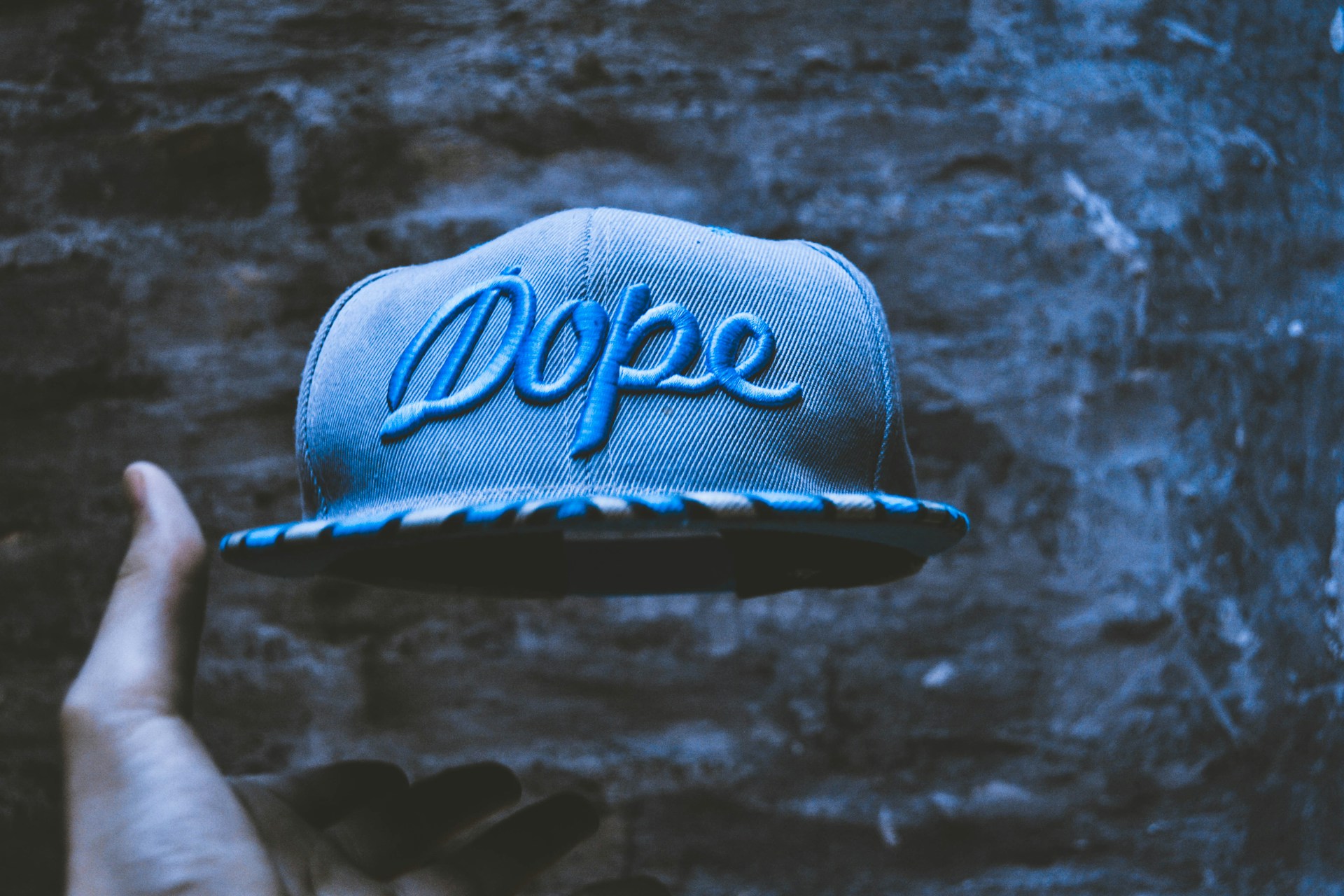
A cap is curved, structured, seamed down the middle and built from panels, which means the decoration method matters far more than it does on a tee.
Get that wrong and a logo puckers, a gradient looks muddy, or a six-colour design comes back as four.
The five companies below all produce custom headwear on demand, with no inventory to buy and no warehouse to fill. What separates them is decoration capability, where production happens and who they are actually built for.
What to Compare Before You Choose
Decoration method. Embroidery, direct-to-film printing and sublimation each suit different artwork, and not every hat style accepts every method. This is the decision that shapes everything else.
Colour limits. Standard embroidery is usually capped, often at six colours, because each colour means another thread. A detailed logo may need a different process entirely.
Minimums. Genuine print-on-demand means one unit. Some suppliers describe themselves as on-demand while still expecting volume.
Production location. Where a hat is made determines how long it takes to arrive and what shipping costs, which matters whether you are selling or just ordering for yourself.
1. Printful
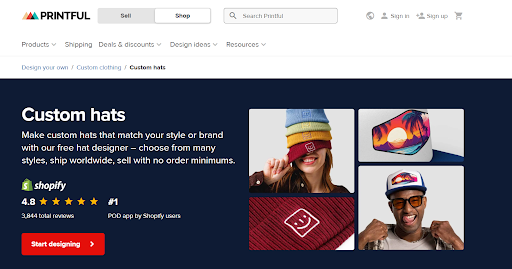
Printful offers the widest decoration range of the five, which is why it leads here. Rather than one embroidery option, it runs four distinct methods and publishes what each one suits.
Regular embroidery handles clean logos and lettering with a classic raised stitch, working across baseball caps, trucker hats and beanies, with up to six colours chosen from fifteen. Unlimited colour embroidery removes that ceiling for detailed or multicolour artwork, available across more than twenty hat models with a premium high-detail finish.
For artwork embroidery cannot reproduce, DTFlex prints photo-realistic and bold graphics in full colour with a sharp, flexible finish on select print-ready hats. Sublimation covers edge-to-edge designs on cut-and-sew styles, producing vibrant colour that will not crack or fade.
The catalogue covers a wide range of customisable hats and caps, from trucker hats and bucket hats to snapbacks, dad hats, beanies and visors, made by trusted headwear brands.
You do not need a store to use it, which is the part most people miss about print-on-demand. If you want to design your own hat for yourself, a family reunion or a one-off gift, Printful has no minimums.
The process is short. Open the catalogue, pick a hat, apply your design in the free Design Maker by uploading artwork or adding text, then place the order. One hat is a perfectly normal order.
For anyone selling rather than buying, Printful integrates with the major ecommerce platforms and shows a live price quote before you publish. Bulk pricing begins at 25 units, and every hat is quality-checked before it ships, with a free reprint or refund if a manufacturing error occurs.
2. Printify
Printify works differently from everything else here. It is not a manufacturer but a network, connecting sellers to a large pool of independent print providers.
That structure is the whole proposition. Because multiple providers offer embroidery, you can choose who fulfils each order based on price, production location or method, rather than accepting a single supplier’s rates and turnaround.
The trade-off is consistency. Quality and speed vary between providers, so the sampling stage matters more than it does with a single-manufacturer platform. It suits sellers who want to optimise margins and are willing to test providers to find the right fit.
3. Apliiq
Apliiq is the specialist of the group, built around apparel decoration rather than general print-on-demand.
Its headwear offering centres on embroidery, embroidered patches and hat printing, with production in the United States. Where it genuinely differs is private labelling and relabelling, letting sellers put their own branding inside the product rather than shipping something that feels like a blank someone decorated.
There are no minimums, and bulk discounts apply as volume grows. Integrations are narrower than the larger platforms, covering Shopify, WooCommerce and Etsy, so multi-channel sellers should confirm it fits their setup.
It suits brands where finish quality and branding matter more than the lowest unit cost.
4. Gelato
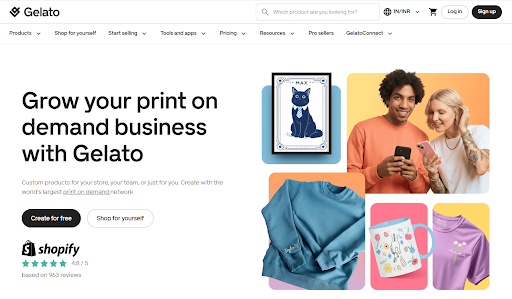
Gelato’s advantage is geographic. It operates a production network spanning more than 140 partners across 32 countries and routes each order to the nearest facility, which shortens delivery and reduces shipping emissions.
Its embroidered hat range covers baseball caps, dad hats, trucker hats, snapbacks, bucket hats and beanies, produced through an embroidery network spanning seven countries.
The technical detail is worth knowing. Gelato uses flat embroidery with satin stitch for outlines, run stitch for fine detail and tatami fill for larger areas, and caps designs at six colours. That is the same practical ceiling most standard embroidery works to, so complex artwork needs simplifying or a different method.
Best for sellers with customers spread across multiple countries.
5. CustomCat
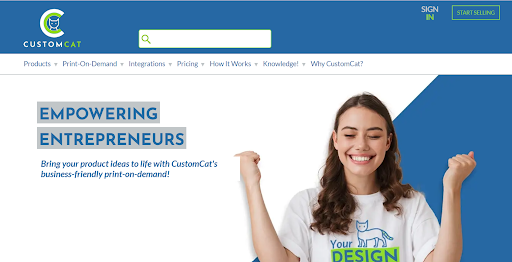
CustomCat is the speed option. US-based, with production commonly running two to three business days, and embroidery available across hats, beanies, polos and jackets.
Pricing on caps is competitive, and there are no minimums. The platform itself is dated compared with newer interfaces, which is a real consideration if you spend significant time in the dashboard, though less relevant if you are placing occasional orders.
It suits sellers competing on delivery speed within the US.
Embroidery or Print? The Decision That Matters Most
Almost every problem with a custom hat traces back to this choice.
Embroidery stitches thread directly into the fabric. It is durable, it has physical texture and it reads as premium, which is why it dominates corporate and team headwear.
The same reasoning drives bespoke uniform decisions more broadly, where an embroidered logo signals a level of investment in the brand that a printed one rarely matches.
The constraint is detail. Fine lines, gradients and photographic imagery do not translate into thread, and standard processes cap the colour count.
Printing handles what embroidery cannot. Direct-to-film reproduces photographic detail and unlimited colour with a flexible finish, and sublimation covers a whole panel edge to edge. The trade-off is that print sits on the surface rather than in it.
If your design is a wordmark or a simple logo, embroider it. If it is illustrative or photographic, print it.
Which One Fits You
For the widest decoration options and the simplest route to ordering a single hat, Printful. For provider choice and margin control, Printify, and for premium finish and private labelling, Apliiq.
For customers spread across countries, Gelato. For fast US delivery, CustomCat.
Order a sample before committing to any of them. Colour reproduction, stitch density and cap structure vary between suppliers, and a photograph on a website tells you almost nothing about how a hat sits on a head.
Conclusion
Print-on-demand headwear has moved well past a logo stitched onto a plain cap. Four decoration methods, a wide range of styles and genuine single-unit ordering make it accessible whether you are building a brand or making one hat for yourself.
Start with your artwork and work backwards. The design decides the decoration method, the method narrows the supplier list, and the supplier determines what it costs and how quickly it arrives.
Frequently Asked Questions
- Can I order just one custom hat?
Yes. Genuine print-on-demand suppliers have no minimums, so a single hat is a normal order. With Printful you open the catalogue, choose a hat, apply your design in the free Design Maker and place the order.
- How many colours can I use in hat embroidery?
Standard embroidery is typically limited to around six colours, since each colour requires a separate thread. Printful offers an unlimited colour embroidery option for detailed artwork, available across more than twenty hat models.
- Is embroidery better than printing on hats?
Neither is better, they suit different artwork. Embroidery is durable and textured but cannot reproduce fine detail or gradients, while printing handles photographic and full-colour designs that thread cannot.
- Do I need an online store to order custom hats?
No. Print-on-demand platforms serve individuals ordering for themselves as well as sellers fulfilling customer orders, so you can design and buy a single hat without setting up a shop.