





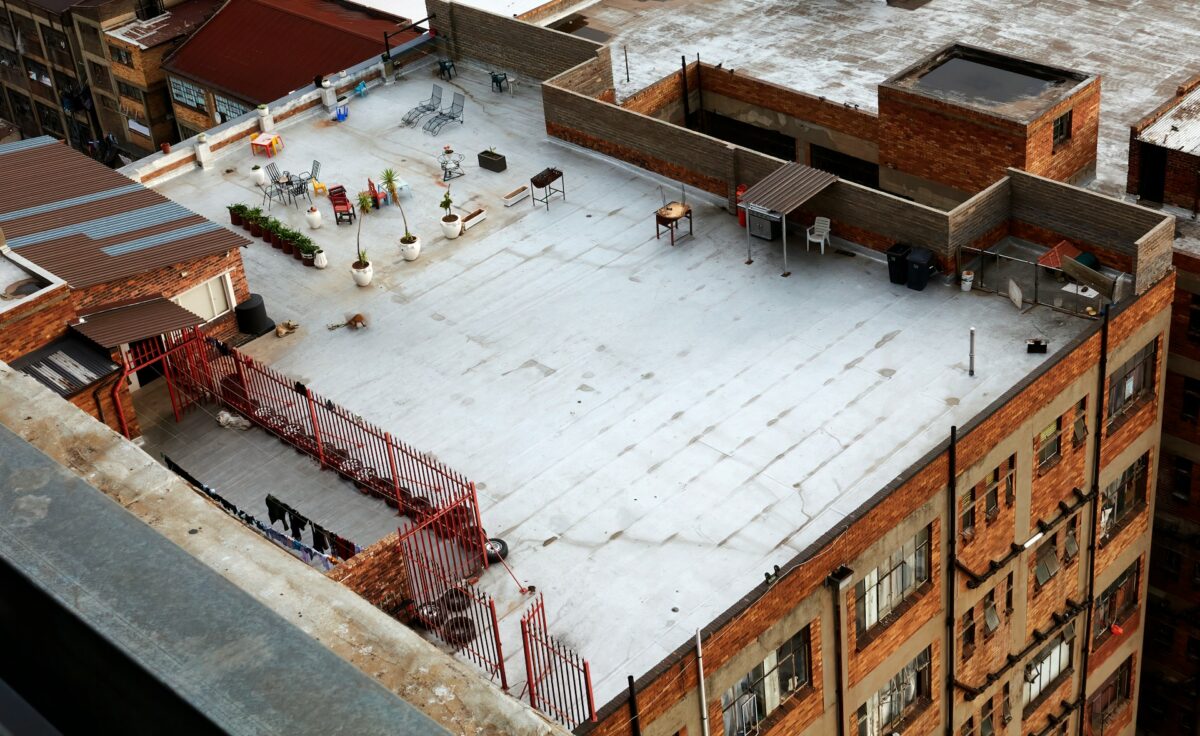

I watched a building manager in Bellaire write three repair checks in fourteen months.
Same roof.
Same corner. Same puddle. The roofer kept patching the symptom, nobody ever named the cause, and the building kept paying for it.
If that pattern sounds familiar, the problem usually isn’t the crew. It’s a roofing membrane picked for a climate it wasn’t built to survive, dropped onto a low-slope deck that gets hammered from April through October. Houston chews through flat roofs faster than most of the country, and the materials that shrug off a dry summer in Arizona tend to age out early down here.
So what does hold up? For a lot of low-slope commercial and multifamily buildings around here, modified bitumen roofing in Houston earns its keep because it’s built to flex, seal, and take UV punishment in the same package. That’s the short answer. The longer one is worth your time, because the wrong system costs you a second roof.
What Houston actually does to a roof
Picture a typical August week. Your roof surface hits 150 degrees or higher by early afternoon, bakes for hours, then a thunderstorm rolls in and drops the surface temperature 60 degrees in twenty minutes. That membrane expands and contracts twice a day, every day, for months. Whatever you put up there has to move with it without cracking at the seams.
Layer in the humidity. The National Weather Service keeps the Gulf Coast in a warm, moisture-heavy pattern for a big chunk of the year, and that moisture finds every weak seam. Then add the UV. The Environmental Protection Agency has documented how sustained sun exposure degrades roofing surfaces over time, which is why cheap single-layer systems go chalky and brittle here years before their rated lifespan.
Here’s my honest read: most flat roof failures in this city aren’t storm damage. They’re heat fatigue plus a seam that never got the attention it needed. Insurance pays for the hurricane. Nobody pays for the slow bake.
Why modified bitumen keeps showing up on this shortlist
Modified bitumen is asphalt reinforced with polymers, usually installed in layers, and those layers are the whole point. Each pass adds another barrier against water and another bit of give for thermal movement. It behaves like a hybrid between old-school built-up roofing and a modern single-ply membrane, and that middle ground is exactly where Houston buildings tend to land.
What you get in practice:
- Movement tolerance. It stretches instead of splitting when the deck shifts through the daily heat cycle.
- Layered water defense. Two or three plies mean a compromised seam doesn’t automatically become a leak.
- Foot traffic durability. HVAC techs walk your roof. This surface doesn’t protest much.
- Repairability. Localized damage can often be fixed without re-covering the whole field.
TPO and EPDM have their fans, and they’re not bad products. But on a low-slope roof with a lot of penetrations, vents, and mechanical units scattered across it, I’d take modified bitumen for the way it handles detail work. Those corners are where leaks are born.

Where this system goes wrong
Most complaints I hear aren’t about the material. They’re about the install. A membrane laid over a wet deck traps moisture and rots the assembly from underneath, and no top layer saves you from that. Ponding water is the other quiet killer. If your roof holds a puddle for more than two days after rain, drainage is the real project, not the surface.
Installation weather matters too. Adhesive and torch-applied seams need reasonable conditions to bond properly, and a crew rushing a job before an afternoon storm is how you get a roof that looks finished and isn’t. Ask any contractor how they handle a deck that fails a moisture scan. The answer tells you more than the bid.
A practical checklist before you sign anything
Use this on your next roof decision, whether it’s a repair or a full replacement:
- Get a moisture survey of the existing deck, not just a visual walk. Core samples or infrared scans, and ask for the results in writing.
- Confirm the drainage plan. Count the drains and scuppers against the square footage, and make sure slope corrections are in scope.
- Ask for the ply count and the reinforcement type in writing. “Modified bitumen” alone is not a spec.
- Check how the crew handles penetrations. Every pipe boot and HVAC curb should have a detail drawing.
- Get the warranty terms in plain language, including what voids coverage. Ponding and neglect show up in the exclusions.
- Plan the maintenance cadence now. Twice a year, spring and fall, with photos on file.
That sixth item is the one people skip. It’s also the cheapest insurance you’ll ever buy on a flat roof.
The habit that separates a twenty-year roof from a twelve-year one
I’ve walked roofs where the membrane was still supple after fifteen Houston summers, and roofs of the same material that were cracked and curling at eight. The difference was rarely luck. It was a building owner who had someone look at the roof twice a year, clear the drains before storm season, and fix a fifty-dollar seam issue before it turned into a five-figure deck repair.
Set a recurring calendar reminder. Take photos from the same four spots so you can compare year over year. When a contractor tells you the roof is fine, ask which drain they checked. It’s a small question that sorts the real inspectors from the salespeople.
Flat roofs in this climate are a maintenance relationship, not a one-time purchase. Pick a material that can take the heat, install it on a dry deck with a real drainage plan, then treat the roof like equipment that needs service. Do those three things and your building stops writing the same repair check every fourteen months.
What’s your roof doing right now, after the last storm? Go look. Bring a camera, check the drains, and write down what you see. That fifteen-minute walk is the difference between a repair and a replacement.


