

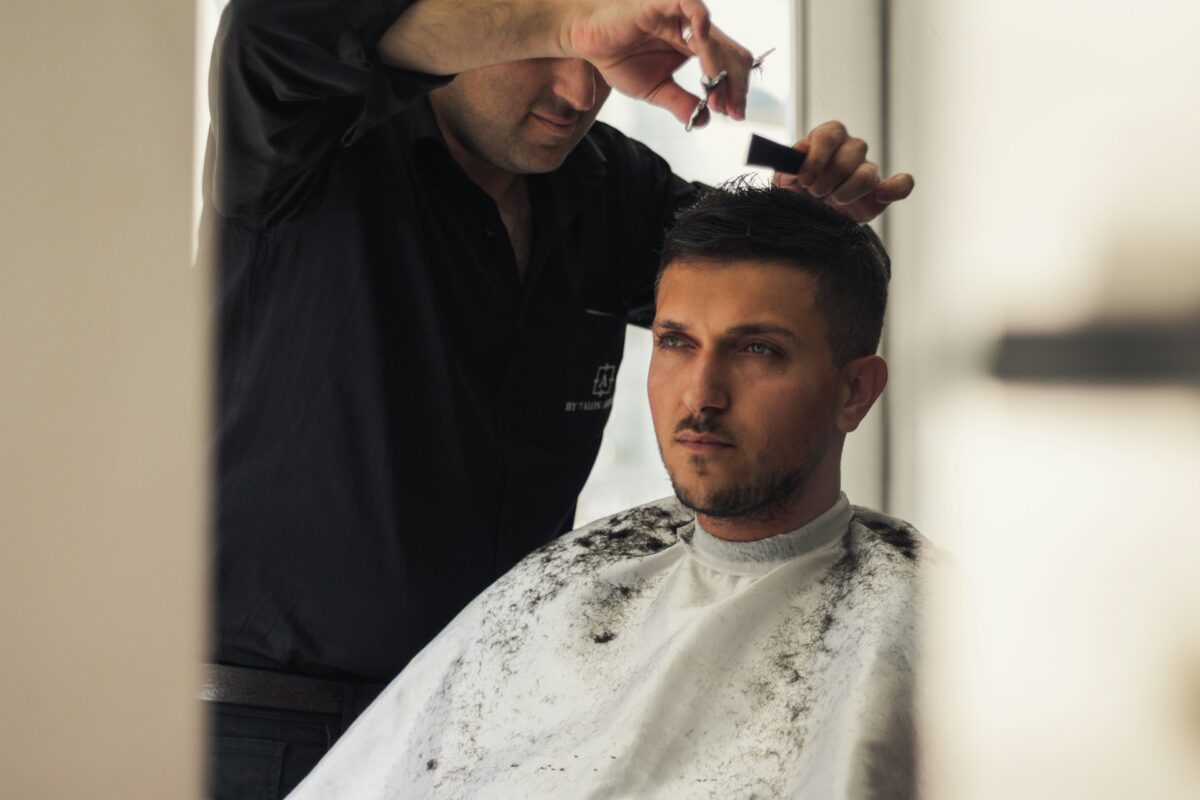

A man walks into a photography studio wearing a plain white T-shirt, faded jeans and trainers. His hair is slightly unkempt, his beard has grown beyond its usual shape, and there’s nothing particularly deliberate about the way his clothes fit. A few hours later, he stands in front of the same camera wearing a sharply tailored jacket, polished boots and a hairstyle that completely changes the proportions of his face. The transformation feels dramatic, yet none of the individual elements is especially extravagant.
That’s the fascinating part of a successful fashion editorial. The difference between the first image and the last isn’t necessarily an expensive wardrobe or a radical makeover. It’s the way a creative team uses clothing, grooming, accessories and photography to build a coherent visual identity.
Behind every convincing transformation is a series of decisions that viewers may never consciously notice.
Every Transformation Begins With a Creative Direction
Before the stylist selects a jacket or the photographer adjusts a light, the team needs to decide what story the images should tell.
A men’s fashion editorial might explore the contrast between casual streetwear and contemporary tailoring. Another could focus on a musician-inspired aesthetic, combining textured hair, jewellery and relaxed silhouettes.
For a before-and-after concept, the difference needs to be clear without making the first appearance seem inherently inferior.
Imagine a fictional editorial titled The Modern Gentleman, featuring the same model in two contrasting looks.
The opening photograph presents him in everyday clothes, with natural grooming and minimal styling. The second introduces structured tailoring, a more defined hairstyle and carefully selected accessories.
The objective isn’t to suggest that one version is a better person. It’s to demonstrate how creative styling can communicate a different mood.
A mood board helps translate that idea into practical choices. The team can collect references for clothing silhouettes, hair texture, facial hair, lighting and photographic composition before anything is purchased or booked.
When these elements share a consistent direction, the final images feel intentional rather than simply fashionable.
Clothing Changes the Shape Before Anything Else
A good stylist looks beyond colour and brand labels. Fit and proportion usually have a greater influence on how an outfit appears in photographs.
Consider an oversized T-shirt with loose trousers. The combination creates a relaxed silhouette, with few sharply defined lines around the shoulders or waist.
Replace it with a structured jacket and tapered trousers, and the same person can appear visually taller or more angular.
The change comes from construction.
Shoulder seams influence the apparent width of the upper body, while trouser length affects the line between the waist and shoes. Even the position of a jacket’s buttons can change how the torso is perceived.
For the proposed editorial, the stylist could begin with a charcoal suit featuring a softly structured shoulder. A fine-knit shirt would introduce texture without distracting from the overall silhouette.
The result should feel contemporary rather than overly formal.
Importantly, a transformation doesn’t always require tailoring. A well-proportioned streetwear outfit can be just as deliberate when the lengths, volumes and textures work together.
The question is whether the clothing supports the story the creative team wants to tell.
Hair Styling Can Completely Shift the Visual Balance
Hair is one of the first details people notice in a portrait, partly because it frames the face.
A short, close-fitting haircut can emphasise facial structure, while longer hair introduces movement and changes the outline around the forehead and temples.
For an editorial transformation, the hairstylist needs to consider how the chosen look interacts with the clothing.
A textured crop may complement a relaxed jacket, creating a balance between polish and informality. A swept-back hairstyle can make a tailored outfit feel more formal, particularly when the forehead is fully exposed.
The direction of the hair also matters.
A side part creates an asymmetrical line that can influence how the face appears on camera. Additional volume around the crown changes the apparent height of the head, while softer layers can reduce the severity of a structured outfit.
These effects become more noticeable when the before-and-after photographs use the same camera angle.
Professional styling teams may use blow-drying, cutting, temporary colour, extensions or alternative hairpieces to create the intended result.
The most effective choice is not necessarily the most dramatic. It’s the one that works with the model’s features and the visual concept.
Hair Replacement as a Creative Styling Tool
Not every model has the natural hair density, length or coverage required for a particular editorial look.
Sometimes, the desired transformation involves creating additional volume or changing the appearance of a receding hairline.
In these situations, a men’s hair replacement system can offer another styling option.
Modern non-surgical hair systems may use fine lace, thin polyurethane or hybrid base constructions, with human hair selected to complement the wearer’s existing colour and texture.
Unlike a conventional haircut, a hair system can change the apparent distribution of hair across the scalp. This gives the styling team additional flexibility when developing a specific silhouette.
For example, a model with thinning around the crown might want a fuller, textured hairstyle for a fashion shoot. Another may prefer a lower-density, swept-back look that creates a more understated appearance.
The details make a significant difference.
Hairline shape, density, direction and texture all influence how naturally the replacement hair blends with the remaining hair.
The team also needs to consider attachment, comfort and how the system behaves under studio lighting. A design that looks convincing from the front should still be assessed from the side and under brighter illumination.
Hair replacement is not necessary for every transformation, but it can be one of several tools available when a particular creative direction calls for it.
Beard Design Brings Definition to the Face
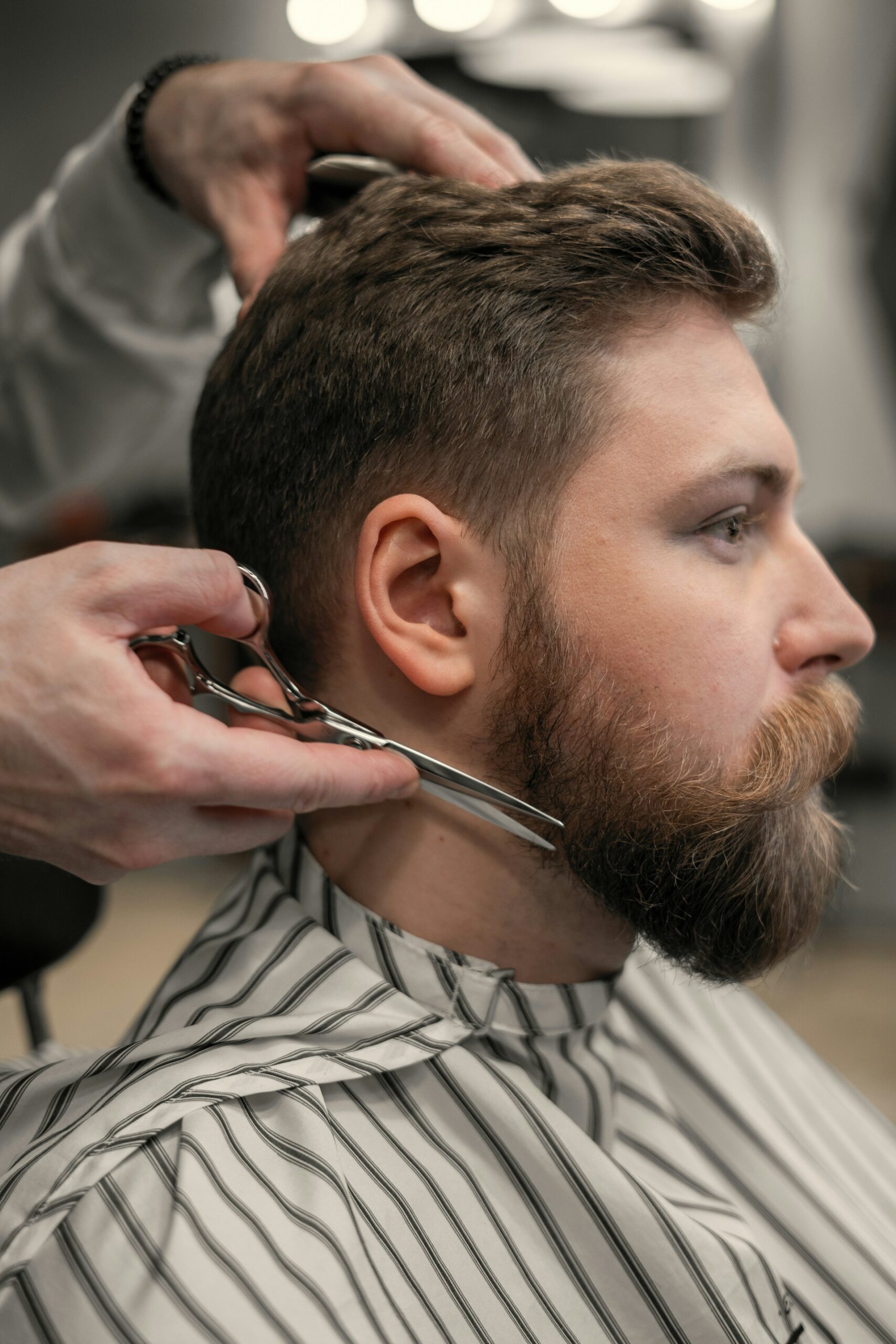
Facial hair can have a surprisingly strong influence on the final portrait.
A fuller beard adds visual weight around the lower face, while closely trimmed stubble allows the jawline to remain more visible. A clean shave can produce a different impression again.
For a fashion editorial, the grooming team might refine the beard’s neckline and cheek lines rather than removing it entirely.
Small adjustments can make the overall appearance more deliberate.
The relationship between facial hair and hairstyle is particularly important.
A full beard paired with longer, voluminous hair creates a different balance from a neat beard combined with a close fade. Neither arrangement is universally more flattering; the effect depends on the model’s features and the intended visual story.
Beard colour and texture also need attention under studio lighting.
Stray hairs that are barely noticeable in natural daylight may become more visible in close-up photographs. However, excessive grooming can remove the natural texture that makes a portrait feel authentic.
The goal is controlled detail, not an artificial finish.
Personalisation Makes the Transformation Convincing
A creative team can reproduce the clothing from a reference photograph, but hair and grooming often require a more individual approach.
Two models may wear the same jacket and still need entirely different hairstyles to achieve a similar visual balance.
The same principle applies when working with hairpieces.
Top Unique Hair offers customisation options for men’s hair systems, including base size and construction, hair density, colour, texture, direction and hairline shape. These details illustrate how a styling product can be adapted to a particular appearance rather than relying on a single standard design.
For an editorial team, that flexibility can be useful when the concept requires a precise hairstyle.
A dense, dramatic look may suit a fashion-forward portrait, while a lighter, more natural density may be more appropriate for a restrained menswear campaign.
The chosen hair direction also affects how the finished hairstyle responds to brushing and movement.
However, customisation requires preparation. A made-to-order system cannot necessarily be arranged at short notice, and professional fitting or installation may be needed.
For that reason, any alternative hair product should be selected and tested before the shoot.
The final decision should serve both the creative concept and the comfort of the person wearing it.
Accessories Create the Final Layer of Personality
Once the clothing and grooming are established, accessories help communicate the character of the look.
A simple watch can introduce a sense of restraint, while layered jewellery creates a more expressive impression.
Sunglasses, rings, belts and footwear can all contribute to the overall visual story.
For the proposed Modern Gentleman editorial, the stylist might choose a silver watch, a narrow leather belt and polished black boots.
These pieces would support the tailored outfit without competing with the hairstyle.
A different concept might call for chunky rings, a statement chain and oversized sunglasses. Combined with relaxed clothing and textured hair, the result would feel closer to contemporary music-inspired fashion.
The key is knowing when to stop.
Too many accessories can make a photograph difficult to read, particularly when the hairstyle and clothing already contain strong visual details.
A successful editorial usually gives the viewer a clear focal point.
Sometimes, one carefully chosen accessory is more effective than five.
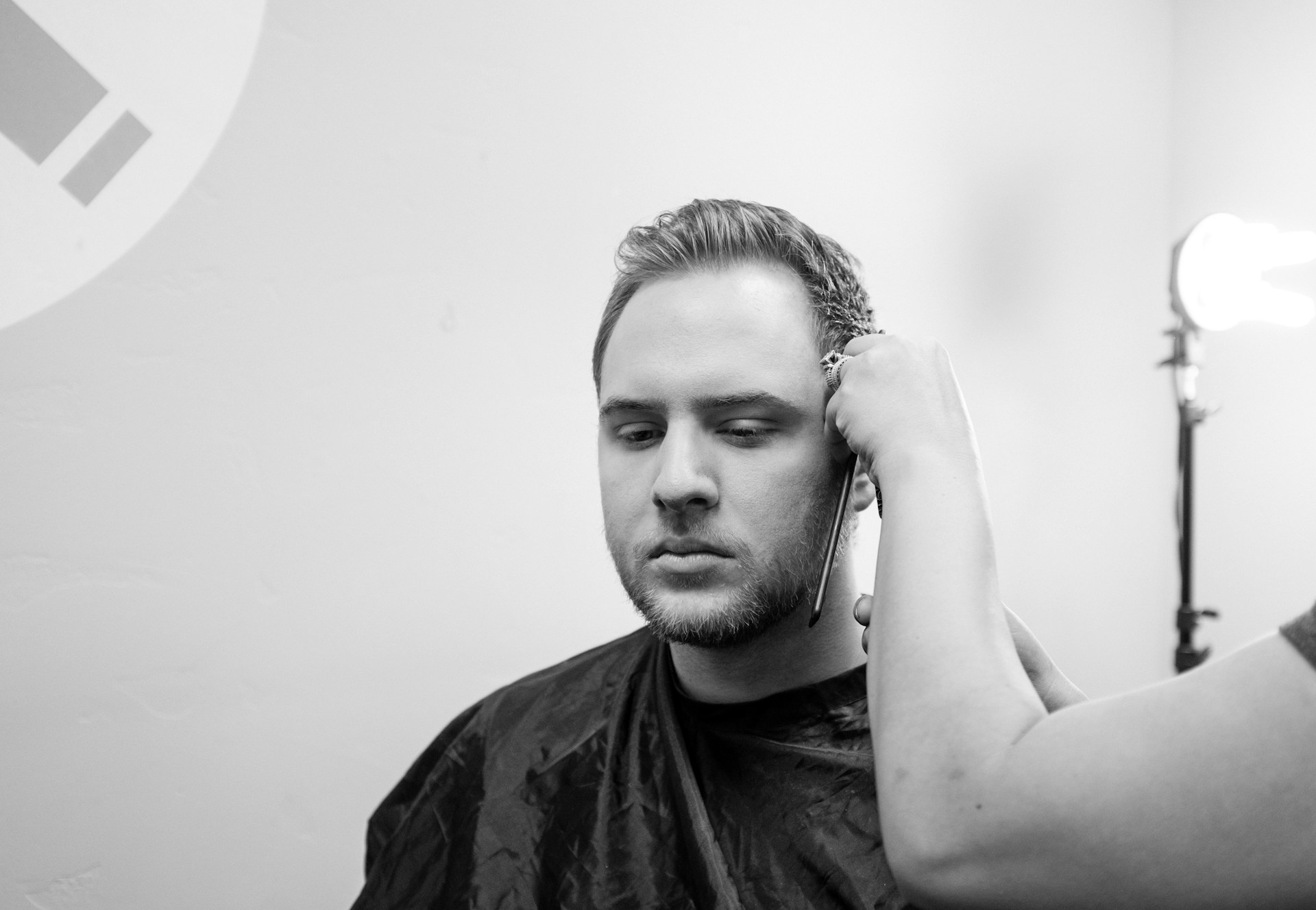
Lighting and Camera Angles Complete the Transformation
The same outfit can produce very different photographs depending on how it’s lit.
Soft, diffused light tends to create gentle transitions across the face and clothing, while harder directional lighting can emphasise texture, structure and shadow.
For a before-and-after editorial, the photographer needs to decide whether the goal is a controlled comparison or a dramatic visual narrative.
If the purpose is to demonstrate the impact of styling, keeping the lighting, camera position and model’s pose consistent makes the comparison more meaningful.
If the goal is to create a cinematic fashion story, the final image may use a different lighting setup to strengthen the mood.
Both approaches can be effective, but they communicate different things.
A low camera angle can make a model appear taller, while a higher angle may change the apparent proportions of the face and shoulders.
Lighting can also affect the appearance of hair.
A strong light positioned behind the model may highlight individual strands and the outline of the hairstyle. A more frontal, diffused setup can create a smoother appearance while preserving detail.
The photographer and hairstylist should review test images together, particularly when the shoot includes hairpieces or carefully constructed hairlines.
Small adjustments made before the final photographs can prevent distracting details from becoming prominent later.
A Before-and-After Editorial Shot List
A complete transformation becomes more compelling when the photographs reveal how each styling decision contributes to the result.
For the fictional Modern Gentleman concept, the team could plan five images using the same model and studio location.
Frame One — The Starting Point
The model wears a plain T-shirt, relaxed jeans and everyday shoes. His hair and facial hair remain in their usual condition, with minimal styling and neutral lighting.
Frame Two — The Tailoring Test
The model changes into a structured jacket and tailored trousers. His hair remains unchanged, allowing the viewer to see how clothing alone alters the silhouette.
Frame Three — The Grooming Transformation
The hairstylist introduces the planned hairstyle and refines the beard. The model keeps the tailored outfit, making the influence of grooming easier to recognise.
Frame Four — The Accessories
A watch, belt and carefully selected footwear complete the look. The photographer captures a three-quarter portrait that shows the relationship between clothing, hair and posture.
Frame Five — The Final Editorial
The team introduces more expressive lighting and a stronger pose to create the campaign-style image.
This sequence offers two different kinds of storytelling.
The earlier frames document the individual changes, while the final photograph demonstrates how those changes work together as a complete creative concept.
For a genuinely informative before-and-after feature, the team should retain at least one matched comparison with consistent lighting, framing and posture.
Otherwise, readers may mistake changes caused by photography for changes created by the styling itself.
What Makes a Men’s Fashion Transformation Successful?
The most effective transformations aren’t necessarily the ones that produce the greatest visual contrast.
A completely new hairstyle, expensive jacket and dramatic lighting can create an impressive photograph, but that doesn’t automatically mean the result feels coherent.
A successful editorial needs a clear relationship between the creative direction and every styling decision.
The clothing should establish the silhouette. The hairstyle should complement the face and outfit. Facial hair and accessories should add definition without overwhelming the image.
Photography then brings those elements together.
It also helps when the final appearance feels believable for the person being photographed.
A model who looks uncomfortable in a highly structured suit may produce less convincing images than someone wearing a simpler outfit with confidence.
The creative team needs to recognise when a planned idea isn’t working and make adjustments.
Sometimes, removing an accessory, softening a hairstyle or changing the jacket can improve the result more than adding another dramatic detail.
Fashion Transformation Is Ultimately Visual Storytelling
A men’s style transformation is rarely the result of one product or technique.
It’s a collaboration between wardrobe styling, hair design, grooming, photography and the person in front of the camera.
Each decision changes how the final image communicates personality, mood and identity.
The most interesting before-and-after editorials reveal those decisions rather than simply presenting a polished final photograph.
They show how the cut of a jacket changes the shoulders, how a hairstyle reshapes the portrait and how lighting influences the atmosphere.
When these elements work together, the transformation becomes more than a makeover.
It becomes a visual story about the creative possibilities of personal style.