






The elimination of trading commissions across most major online investment platforms has made the choice of where to buy stocks online less about cost and more about everything else: the quality of the research tools, the reliability of the trading interface, the breadth of available investments, the account types offered, and the overall experience of managing an investment relationship through a digital platform over years rather than a single transaction.
The platforms that deliver the best experience for online stock buying are not always the ones with the most features or the lowest cost. They are the ones whose specific combination of capabilities best matches how you actually invest. Here is what separates the best from the rest.
Commission-Free Trading That Is Genuinely Free Without Hidden Costs
Commission-free trading has become the industry standard across most major online investment platforms, but the elimination of explicit per-trade commissions does not mean all platforms have eliminated all costs associated with trading. Payment for order flow, which routes customer orders through market makers who pay the platform for that order flow, is a revenue model that some commission-free platforms use that can affect the quality of trade execution even when no explicit commission is charged.
The practical impact of payment for order flow on execution quality for most retail investors making straightforward market orders in liquid stocks is modest, but it is worth understanding as part of the full cost picture of commission-free trading. Platforms that do not use payment for order flow and route orders directly to exchanges may provide better execution prices on average, which represents an implicit cost advantage that does not show up in the commission comparison.
For most retail investors making regular contributions to a long-term portfolio of diversified holdings, the execution quality differences between platforms are less consequential than the differences in account types, investment options, and overall platform quality. For more active traders making frequent trades in individual securities, execution quality is a more significant consideration that warrants direct evaluation rather than assumption.
Where Can I Buy Stocks Online?
The landscape of platforms where stocks can be purchased online has expanded considerably as competition has driven innovation and cost reduction across the category. The platforms that are most worth considering for online stock buying combine commission-free trading with strong investment tools, broad investment availability, and a mobile experience that makes managing the investment relationship from a phone as effective as from a desktop.
SoFi’s platform for buying stocks online provides commission-free stock and ETF trading alongside fractional share investing, automated investing options, and the broader financial platform that includes banking and lending products within the same relationship. For investors who want a comprehensive financial platform rather than a standalone brokerage, SoFi delivers online stock buying as part of a relationship that serves multiple financial needs simultaneously.
Other platforms consistently cited as strong options for buying stocks online include Fidelity, which combines commission-free trading with extensive research tools, strong retirement account options, and customer service quality that consistently ranks among the best in the category; Charles Schwab, which offers a comprehensive investment platform with strong research, broad account types, and a nationwide branch network for investors who occasionally want in-person support; and Robinhood, which pioneered commission-free mobile trading and maintains a strong presence among younger investors with a simplified interface and cryptocurrency trading alongside stocks.
Research and Analysis Tools That Support Informed Investment Decisions
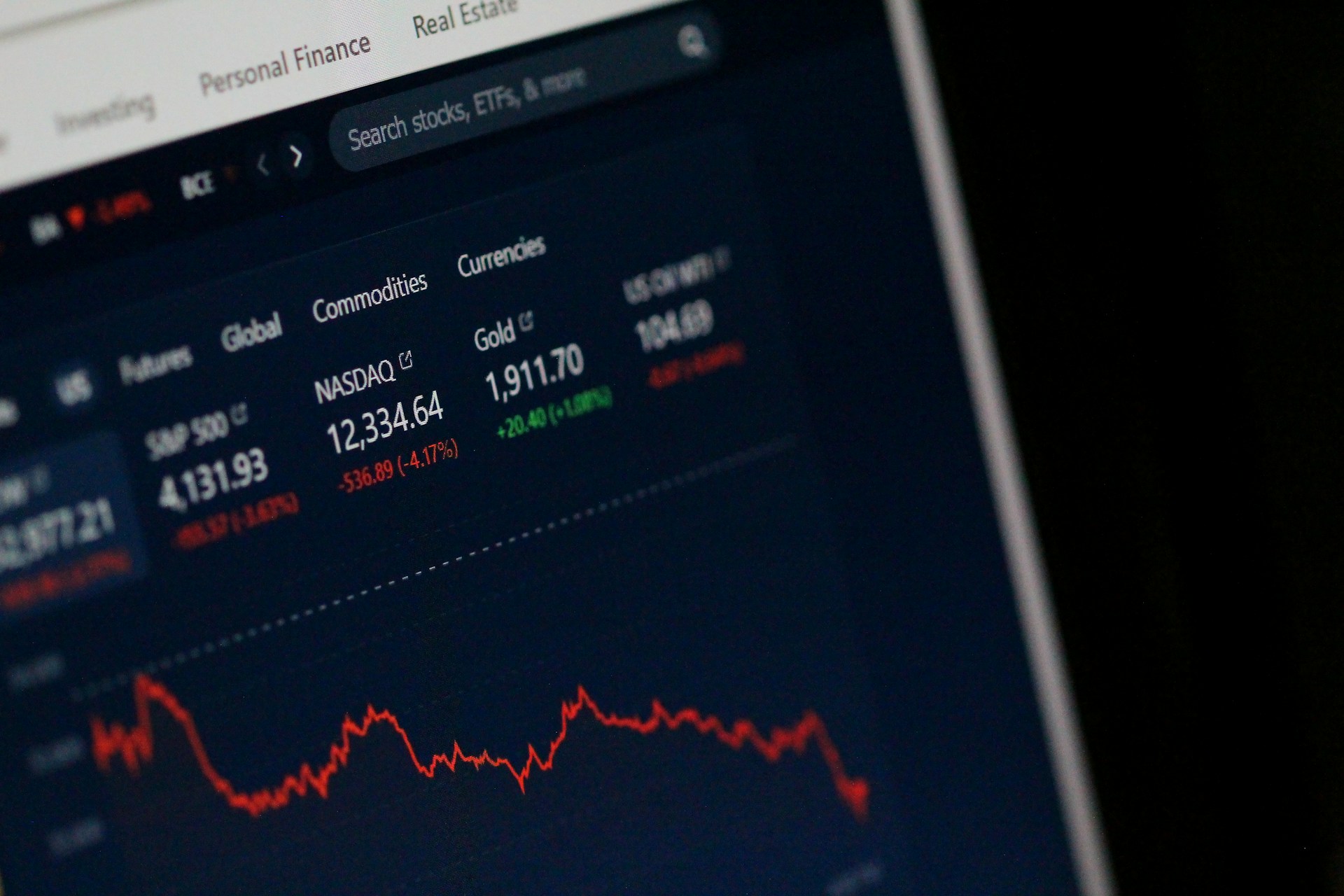
The trading interface is where stock purchases are executed, but the research and analysis tools are where investment decisions are actually made. The quality of the research available within a platform, including fundamental data on individual companies, analyst ratings and price targets, earnings history and projections, and screening tools that allow investors to identify investment candidates based on defined criteria, determines how well-informed those investment decisions are.
Platforms that provide comprehensive research from multiple sources alongside their trading capability give investors the information they need to make decisions without requiring them to gather research from separate websites before returning to the platform to execute. The integration of research and trading within the same interface reduces the friction of the investment process and improves the quality of decisions by making relevant information immediately accessible at the point of decision rather than requiring a separate research step.
The depth of research that matters most depends on the investment approach. Index fund investors who are making allocation decisions rather than individual security selections need different research tools than individual stock investors who are evaluating specific companies. Matching the research capabilities of a platform to your specific investment approach prevents both over-engineering for a passive investor and under-serving an active one.
Account Types That Match Your Investment Goals
The investment goals that online stock buying serves vary considerably across investors, and the account types available at a platform determine whether it can serve your specific goals or only a subset of them. Tax-advantaged retirement accounts including traditional and Roth IRAs are the most important account type for most long-term investors because the tax efficiency benefit of holding stock market investments in these accounts produces meaningfully better after-tax outcomes than holding the same investments in taxable accounts over comparable time horizons.
A platform that offers only taxable brokerage accounts is forcing investors to forgo the retirement account tax efficiency that should be the foundation of most long-term investment strategies. Platforms that offer the full range of individual retirement account types, including both traditional and Roth IRAs, alongside taxable accounts, and that make it straightforward to manage multiple account types within the same platform relationship, serve most investors more completely than those with a narrower account type offering.
Specialty account types including custodial accounts for investing on behalf of minors, solo 401k accounts for self-employed investors, and health savings accounts that provide triple tax advantage for medical expense investing are additional account types whose availability varies across platforms and whose relevance depends on your specific financial situation.
Mobile Application Quality That Makes Investing Practical From a Phone
The majority of investment account interactions for most retail investors now happen through mobile applications rather than desktop interfaces, which makes the quality of the mobile experience a primary rather than secondary evaluation criterion. A platform whose desktop interface is comprehensive but whose mobile application is limited, unreliable, or difficult to navigate is not delivering the full functionality of the investment relationship where most investors actually manage it.
Mobile application quality encompasses several dimensions that matter differently for different investors. The reliability of the interface during market volatility, when many investors are most likely to be checking their portfolios and potentially executing trades, is particularly important because application performance degradation during high-volume periods is the most consequential failure mode. Navigation that makes common tasks accessible without extensive menu searching, real-time portfolio valuation that reflects current market prices without delay, and order entry flows that complete in the minimum number of steps all contribute to a mobile experience that makes investing practical from a phone.
Current user reviews of the mobile application, particularly those that address reliability under market stress conditions, provide the most accurate assessment of how the application actually performs rather than how it performs in controlled demonstrations.
Investment Universe Breadth Beyond Individual Stocks
Online stock buying platforms vary considerably in the breadth of investments available beyond individual domestic stocks. Exchange-traded funds that provide broad market exposure, international stocks and ADRs that provide geographic diversification, options contracts for more sophisticated investment strategies, fixed income instruments, and cryptocurrency are all asset classes whose availability differs across platforms and whose relevance depends on your investment approach and goals.
Investors whose strategy involves only domestic large-cap stocks and broad index ETFs will find adequate investment universe coverage at most platforms. Investors whose strategy involves more specialized ETFs, international individual stocks, sector-specific instruments, or alternative assets will find significant variation in availability across platforms that makes investment universe breadth a more important selection criterion for their specific needs.
The trend toward more comprehensive investment platforms that provide access to a broad range of asset classes within a single relationship reflects investor preference for managing investment exposure across asset classes without maintaining multiple brokerage relationships. Platforms that continue to offer only a narrow investment universe are losing ground to those that are expanding their available asset classes to serve investors with more diversified investment approaches.
Automated Investing Features That Support Consistent Long-Term Contribution
The most impactful investment decisions for most long-term investors are not which specific stocks to buy but whether to invest consistently and how to maintain investment discipline through market volatility. Automated investing features that remove the need for active decisions at each contribution point address these behavioral dimensions of investment success more directly than any trading interface improvement.
Recurring investment scheduling that automatically purchases specified securities or allocates contributions across a defined portfolio on a regular schedule transforms investing from an active decision that competes with other priorities to a systematic process that operates in the background. Automatic portfolio rebalancing that maintains target allocations through periodic adjustment reduces the behavioral drift that occurs when winning positions grow to oversized allocations and losing positions shrink below target weights without corrective action.
Platforms that combine strong active trading capabilities with robust automated investing features serve both the investor who wants to make deliberate individual security selections and the investor who wants to implement a systematic strategy without active management, which is a broader population than either feature alone serves.

Customer Service Quality When Problems Arise
Investment account problems including deposit delays, execution issues, incorrect account statements, and fraud concerns require customer service that can resolve the issue quickly and accurately rather than redirecting to generic FAQ content or requiring multiple contacts to reach someone with the authority and knowledge to help. The quality of customer service becomes most apparent in these problem situations, which are not the typical experience but are the moments that determine long-term account retention.
Customer service accessibility through the mobile application without requiring a separate login, availability outside standard business hours when investment account issues most commonly generate urgency, and the knowledge level of representatives who handle investment-specific questions rather than only general account questions all contribute to a service experience that adds rather than subtracts from the value of the platform relationship.
The investment community on social media provides a more reliable signal about customer service quality than the platform’s own service metrics, because investor discussions of their service experiences reflect actual outcomes rather than stated service standards.
Security Architecture That Protects Investment Accounts
Investment accounts hold financial assets that are attractive targets for unauthorized access, and the security infrastructure of an online investment platform is a dimension of the platform relationship that matters before a security incident rather than only after one. Two-factor authentication, biometric login options, real-time alert systems that notify account holders of transactions and login events, and account freeze capabilities that can be activated immediately through the mobile application all contribute to a security posture that protects investment assets effectively.
SIPC membership, which is the investment account equivalent of FDIC insurance for bank deposits, provides protection for securities held in brokerage accounts against the failure of the brokerage firm rather than against market losses. Confirming that any investment platform you are considering is a SIPC member provides the baseline protection assurance that the regulatory framework requires, and understanding the coverage limits and what SIPC protection does and does not cover gives you accurate expectations about the nature of the protection.
Platform Stability and Long-Term Business Viability
Investment account relationships are intended to be long-term, and the platform you choose today needs to be one that will continue to exist, invest in its capabilities, and serve its customers effectively over the decade or more that your investment relationship is intended to last. Platform stability, the financial health of the business behind the investment platform, and the track record of ongoing development and improvement are all relevant to the long-term viability of the platform relationship.
The online investment platform landscape has seen consolidation, acquisition, and occasional platform failure that has required customers to manage unexpected account transitions. Choosing a platform with demonstrated financial stability, a clear business model that does not depend on revenue sources that could become regulatory targets, and a track record of platform improvement rather than stagnation reduces the risk of a platform relationship that requires migration at an inconvenient time.