

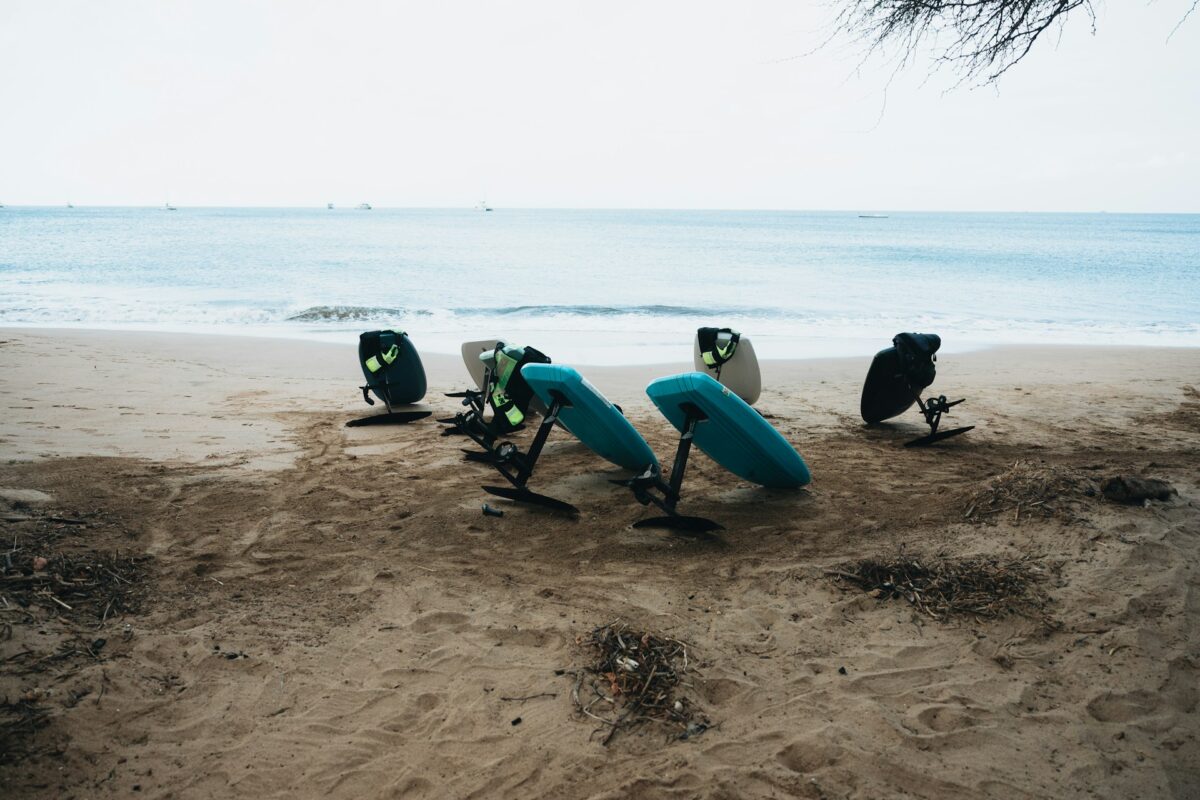

An eFoil lifts a rider a metre clear of the water at up to 55 km/h, on a machine weighing 27 to 35 kilograms fully rigged. Asking whether that is safe is reasonable. The more useful question is narrower: which parts of the risk belong to the rider, and which were settled by engineers before the board ever reached the water.
Most eFoil safety advice covers only the first half — lessons, conditions, gear, battery discipline. The other half is fixed at the factory, and the component that shapes it most is the drive system. How thrust is generated, and how completely it is enclosed, decides whether one whole category of injury is possible at all.
Key takeaways
- Three of the four main eFoil hazards are rider-side. Contact with the thrust source is designed in or out at the factory.
- Open propellers, ducted propellers and fully shielded jet drives carry different contact and debris profiles.
- A guard lowers the chance of touching a spinning blade. An enclosed jet drive removes the blade from open water.
- Breaching is the failure mode beginners least anticipate, and it has nothing to do with propulsion.
- No drive design replaces water depth, a helmet and vest, or a battery reserve for the ride home.
What determines an eFoil’s safety profile?
An eFoil’s safety profile is set by three factors: the drive architecture, meaning how completely the thrust source is enclosed; the board’s behaviour when the foil breaches the surface; and the rider’s compliance with depth, distance and battery rules. Only the first is fixed at the moment of purchase.
What actually injures eFoil riders
Four hazards account for most eFoil incidents, and each fails differently.
Contact with the thrust source. A rider separated from the board in a fall can end up behind or beneath it while the drive is still turning.
Contact with the wing and mast. Carbon foil edges are thin and stiff, and a 27 to 35 kilogram board driven by chop carries real momentum.
Breaching and shootout. The foil exits the water, lift collapses, and the rider is thrown forward over a board that is no longer flying.
Environmental and planning error. Water too shallow for the mast, a launch further out than the rider can swim back, or a battery that empties upwind of the beach.
No public dataset isolates eFoil injuries. The nearest national reference covers recreational boating as a whole: the U.S. Coast Guard verified 3,887 incidents in 2024, resulting in 556 deaths and 2,170 injuries. Those figures span every vessel type rather than foils, but the pattern travels — most harm on the water comes from a short list of repeated, avoidable causes.
Three drive architectures, three risk profiles
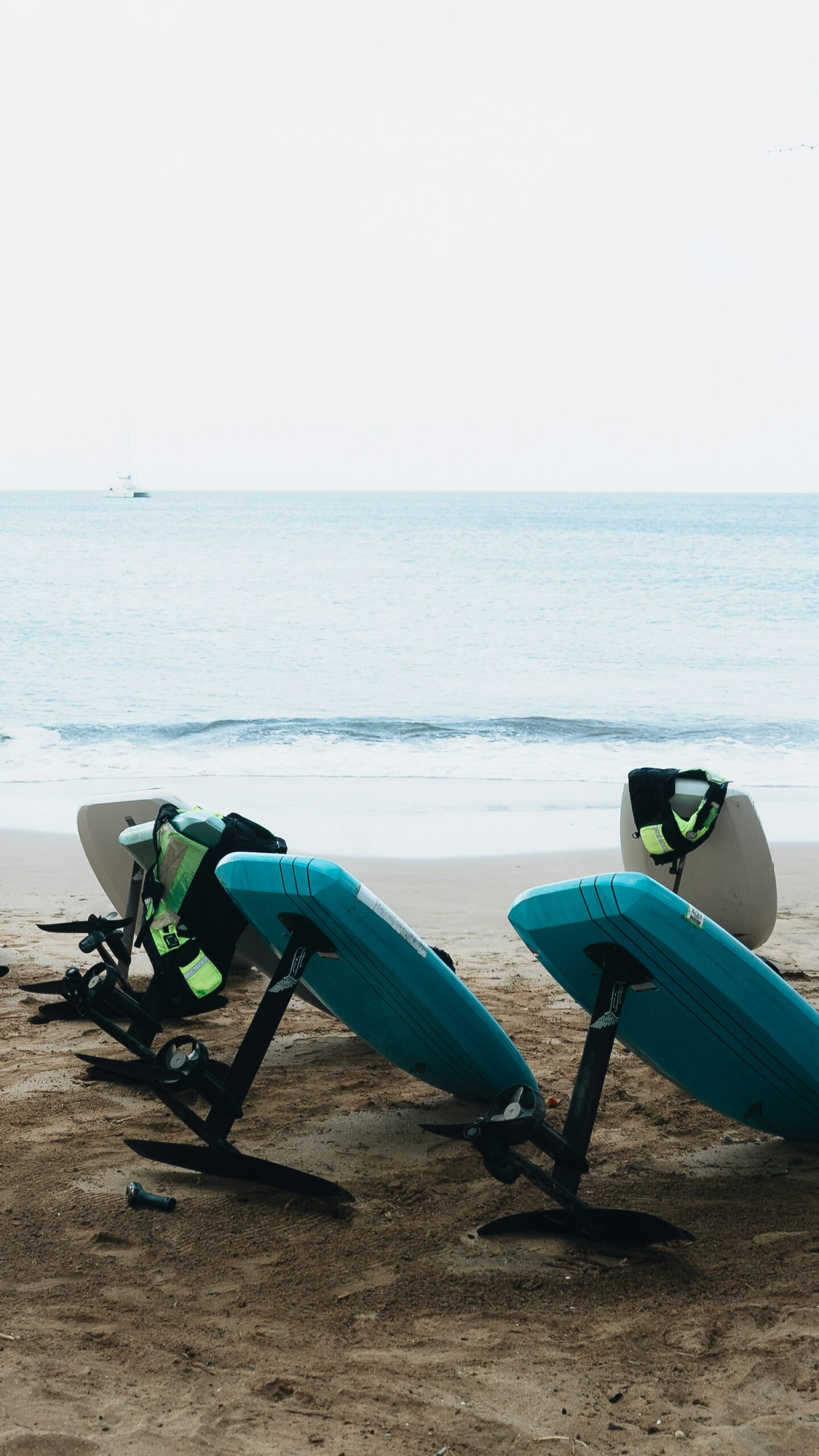
eFoil propulsion falls into three broad designs, and the differences are structural rather than cosmetic.
Open propeller. Rotating blades sit in open water at the base of the mast. Weed, line and kelp wrap onto the shaft, direct contact with hands, feet or a trailing limb is possible, and the blades need inspecting for chips and bends after every grounding.
Ducted propeller. The blades sit inside a ring or cage with open apertures. Debris still enters and can jam the rotor, fingers and cord can still reach through the gaps, and the guard itself becomes a part to check for alignment and deformation.
Fully shielded jet drive. No blades sit in open water; the impeller runs inside the drive housing. Water passes through a defined intake path rather than wrapping a shaft, blade contact is designed out, and maintenance shifts to housing, seal and intake condition. The water jet itself still carries force.
These are not three grades of the same protection. They are three different answers to whether a rider can reach a moving blade at all.
A guard is not a shield
A guard is a barrier around a hazard that still exists. A shield is an enclosure that removes the hazard from the water. Conflating the two is the most common mistake in eFoil safety comparisons.
The gap shows up in three places. Apertures large enough to pass water are large enough to pass a finger, a leash cord or fishing line. A guard that takes a hard grounding can deform, and a deformed guard sits closer to the blades than intended. And a guard is one more component to inspect — one more thing to skip on a rushed launch.
None of this makes an enclosed jet drive hazard-free. Manufacturer safety documentation is explicit that nobody should look into the rear nozzle while the unit runs, because debris drawn into the intake can be accelerated back out.
Breaching: the risk propulsion design doesn’t touch
A breach happens when the front wing rises too close to the surface and leaves the water. Lift disappears, the nose drops, and the rider continues forward at riding speed; the more violent version is known as a shootout. It catches beginners out because it arrives without warning, just as the ride starts to feel controlled.
Technique reduces breaching over time: steadier mast discipline, smoother throttle, and a wing set matched to rider weight, where the pairing of front wing and stabilizer matters more than either part alone. Some manufacturers address the problem structurally instead. Anti-breach systems, offered as an option on certain inflatable models, are engineered to counter an unexpected breach rather than leaving recovery to rider reflex.
What no drive design solves
Propulsion architecture closes one hazard. These six rules close the others, and they apply to every eFoil regardless of what sits at the bottom of the mast.
- Minimum 1.5 metres of water depth everywhere you intend to ride. A carbon mast hangs 60 to 80 centimetres below the board, and shallow water damages rider and equipment alike.
- Helmet and flotation vest, every session. Coast Guard figures for 2024 found that where cause of death was known, 87 percent of drowning victims in recreational boating incidents were not wearing a life jacket. Guidance on wearing rather than carrying flotation comes from the U.S. Coast Guard’s Boating Safety Division.
- Never ride further out than you can comfortably swim back. A dead battery turns an eFoil into a heavy paddleboard.
- Track battery state throughout the session. Range shifts with wind, current, wave state, rider weight, wing choice and speed.
- Keep generous distance from other craft and swimmers, and observe local right-of-way rules.
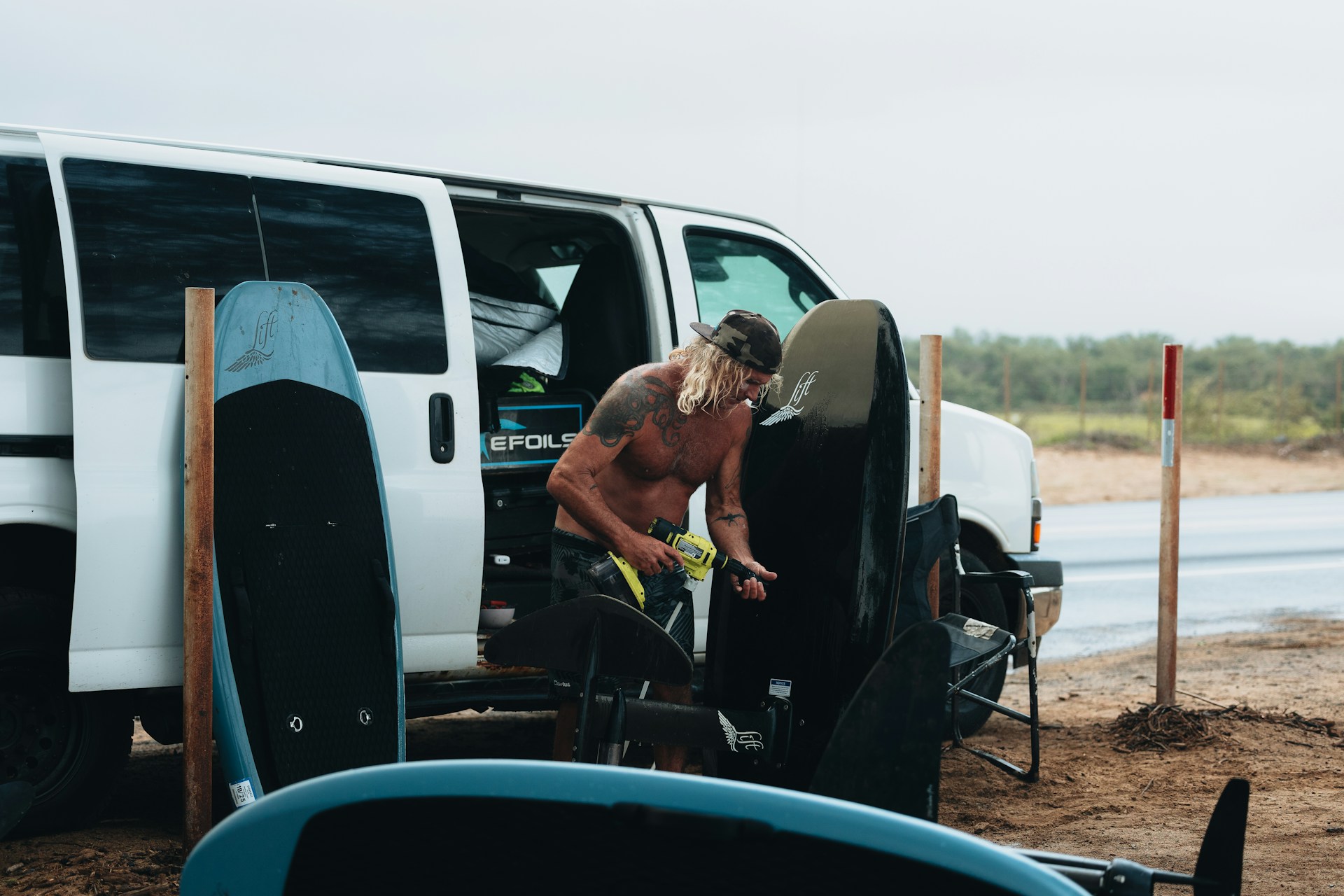
- Brief every rider before their first session, and leave service and repair to qualified technicians.
How to read a spec sheet before you buy
Five questions separate a genuine safety design from a marketing claim, and all five can be answered before buying.
Is the thrust source fully enclosed, or guarded? Is a breach-mitigation system available, and is it standard or optional? Are wings sold as matched front wing and stabilizer sets, or as parts a buyer is left to combine? Are assembly and service specifications published, or supplied only after purchase? Is there qualified service support where the board will actually be used?
Manufacturers differ widely in how much of this they publish. Aerofoils, the German maker that built its range around a fully shielded jet drive, publishes assembly and service documentation alongside its model specifications. Any eFoil board worth considering should let a buyer check these five points without asking a salesperson.
Frequently asked questions
Are eFoils dangerous for beginners? eFoils are manageable for beginners who start on a high-volume board, in deep open water, with instruction. Manufacturers report most new riders achieve their first flight within a few hours. Risk concentrates in the earliest sessions, before a rider has learned to fall away from the board.
Can an eFoil propeller cut you? An exposed eFoil propeller can cause laceration injuries, which is why guards and enclosed drives exist. Ducted designs reduce that exposure without eliminating it, since apertures that pass water can also pass fingers. A fully shielded jet drive has no blades in open water, removing blade contact as a mechanism.
How deep does the water need to be for an eFoil? At least 1.5 metres, everywhere along the intended riding area rather than only at the launch point. A carbon mast extends 60 to 80 centimetres below the board, and the wing needs clear water beneath it to generate lift. Grounding a foil at speed risks injury and structural damage.
Do you need a licence to ride an eFoil? Licensing depends on jurisdiction, and eFoils sit in a regulatory grey area in many of them. In the United States, operator requirements are set state by state rather than federally; a starting point is the National Association of State Boating Law Administrators. Rules on registration, insurance and permitted waters vary widely elsewhere, so verify locally before the first session.
The bottom line
Drive architecture sets the ceiling on one category of eFoil risk, and it is the only category a rider cannot improve through skill or caution. Everything else — breach recovery, depth, distance, battery planning, gear — stays in the rider’s hands. Choose the hardware for the risk you cannot manage, then manage the rest properly.