
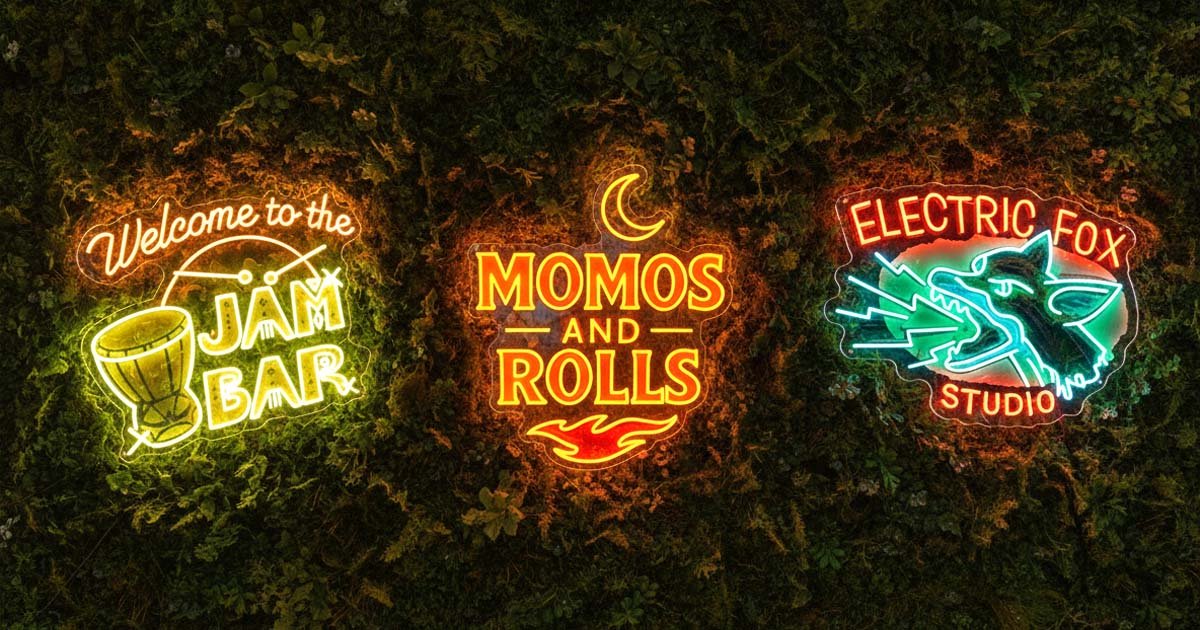

A barber studio in the Pacific Northwest. A 686,000-follower science creator. A beauty salon owner who calls her glowing logo “the highlight of my business.” On paper, these three have almost nothing in common. What links them is a wall and a piece of light shaped to say exactly who they are.
That’s the quiet idea behind Neon Designs, a custom LED neon sign company that has spent the last few years building one thing for businesses, couples, and creators: a way to put their identity on a wall and make people remember it. The brand’s own tagline says it plainly.
Every brand has a story worth telling, and they happen to tell those stories in light. It sounds like marketing until you look at who actually buys from them and why. The pattern isn’t “people who want a pretty sign.” It’s people who want to stop blending in. What follows is how a company founded by an 18-year-old turned personalization into its entire reason for existing, what custom neon signs actually do for the people who commission them, and why “made for you” keeps beating “made for everyone.”
How Neon Designs Started: A Custom Sign Brand Built to Stand Out
Neon Designs was founded in 2023 by Austin Colasanti, who was eighteen at the time. The starting belief was almost stubbornly simple: your brand deserves to be seen and remembered. He wasn’t trying to launch another signage shop. He wanted to give businesses and individuals a way to turn their identity into something people couldn’t ignore.
What began as a one-person operation grew into a team of ten, working out of a St. Petersburg, Florida, headquarters, with the rest of the crew spread across the US and beyond. The founding frustration is one plenty of small-business owners will recognize. Too many companies blend into generic visuals, fighting for attention with the same templated look as everyone else. Neon Designs’ answer was to refuse templates entirely. Every sign starts from the client’s own idea, colors, and vision, not a dropdown menu of pre-made options.
There’s a refreshing honesty in that positioning. Plenty of brands claim to be “custom” while quietly steering you toward four house fonts. The harder, slower path of building each piece from scratch is also the one that produces something worth photographing.
What a Custom Neon Sign Actually Does for a Brand
People underestimate this part. A custom neon sign isn’t a décor that happens to glow. It’s a branding tool that keeps working even when no one’s tending it. Once it’s on the wall, it pulls eyes, anchors photos, and quietly signals that a business cares about how it presents itself. The proof shows up in Neon Designs’ own client success stories, which read less like testimonials and more like small case files. KD Esthetic, a beauty salon, says its custom sign became the highlight of the business, backed by Instagram buzz and Google reviews.
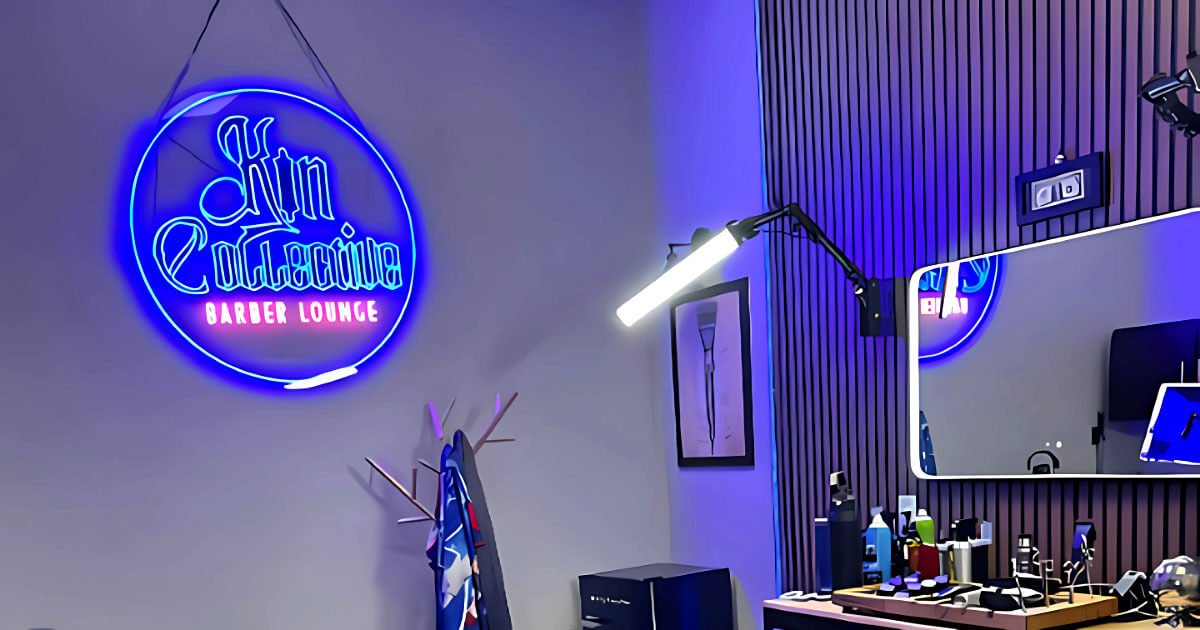
Style By Grace, a barber studio, used neon to lift its credibility and social presence. Yum Yum Tiger, an Asian specialty market, found that a professional logo sign helped build trust with customers hunting for the real thing. Different industries, same outcome: the sign did identity work that a logo on a website couldn’t.
Then there’s SciBytes, a science-education creator with 686,000 followers, who brought their logo to life in neon to sharpen content quality and keep their brand consistent on camera. That last detail matters more than it looks.
For anyone building a personal brand as a video streamer, podcaster, or educator, a neon piece reads beautifully on a lens and turns a blank background into a recognizable set. The backdrop becomes part of the brand.
LED Flex vs. Glass Neon: The Technology Most People Miss
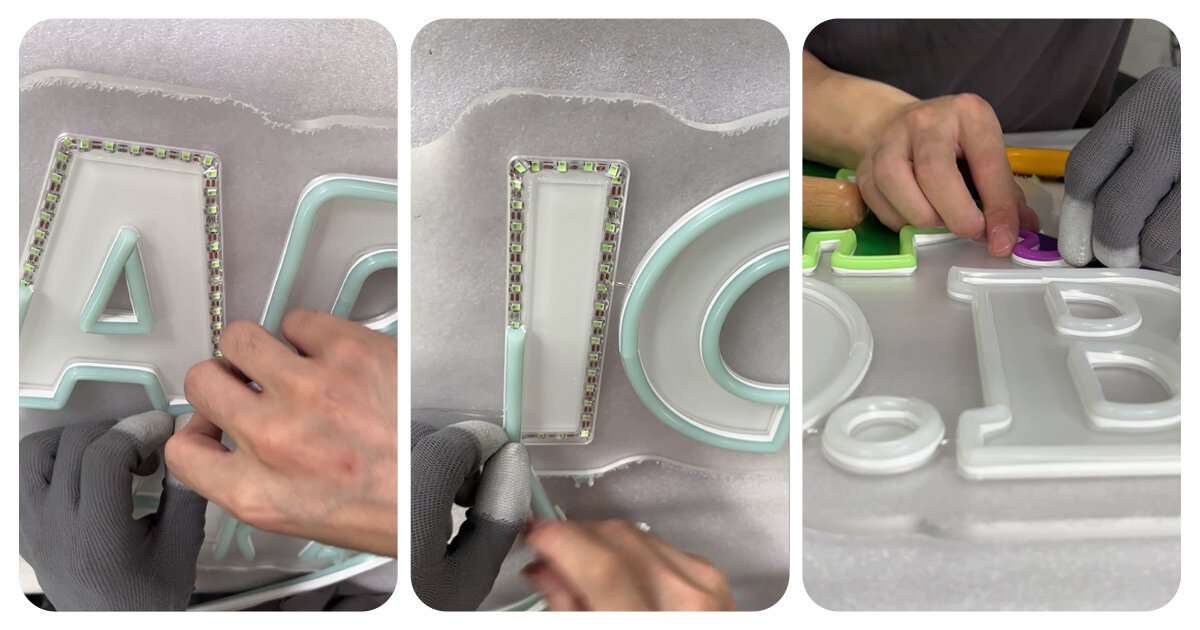
You don’t need an engineering degree to care about how these signs are made. But a couple of facts change how you’ll think about them. Neon Designs builds with LED flex neon rather than traditional glass tubing, and the difference is bigger than it sounds. Old-school glass neon is fragile, contains mercury, and runs hot. LED flex skips all three problems. Nothing shatters in transit; there’s no mercury, and the heat output stays minimal. It runs on low voltage and lasts somewhere north of 100,000 hours, which is well over a decade of normal use. (For a wedding backdrop you’ll use one night and then hang at home, that’s effectively forever.)
The practical upside for a business owner is simple. Lower running cost, no buzzing, safe to touch, and a sign that won’t quietly die six months after you mount it. Every piece ships with a power adapter and mounting hardware, plus a 2-year warranty covering the LED modules and wiring. None of this is exotic. It’s the modern version of a hundred-year-old craft, minus the parts that used to make neon a headache.
Why “Made for You” Beats Mass-Produced Décor
The interesting shift here extends beyond one company. Consumers are drifting away from mass-produced everything and toward objects that feel specifically theirs, and signage is a near-perfect example of that pull. A generic “OPEN” sign indicates that a shop is open. A custom piece in the owner’s own colors and handwriting tells you who they are. That’s the gap Neon Designs is built to fill, and it’s the same instinct driving personalization across modern brands: people pay more for things that reflect them. A wedding sign with a couple’s last name and date isn’t competing with a mass-market product, because no mass-market product can be about them.
The same logic applies to a restaurant’s signature wall piece or a salon’s logo glowing behind the front desk. You can’t buy that off a shelf. You can only have it made.
There’s a financial angle to this, and it’s worth being clear-eyed about. For a business, a custom sign sits closer to a brand investment than a decoration. It earns its keep in photos shared, storefronts noticed, and customers who remember the place. For a couple or a homeowner, the math is emotional rather than commercial, and that’s fine. Not everything needs an ROI. Some things need to mean something.
The Honest Trade-Offs of Custom Neon Signs
No piece worth trusting skips the downsides, so here are two. Custom work takes time and costs more than a template. Neon Designs ships most orders within seven business days, which is genuinely fast for the category, especially next to the four-to-six-week quotes some shops hand out. But it’s still made-to-order, not same-day. If you need a sign tomorrow, custom isn’t your answer. And a one-of-a-kind piece will run higher than a generic sign off a marketplace. That’s the trade. You’re paying for something that’s actually yours, designed with a free mockup before production, so you see it before you commit.
The second honest point: neon isn’t right for every space or every brand. A piece that sings in a barbershop or a wedding venue can feel out of place in a law office. The brands that get the most from custom neon are those with a visual identity worth amplifying and a willingness to be a little bold about showing it.
A Small Idea, Lit Up
Strip away the LED specs and the case studies, and Neon Designs is really selling a single proposition: your story deserves to be visible. A teenager started the company on that belief in 2023, and the clients who keep coming back to salons, barbers, markets, creators, and couples keep proving it has legs.
The brands that stand out in the next few years won’t be the ones with the biggest budgets. They’ll be the ones willing to look like themselves, loudly. A wall that glows with your own name, your own colors, your own words is a surprisingly direct way to do that. If your brand or your moment has a message worth displaying, the only real question left is what it should say.