







Traveling or hitting the hiking trails with a newborn or toddler is an adventure that requires careful preparation, especially when navigating terrain that is entirely unsuited for wheeled strollers. For parents eager to maintain their active lifestyles, incorporating a reliable baby carrier into your travel gear is an absolute game-changer. Rather than being confined to paved walkways or forced to leave outdoor excursions behind, babywearing allows you to explore uneven trails, crowded airports, and narrow cobblestone streets with complete freedom. Beyond mere convenience, keeping your child secure against your body transforms travel from a logistical challenge into a deeply bonding shared experience, offering comfort and security in unfamiliar environments.
The Logistics of Outdoor Exploration: Why Carriers Outperform Strollers
When planning a day trip, a weekend hike, or a cross-country flight, the choice of mobility equipment dictates how smooth your journey will be. While strollers have their place in suburban shopping malls, they quickly become heavy liabilities the moment you encounter gravel paths, steep inclines, deep sand, or endless flights of stairs at transit hubs.
An ergonomic Momcozy infant carrier eliminates these friction points entirely. By distributing your child’s weight evenly across your center of gravity—your torso, hips, and shoulders—a well-designed carrier makes you nimble and agile. You can step over fallen logs on a forest trail, navigate crowded train platforms without elbowing commuters, and breeze through airport security lines without dismantling a bulky folding chassis.
Furthermore, outdoor environments introduce a flurry of sensory inputs that can easily overwhelm a young child. Wind rustling through leaves, bright sunshine, sudden loud noises, and swirling crowds can spike an infant’s cortisol levels. When your baby is tucked securely against your chest, they have an immediate anchor. They can look up to gauge your reaction to new stimuli or simply bury their face in your shirt to take a sensory break, ensuring that travel remains an exciting, low-stress adventure rather than an exhausting ordeal.
Preparing for the Trail: Essential Gear and Ergonomic Adjustments
Before stepping out onto a hiking trail or embarking on an extended travel day, preparation is key. Outdoor environments demand more rigorous attention to physical ergonomics and gear setup than a simple trip to the local grocery store.
Checking Fit and Comfort Before Departure
Never test a new configuration on the trail itself. Adjust your straps, waistbelt, and shoulder panels at home in front of a mirror. The waistbelt should sit snugly on your hips (not your soft waist) to transfer the load downward, while the shoulder straps should form a comfortable “H” or “X” pattern across your back to prevent slipping.
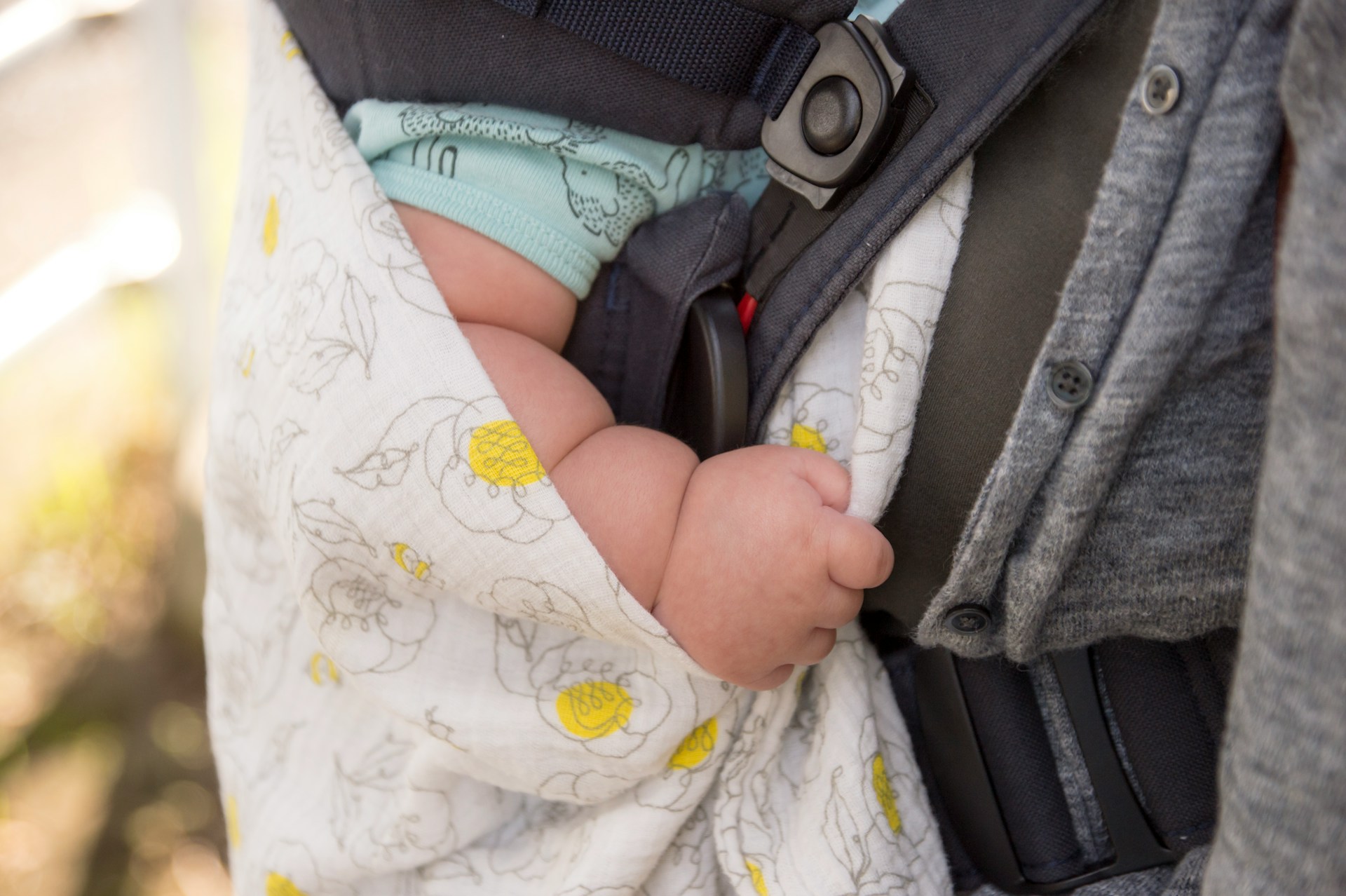
Layering for Temperature Regulation
When you carry a baby, your bodies act as dual thermal heaters. It is easy to accidentally overheat an infant if you dress them in the same heavy winter gear you wear for strenuous hiking.
- The Golden Rule: Dress your baby in one less layer than you are wearing.
- Checkpoints: Frequently feel the back of your baby’s neck or their chest to gauge their true temperature. Sweaty skin or flushed cheeks indicate overheating, while cool hands and feet are normal due to immature circulation.
- Sun and Wind Protection: Always utilize a wide-brimmed sun hat and breathable, lightweight fabrics. If your carrier includes a built-in hood or sun shade, use it during peak UV hours.
Choosing the Best Baby Carrier for Hiking and Travel
Not all carriers are created equal, and the style that works well for a quick trip to the coffee shop may not provide the structured support needed for a five-mile mountain hike. When selecting the best baby carrier for outdoor adventures, look for specific performance features:
- Breathable, Moisture-Wicking Fabrics: Hiking and active travel generate body heat. Look for carriers constructed from specialized mesh panels or lightweight cotton blends that promote airflow and prevent heat rash for both you and your child.
- Padded Lumbar Support: A sturdy, thick waistbelt with lumbar padding is essential for distributing weight off your lower spine during long hours of walking.
- Secure Buckles and Double-Action Safety: Outdoor environments involve movement and bending. Ensure all buckles are high-impact and durable, with double-action release mechanisms where possible to prevent accidental unbuckling.
- Adjustable Panel Heights: As babies grow rapidly during their first year, a carrier with an adjustable seat and back panel ensures continuous knee-to-knee ergonomic support and proper C-curve alignment for the spine.
Step-by-Step Guide to Safe Trailside Babywearing
When you are out on a trail, adjusting your gear or tending to your child requires a calm, methodical approach. Follow these steps to ensure safety and comfort throughout your hike:
- Conduct a Pre-Hike Safety Check: Before leaving the trailhead, inspect all buckles, webbing, and seams. Ensure the T.I.C.K.S. rules are met: your baby is tight against you, in view at all times, close enough to kiss, with their chin off their chest, and their back fully supported.
- Establish a Rhythm on Moderate Terrain: Start on flat, stable ground for the first fifteen minutes. This allows both you and your baby to adjust to the shifting weight distribution before you hit steep inclines or loose gravel.
- Take Intentional Rest Breaks: Every 45 to 60 minutes, step off the trail to a shaded rest stop. Take your baby out of the carrier entirely to stretch their legs, change diapers if needed, offer hydration, and allow their skin to breathe.
- Manage Hydration and Sun Exposure: Remember that you are expending extra energy carrying a child. Drink water frequently, and reapply infant-safe sun protection as recommended by your pediatrician if you are above the tree line.
Traveling Through Airports and Transit Hubs
Air travel presents a unique set of logistical hurdles. Navigating sprawling terminals, long immigration lines, and cramped airplane cabins demands efficiency.
Wearing your baby through an airport is arguably the ultimate travel hack. You can bypass the frustration of gate-checking a stroller or waiting endlessly at baggage claim. Most security checkpoints will allow you to wear your baby through the metal detector, though you may be asked to pat your hands over the carrier fabric for a quick explosive residue swipe.
Once on the plane, a soft-structured carrier or ring sling becomes an invaluable tool for inflight sleep. The gentle engine hum combined with the close contact often lulls overtired infants into peaceful rest, helping them bypass the ear-pressure discomfort during takeoff and landing while keeping your hands free to manage carry-on bags.

Conclusion
Exploring the world with an infant does not mean putting your sense of adventure on hold. Whether you are scaling a rugged mountain ridge, wandering through historic European alleyways, or simply navigating a bustling local park, babywearing bridges the gap between parental mobility and infant security. By prioritizing ergonomic support, monitoring environmental conditions, and keeping your child close to your heart, you lay the groundwork for a lifetime of shared exploration, curiosity, and outdoor appreciation.