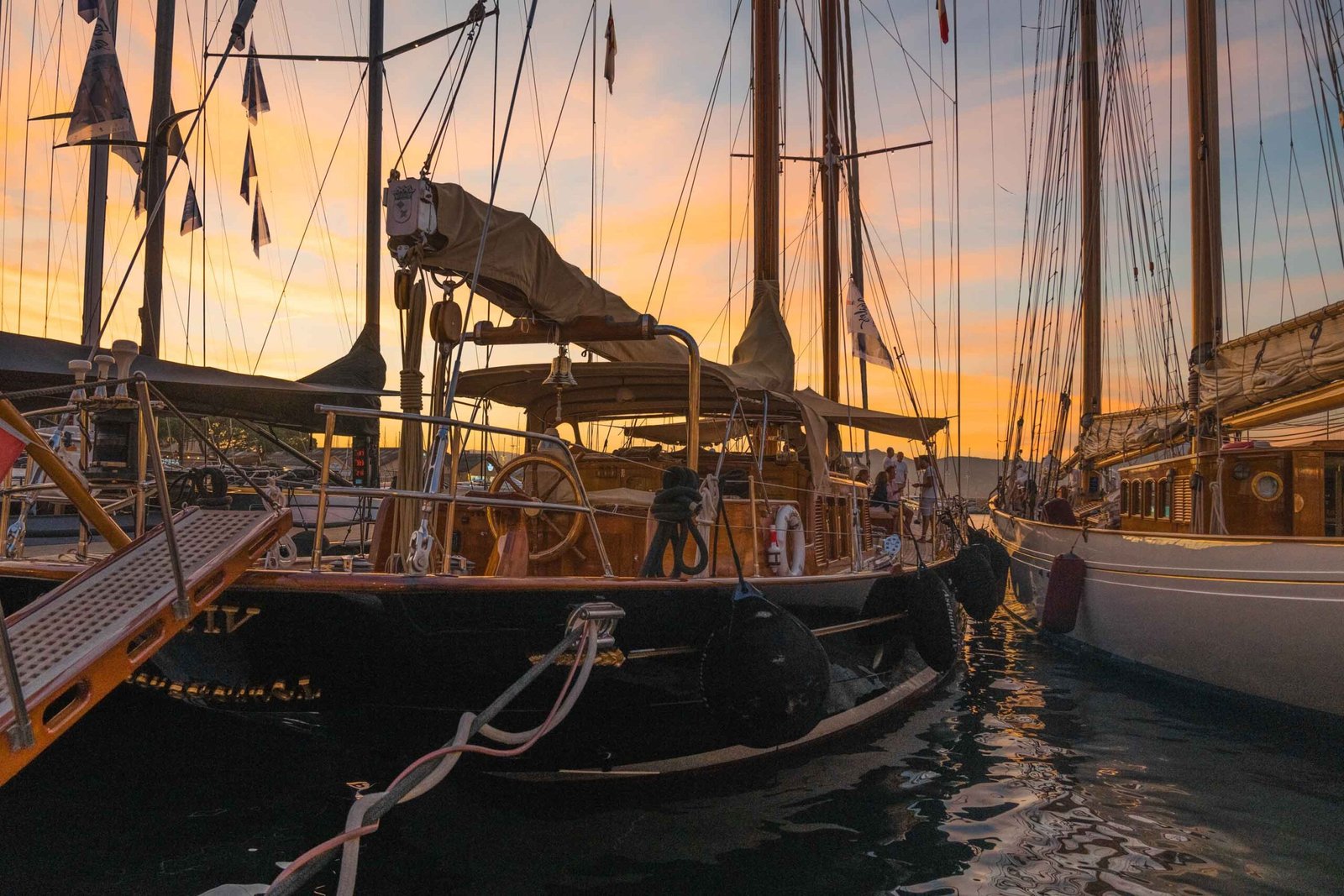






Arriving in Saint-Tropez for Les Voiles de Saint-Tropez (September 27 – October 5), one comes armed with expectations filled with a fortress of exclusivity.
The stories go like this: velvet ropes, bored billionaires, and boat shoes that never touch a drop of saltwater. But then you step onto the quay, the morning mist lifts, and all those assumptions drift away. What you see isn’t some parade of egos. It’s raw, passionate, and a little messy, but a true celebration of the sea.
To really get the spirit of Les Voiles, you have to go back to the beginning. Locals tell the story like it’s a legend, whispered around the Village des Voiles. The whole thing started in 1981 with a simple bet: the owner of the 12-meter Ikra challenged the owner of the American Swan 44, Pride. First one to Club 55 on Pampelonne Beach buys lunch. That’s it. Winner eats for free. Loser picks up the tab. It’s grounding when you realize this world-famous event grew out of a spontaneous afternoon among friends.
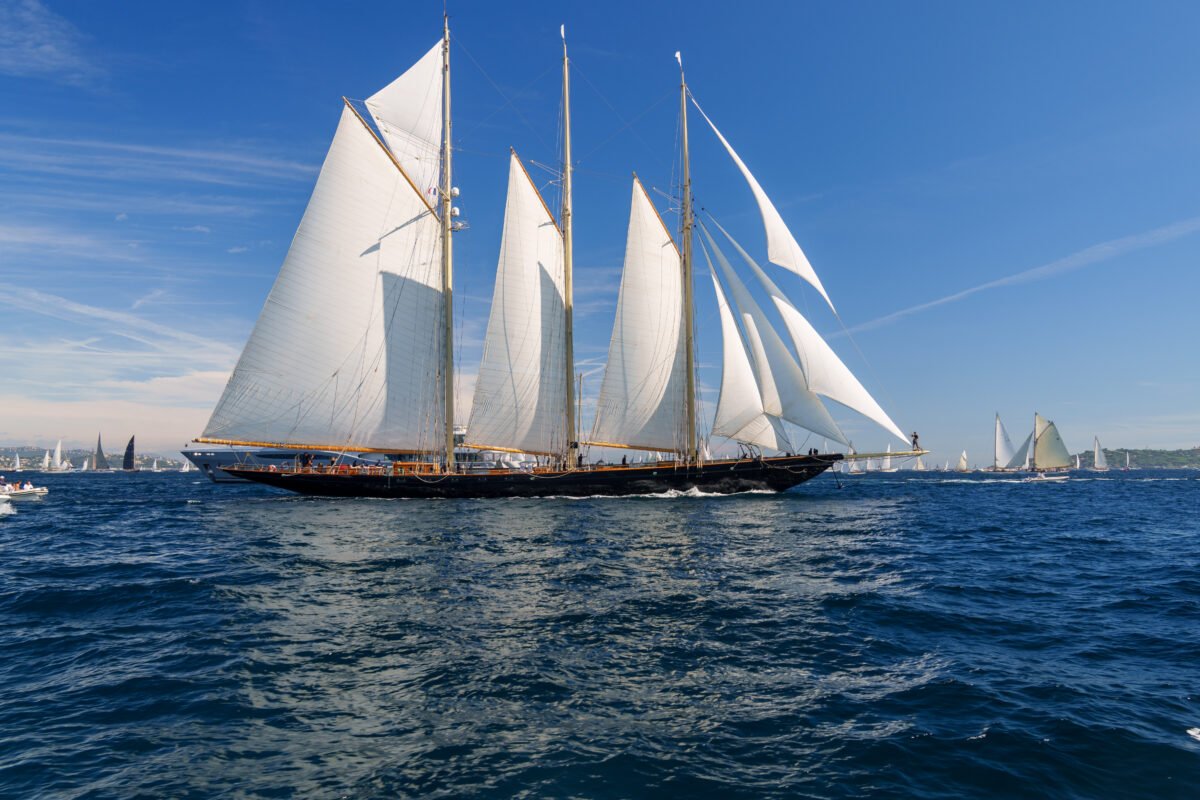
Visually, Les Voiles is a wild mix of old and new. The fleet splits into two camps: the Tradition class and the Maxis. Despite the millions of dollars floating in the harbor, the event retains the soul of a friendly grudge match.


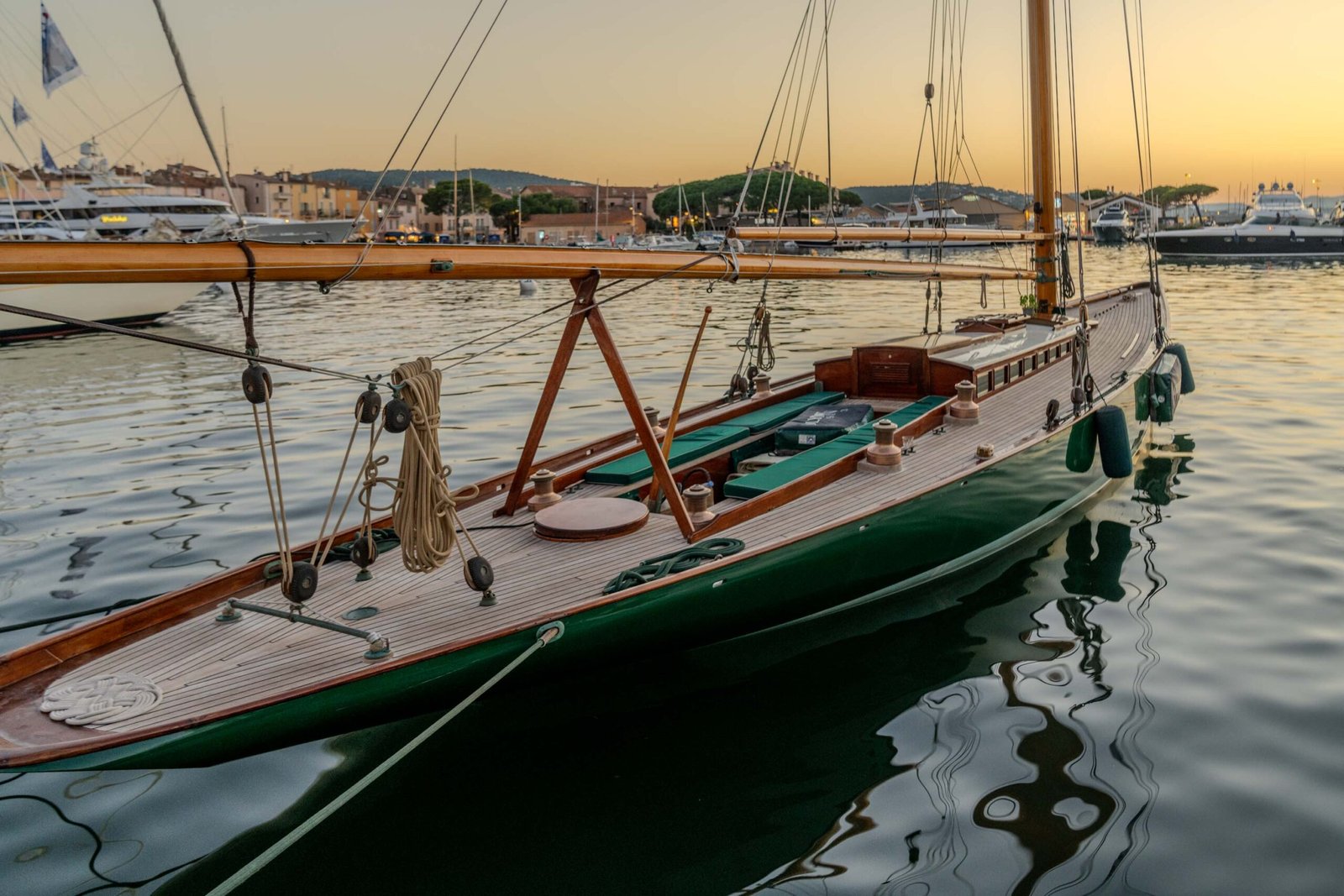
Photos by Karina Manuzina
The true magic, however, happens onshore. In many luxury destinations, the goal is separation – VIP areas, private lounges, restricted access. Les Voiles flips this script. The “Village” by the harbor is a porous, chaotic, wonderful mix of humanity. You can walk the quay and be inches from the action, watching crews scrub decks, repair sails, and debrief. The social hierarchy dissolves completely at the Place des Lices. Here, under the plane trees, the fiercely competitive game of pétanque takes center stage. This isn’t a photo op; it’s serious business. Billionaire owners are frequently humbled by local fishermen or shopkeepers who have played on this dirt square every day for decades. The “Pétanque des Voiles” tournament is the great equalizer, a reminder that on the dusty ground, bank accounts don’t help your aim.
The star of 2025 was undoubtedly the legendary schooner Atlantic. Seeing her three masts piercing the skyline is a religious experience for anyone with a passing interest in maritime history. This is the vessel that held the transatlantic record for 75 years, a wooden cathedral of speed. Watching her crew haul lines by hand, coordinating raw muscle with ancient physics, stands in stark contrast to the Maxi yachts. The Maxis, like the Nanoq (helmed by the King of Denmark) or the sleek Wally yachts, are silent predators made of carbon fiber and kevlar. They scream past at 20 knots, controlled by hydraulics and computers. Yet, on the water, there is a mutual reverence. The modern crews look at the classics with awe, knowing that no amount of technology can replicate the soul of 100-year-old teak.
The visual spectacle of Les Voiles is defined by a jarring, beautiful anachronism. The fleet is divided into two distinct tribes: the Tradition class and the Maxi class. Any sense of social hierarchy vanishes at Place des Lices. Under the plane trees, pétanque takes over. It’s not some tourist photo-op. This is serious. You’ll see billionaire yacht owners getting schooled by local fishermen or shopkeepers who’ve played on this patch of dirt every day for years. The “Pétanque des Voiles” tournament levels the field fast—on this ground, your bank balance doesn’t matter one bit. Life here moves at its own pace. The races don’t care about TV schedules; they start when the wind wakes up.
By the final sunset, when the citadel glows orange, and the crowd starts to drift away, something hits you: Les Voiles de Saint-Tropez isn’t really about the boats. It’s about honoring beauty, about knowing we’re all just caretakers of these incredible machines for a little while. Whether you’re a spectator leaning over the breakwater or a crewmember grinding on the bow, you’re part of a story that started with a simple bet back in 1981.
The Rhythm of the Riviera
There is a distinct rhythm here that defies the hurried pace of the modern world. Races don’t start at a precise television slot; they start when the wind decides to wake up. Lunches are not “fuel stops”; they are communal feasts that spill into the late afternoon. It forces a surrender of control. You stop checking the time and start reading the sky. As the sun sets on the final day, illuminating the citadel in hues of burnt orange, the realization hits: Les Voiles de Saint-Tropez isn’t about the boats. It’s about the stewardship of beauty. It’s about the collective understanding that we are merely temporary custodians of these magnificent machines.