





One bad snow year can wipe out a mountain town’s entire winter economy. Grand County, Colorado learned that the hard way when a disappointing snowpack season saw occupancy rates cut by roughly 6% and sales tax revenues fall across nearly every municipality in the county.
That kind of vulnerability has a name: single-season dependency.
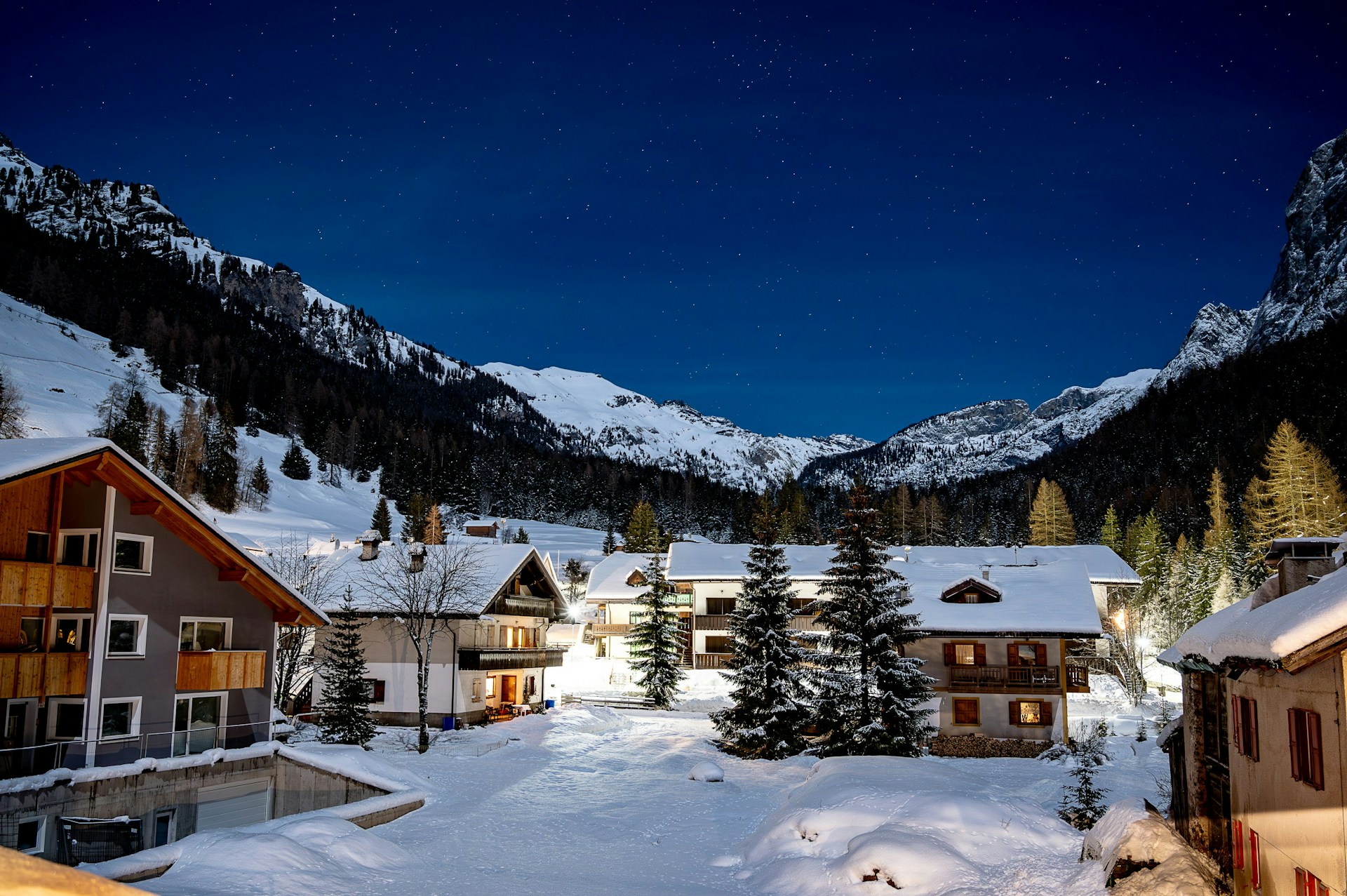
And the smartest resort communities in the American West are working hard to cure it.
Fraser, Colorado sits at the center of that story. Tucked into the Fraser Valley at 8,574 feet along Highway 40, it’s a town that spent decades as a quiet satellite to Winter Park Resort. What it’s becoming is something more interesting: a case study in how small mountain towns plan their way out of boom-and-bust cycles by building infrastructure that works in July just as well as it does in January.
The Economics Behind the Push
Colorado’s outdoor tourism numbers tell a compelling story about opportunity and risk existing at the same time. A record 96.8 million travelers visited Colorado in 2025, spending $29.2 billion, continuing a nearly decade-long streak of record-setting performance. That’s extraordinary scale. But here’s the catch: nearly all of it flows unevenly, concentrated in peak ski weekends and summer holiday months while shoulder seasons see valleys deep enough to put small businesses underwater.
Skiing remains the largest economic driver of Colorado’s $18.1 billion outdoor recreation economy, contributing $1.6 billion in direct spending, according to 2024 Bureau of Economic Analysis figures reported by The Colorado Sun. For a town that lives next door to Winter Park Resort, that dominance is both a gift and a trap. One warm winter and the whole economic engine stalls.
The communities that navigate this well aren’t just lucky with snowfall. They’re the ones that decided to build out their infrastructure before crisis forced their hand.
The Fraser Valley Infrastructure Index: A Framework for Evaluating Resort Town Readiness
Most conversations about mountain town infrastructure focus on roads and ski lifts. That’s a narrow lens. When you look at what actually makes a resort community durable across seasons and economic cycles, you need to evaluate five pillars. Think of this as the Fraser Valley Infrastructure Index, a mental model for assessing whether a mountain town is building for resilience or just coasting on altitude and powder.
| Infrastructure Pillar | Why It Matters for Year-Round Viability | Fraser Valley Example
|
|---|---|---|
| Emergency Medical Access | Visitors and new residents require reliable urgent care regardless of season | New 30,000 sq ft campus on Telemark Drive with 24/7 emergency services |
| Broadband Connectivity | Remote workers need reliable internet to choose a mountain town as a full-time base | Broadband Meet Me Center integrated into new Fraser facility |
| Trail Networks | Multi-use trails drive summer visitation independent of ski revenue | Over 600 miles of regional paths in Grand County accessible from Fraser |
| Local Business Density | Year-round dining, retail, and events reduce over-reliance on resort traffic | Growing Fraser dining and brewery scene drawing visitors independently |
| Community Events Calendar | Recurring annual events smooth the seasonal attendance curve | Fire and Ice Festival, Mountain Mural Art Festival, and similar recurring draws |
No single pillar carries the weight alone. The towns that thrive are the ones hitting at least four out of five and actively working on the fifth.
What the Snow-Failure Scenario Actually Teaches Us
Picture this: Winter Park Resort opens earlier than the prior year, marketing is solid, hotel bookings look fine going into December. Then the snow disappears. Warm temps persist through January. Occupancy craters. A coffee shop owner in Fraser named Olivia Youngs, who runs Simple Coffee Company, described the pattern publicly in 2026 as the “lows being lower” and the business becoming “very weekend heavy.” Weekdays emptied out. Locals kept the lights on.
That scenario repeats across Colorado’s mountain towns every time snowfall underperforms. Colorado’s tourism office reported a 7.3% increase in travelers and a 16.8% increase in spending between 2019 and 2023 , per Rocky Mountain PBS, but aggregate statewide growth masks how unevenly those gains distribute when a single winter underdelivers in a specific valley.
The honest answer is that no amount of infrastructure fully insulates a ski town from a bad snow year. But infrastructure absolutely determines how fast and how hard a community falls, and how quickly it recovers. The towns that collapse are the ones where the entire value proposition was “come ski.” The towns that bounce back are the ones where visitors and residents have reasons to be there even when the lifts aren’t spinning.
“If we can get people to stay for a week, it can be better for the environment, better for the community and there are wins across the board.” This community-first framing, offered by Colorado Tourism Office director Caitlin Wolfe in a July 2026 report, captures exactly what resort towns are quietly beginning to optimize for: length of stay and repeat visitation over raw headcount.
The Medical Access Variable Nobody Talks About
Here’s a pillar that rarely makes it into tourism board presentations: emergency medical access. But ask any remote worker deciding whether to plant roots in a mountain town and it comes up immediately. Access to urgent care is a genuine quality-of-life factor for year-round residents, not just skiers with twisted knees.
Grand County has been serious about this. The Fraser area now benefits from comprehensive healthcare services in Fraser, Colorado through a new facility on Telemark Drive that includes a 24/7 emergency department, advanced imaging, trauma bays, and even a helicopter landing pad. That’s not just a convenience for tourists. It’s a signal to anyone thinking about making Fraser their permanent address that the basic infrastructure of modern life is in place.
Medical access is also a retention lever for the seasonal workforce that mountain towns desperately need. Hospitality workers, trail crew members, lift operators: they choose towns partly based on what’s available when something goes wrong. A 45-minute drive to the nearest emergency room is a harder sell than it used to be, especially as remote work has given people real optionality about where they live.
A Practical Checklist for Any Mountain Town Planning Its Next Decade
If you’re involved in economic development, local government, or just paying attention to how your community is spending its capital, here’s a five-question gut check for whether your town is building for durability. And it matters more than ever: a Brookings Institution analysis of U.S. Census data found that smaller metro and rural areas have seen disproportionate population growth since 2020, driven largely by workers who no longer need to live near their employer’s office, according to The Mountaineer’s April 2026 reporting. The towns with the right infrastructure in place are the ones capturing that migration.
- Does your emergency medical infrastructure serve a bad-weather Tuesday in February as well as a powder Saturday in January?
- Is broadband fast and reliable enough that a remote worker would choose your town over a Denver suburb?
- Do your trail systems and community events generate visitation independent of the ski resort’s performance?
- Is your local business ecosystem deep enough to survive two slow seasons in a row, or does it thin out after one?
- Are you building housing stock that allows essential workers to actually live in the community they serve?
Fraser is doing visible work on the first four. The fifth, housing, remains the hardest problem across every high-altitude Colorado community and Fraser is no exception. The town experienced a growth rate of 14.38% between 2010 and 2020, and in recent years has seen a real estate boom driven by demand for housing amid regional tourism surges. Rising home values are a sign of a community people want to be in. They’re also a problem when the workers needed to run that community can no longer afford to live there.
What Fraser Gets Right
Fraser, nicknamed the “Icebox of the Nation,” is far more than cold temps, and sits just minutes from Winter Park, combining small-town charm with big adventure. That description from Visit Grand County is marketing language, sure, but it’s also accurate. The town has a distinct identity separate from the resort next door, and that matters enormously for long-term viability.
Towns that exist purely in the shadow of a resort are fragile. Towns that develop their own identity, their own events, their own civic infrastructure, and their own reasons for people to show up even when the resort isn’t the draw, those are the towns that outlast the snow cycles.
Fraser is actively choosing the second path. The question worth watching isn’t whether the Fraser Valley will be busy during peak season. It will be. The question is what the place looks like in March, in May, and in October. Right now, the answer is getting better every year. Other mountain communities would do well to study how it’s happening.