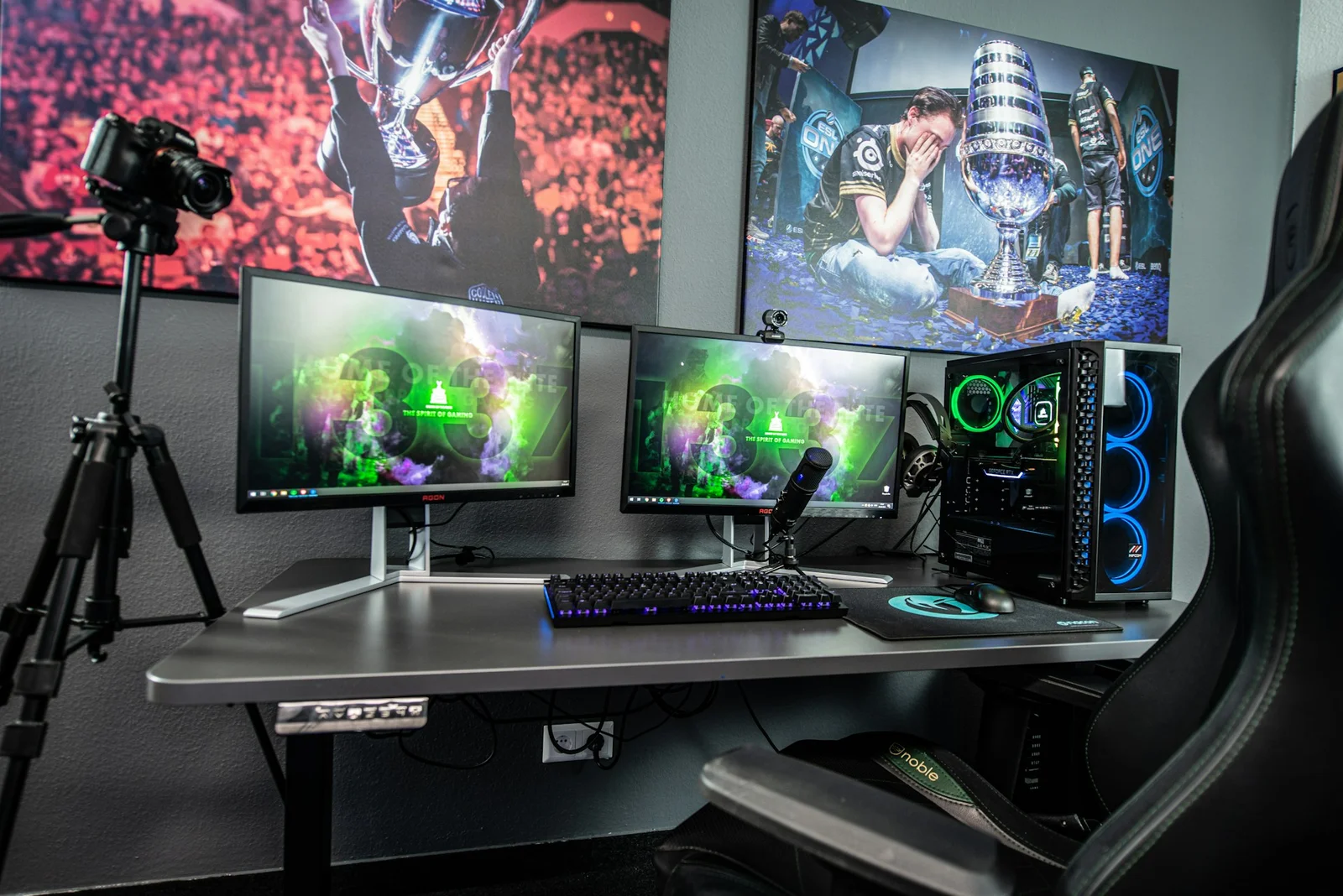







A pro at a virtual table in 2026 brings tools the table itself does not provide. Hand history databases of millions of past sessions are on a secondary screen. Solver-driven strategy guides run during practice and inform decisions during play. Real-time assistance software can flash a recommended action within 200 milliseconds of a card hitting the felt.
The result is a measurable gap between players who have spent five hours studying a session afterward and players who have not. The gap is not theoretical. Some pros report win rates that climb between 40% and 70% above their pre-data baselines once a full tool stack is in place. Recreational players are on the other side of that gap, often without knowing what the other side has access to.
In modern online poker environments, the information edge increasingly belongs to players who can process and apply data faster than the field.
The Tools Available to Today’s Player
Hold’em Manager and PokerTracker are the workhorses of the data-aware player. Each builds a full session log from a player’s hand history, then renders that log as a heads-up display overlaid on the live table. Stats include 3-bet frequency, fold-to-continuation-bet rate, river bluff frequency, and dozens of other measurements specific to each opponent.
A player who has been at the table for two hours has, in effect, a behavioral file on every other seat.
The mechanics of an HUD are simple. A small daemon parses the client’s hand history feed, joins it against a local database of past hands, and projects relevant stats onto the table window. The query takes milliseconds. The decision the player makes after reading those stats is still theirs.

Game Theory Optimal Computing in Real Time
A poker solver models the game as a decision tree and computes balanced lines that cannot be exploited. GTO Wizard, PioSOLVER, and GTO+ are the names most cited at high stakes.
Each engine had to run for hours on desktop hardware until recently. GTO Wizard’s April 2025 engine update switched from Nash Equilibrium calculations to a Quantal Response Equilibrium model, reducing average flop exploitability from 0.17% to 0.12% of pot size and producing solver-level output in seconds.
Real-time assistance software pushes the same logic into the active session. Two computers run side by side. The gaming machine captures its own screen output. The second machine performs OCR on cards, positions, and bet sizes, runs the state through the solver, and pushes a recommended action back to the player.
Latencies of 200 milliseconds are typical.
Poker Games and the Data Layer
Many poker games offer in-app analysis features that show players how their decisions compare to optimal lines, then let them re-watch hands with annotated solver output. Free training tables, hand replayers, and integrated study tools have brought structured review to players who once relied on rough notes.
The result is a tighter feedback loop between play and study. A misplayed flop on Tuesday produces a corrected response on Friday.
The evolution of online poker strategy now depends as much on post-session analysis as live instinct at the table.
AI’s Climb Through the Game
Libratus, built at Carnegie Mellon and released in 2017, defeated four professional players in 120,000 hands of heads-up no-limit Hold’em. Final chip count put Libratus ahead by $1,766,250. The bot would analyze every prior day of play overnight and adjust its lines for the next day, producing a permanent arms race within the match.
Pluribus, the 2019 follow-up, jumped from heads-up to the much harder six-player variant. It beat 15 of the world’s top professionals in six-player no-limit Hold’em across 10,000 hands. Pluribus ran on $150 of compute and two CPUs and used less than 128 GB of memory.
The earlier assumption that multi-player poker would resist AI longer than chess or Go did not hold.
The lessons from Libratus and Pluribus filtered down into the public solver tools the next year. Pros use the same kind of strategy that beat them, an outcome that has been debated by analysts since the publication of the underlying research.
Behavioral Pattern Recognition
Machine learning platforms now scan a player’s own hand history for predictable patterns. The tools flag over-aggression on the turn, predictable continuation-bet sizing, and timing tells. A player who always takes 3.5 seconds before a bluff and 1.2 seconds before a value bet is, in the dataset, telegraphing intent. How AI moves from adoption to differentiator is increasingly the question across white-collar fields, and poker has absorbed the same toolkit faster than most.
The same models pick out leaks in an opponent’s game. A common output is a heatmap of mistakes by board texture: low pairs on connected boards, missed value on river spots with backdoor flushes. Hand histories are the training data. The classifier rolls forward each new session. For the player on the receiving end, the model is invisible. For the player running it, the model offers continuous analytical support without session-length limits. The difference compounds across thousands of hands.

Operator Restrictions on Tracking Tools
Not every platform allows the full tool stack. iPoker, Winning Poker Network, and Chico permit HUD use without restriction. GGPoker, PartyPoker, and Unibet prohibit third-party tracking tools as a matter of policy, on the argument that recreational players should not face data-equipped pros at the same stakes.
PokerCraft and DriveHUD provide platform-native alternatives that limit how much historic data a player can compile on opponents.
The split between the two camps is a structural debate. Operators that allow tracking attract serious players. Operators that block it preserve the recreational pool. Both positions have commercial logic.
What the Edge Looks Like in Practice
The advantage from real-time data comes from a thousand small corrections per session, compounding across sessions. A tech-savvy player closes leaks faster, plays more disciplined ranges, and reads opponent tendencies that an unaided player would need years of intuition to develop. The mechanics of the game stay the same. The information advantage accumulates across sessions.
Over time, the gap between players using advanced analytical tools and players relying only on instinct becomes increasingly difficult to close.
Conclusion
Online poker has always rewarded players who adapt faster than the field. What changed over the last decade is the scale and speed of the information available during both study and live play. Real-time data tools, solver technology, machine learning models, and AI-assisted analysis have transformed poker from a game driven mostly by intuition into one heavily influenced by computation and structured decision-making.
The modern edge is no longer built only on experience at the table. It increasingly comes from how efficiently a player studies, analyzes patterns, and applies data between sessions. As online poker platforms continue debating the limits of tracking software and solver assistance, the divide between data-equipped players and recreational players will likely remain one of the defining tensions shaping the future of the game.
FAQ
What is a poker HUD?
A poker HUD, or heads-up display, is a tool that shows real-time statistics about opponents based on previous hand histories and gameplay patterns.
Are poker solvers legal to use during online games?
That depends on the platform. Some online poker operators allow certain tracking tools, while others prohibit real-time assistance and third-party software during active play.
What is GTO in poker?
GTO stands for Game Theory Optimal. It refers to mathematically balanced strategies designed to make a player’s decisions difficult to exploit over time.
Why do tech-savvy poker players have an advantage?
Players using advanced data tools can identify patterns, reduce mistakes, and make more informed decisions faster than players relying only on instinct or experience.