





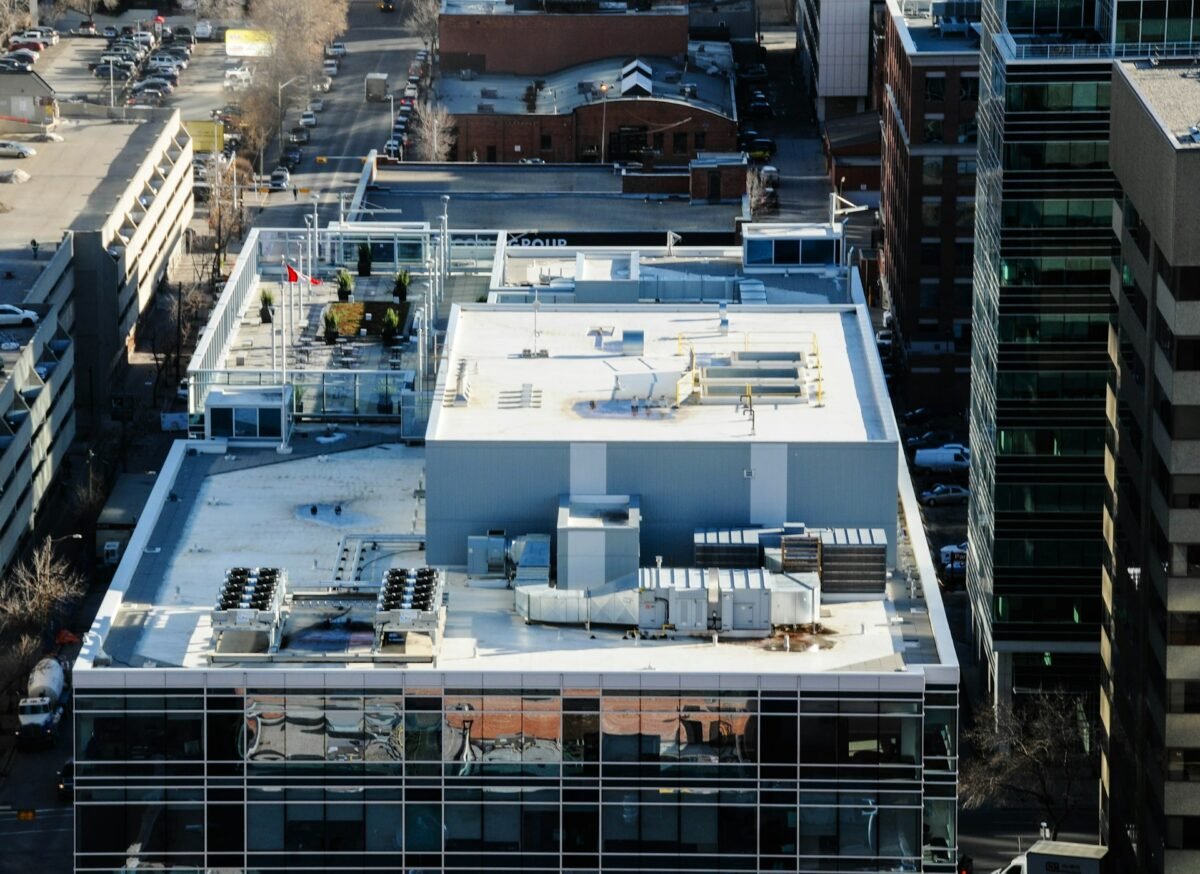

Pigeons cause more damage to rooftops than most building owners realize. Their droppings are acidic and can degrade roofing membranes, block gutters, and create slip hazards on walkways in a single season. If you’ve spotted a growing flock settling on your building’s ledges and flat surfaces, the problem won’t fix itself. Understanding how to protect rooftops from pigeons means moving past quick fixes and building a strategy that actually sticks.
Several proven methods exist, and the most effective approach combines physical exclusion, feeding disruption, and population control. Here are six ways to protect rooftops from pigeons worth knowing about.
Install Physical Barriers Across Landing Surfaces
When it comes to keeping pigeons away, physical barriers are usually the first answer, and for good reason. If you are wondering how to keep pigeons away, spikes, wire coils, and bird netting are the most direct solutions for pigeons landing on ledges, parapets, HVAC units, and flat roof sections. These products don’t harm the birds; they simply remove flat, comfortable surfaces that pigeons prefer to roost on.
Spikes mount along ledges and ridgelines and work best on narrow surfaces where pigeons tend to line up. Wire coil systems function similarly but use spring tension that makes landing uncomfortable. Netting is the broadest option, capable of blocking off entire roof sections, equipment bays, or open courtyards.
Here’s the thing: correct installation matters tremendously. Gaps in netting, short spike runs that leave open sections, or barriers mounted only on the most visible ledges while ignoring other perches will simply push the flock to a nearby spot on the same roof. A professional assessment of every landing point on the roofline, including low parapets, mechanical equipment, and skylights, should come before any installation begins. For large commercial or industrial roofs, the upfront investment in physical barriers can be substantial; they tend to deliver lasting results when installed correctly and maintained annually.
Use Bird Gel and Liquid Repellents Strategically
Bird gel repellents create a sticky, uncomfortable surface that discourages pigeons from landing without causing harm. Applied to ledges, beams, and other horizontal surfaces using a caulking gun, the texture registers as unstable footing to the bird. It’ll choose not to land. They work best on surfaces where spikes aren’t practical: decorative stone ledges, ornate cornices, narrow architectural details.
Liquid repellents operate on a similar principle, though some use scent or taste deterrents rather than texture. Methyl anthranilate, a compound derived from grape extract, is one of the more widely studied options and has shown results in open rooftop areas where pigeons forage. But durability is the catch. Sun, rain, dust, and debris all degrade effectiveness over weeks to months, so reapplication becomes part of the routine. They also aren’t practical as a standalone solution on heavily trafficked roosts where dozens of birds land daily.
For best results, treat gel and liquid repellents as a supporting layer rather than the main defense. They work well paired with something else.

Deploy Visual and Sound Deterrents
Visual deterrents work because pigeons are prey animals with a strong aversion to predator silhouettes and reflective movement. Decoy owls, hawk kites, reflective tape, and spinning pinwheels all create an environment that feels less safe to a landing bird. Motion-activated versions perform considerably better than static ones. A plastic owl bolted to the same spot for several weeks will be seen as non-threatening by an intelligent flock within days.
A decoy that moves with the wind or gets relocated regularly extends its usefulness. Ultrasonic sound devices also fall into this category; they emit high-frequency tones that pigeons find uncomfortable. Results vary depending on roof layout, surrounding noise levels, and how established the flock is. Open, quiet rooftops with small flocks tend to respond better than dense urban environments where background noise is high.
Sound and visual deterrents are best suited for rooftops that already have low-to-moderate pigeon activity; they’re used in combination with a physical or population-level strategy. On their own, they rarely provide enough pressure to displace a flock that has established a long-term roost. That said, they’re relatively affordable and easy to deploy, which makes them a reasonable first step for smaller facilities or residential rooftops dealing with occasional visitors.
Eliminate Food and Water Sources on and Near the Roof
Pigeons are creatures of habit, and they return to rooftops because those locations offer food, water, or safe shelter nearby. Rooftop HVAC condensate lines, flat sections that pool rainwater, and nearby dumpsters or open waste containers all contribute to making a roof attractive. A thorough audit of the rooftop and surrounding perimeter can identify these attractants and remove them.
Standing water is one of the most overlooked contributors. Flat commercial roofs with poor drainage often accumulate shallow puddles after rain, which pigeons use for drinking and bathing. Improving drainage through regular inspection and cleaning of scuppers and downspouts reduces this draw considerably. Nearby feeding sources matter as well; if building occupants or neighbors are feeding pigeons on the ground level or on accessible terraces, that population will continue to cycle back to the roof regardless of what deterrents are in place overhead.
Coordination with property management, neighboring buildings, and local ordinances around intentional pigeon feeding can make a meaningful difference. Removing food and water doesn’t instantly move a flock, but it weakens the behavioral reinforcement that keeps them returning, making every other control method more effective over time. It’s a foundational step; it costs little but supports every other approach in the system.
Trap and Remove Persistent Birds
Trapping is a direct method for reducing the number of birds actively roosting on a specific rooftop. Live catch traps are baited and placed in areas of high pigeon activity; captured birds are then removed from the site. This method works best as part of a multi-step program where physical barriers and environmental modifications are already in place. Trapping alone, without addressing the conditions that attracted the flock, tends to result in temporary reduction followed by replacement from surrounding populations.
The process requires consistency. Traps need daily monitoring, fresh bait, and a clear plan for what happens to captured birds. Some facilities work with licensed pest management professionals who handle the full process. Others manage trapping in-house under applicable local permits, since some jurisdictions regulate how and where pigeons can be trapped and removed.
Trapping is particularly useful during a remediation phase, after physical barriers have been installed and feeding disruption efforts are underway, to reduce the remaining resident population that hasn’t yet been displaced. It’s labor-intensive but can meaningfully accelerate results in buildings where a moderate-to-large flock has been established for years and hasn’t responded to deterrents alone.
Consider Contraceptive Bait Programs for Population Control
Contraceptive bait programs address the root factor that makes pigeon pressure escalate over time: reproduction. Rather than displacing birds or relying on lethal methods, these programs use EPA-registered nicarbazin-based bait distributed through automated feeders on or near the rooftop. The bait doesn’t harm the birds; it interferes with egg development, which causes the flock to shrink gradually over months as new birds aren’t hatched to replace natural attrition.
This approach is particularly well-suited to large commercial properties, industrial facilities, and campuses where physical barriers aren’t practical across every surface and where the goal is a humane, sustained reduction in flock size rather than just displacement. But the program does require a consistent baiting schedule, monitoring of bait consumption, and patience. Results appear over a season rather than overnight.
Contraceptive programs also tend to work best when combined with physical exclusion in the highest-priority areas, so that the gradual population decline is reinforced by barriers that prevent new birds from re-establishing in cleared zones. For facilities that have struggled with recurring infestations despite repeated deterrent installations, contraceptive bait programs offer a different kind of answer. They work on the population level rather than bird by bird.
Conclusion
Protecting a rooftop from pigeons requires more than a single product or one-time installation. The most effective approach combines physical exclusion, environmental modification, and, where the flock is large and persistent, a population-level strategy. Each method has a role, and the strongest programs layer two or three of them together based on roof type, flock size, and budget. The answer is always a system, not a single solution.