
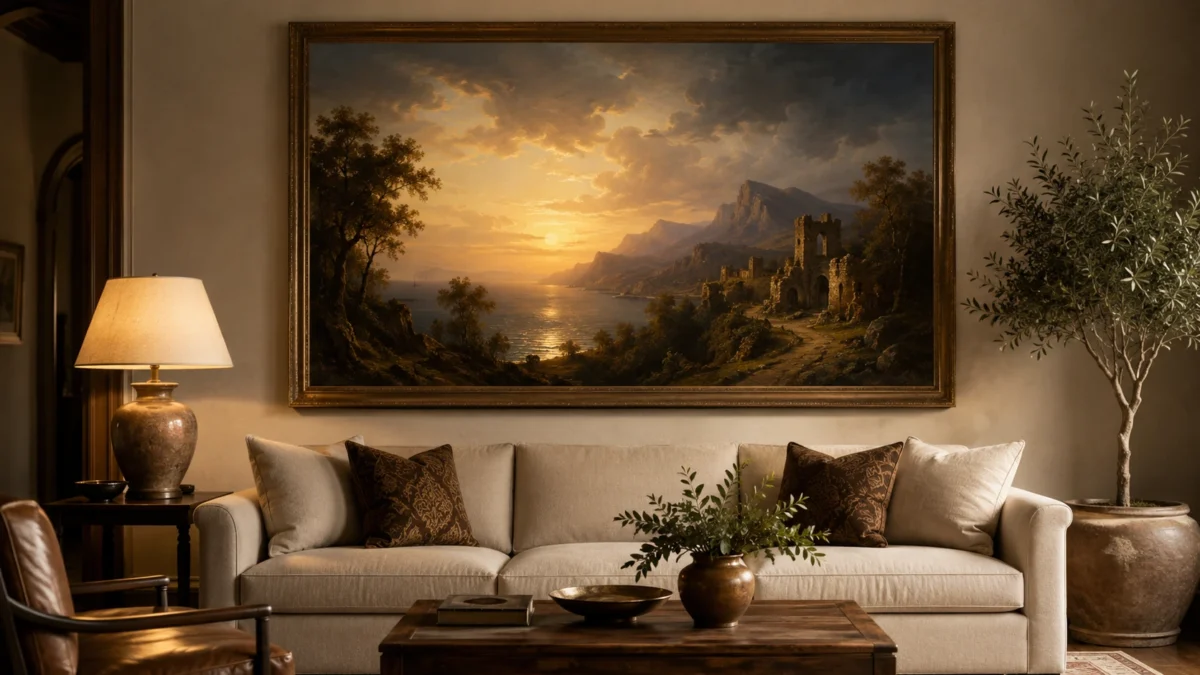

Romantic art has a way of making a home feel warmer and more soulful. With its sweeping landscapes, dramatic skies, and deep emotional pull, a single Romantic painting can turn an ordinary wall into a window onto something beautiful. But once you’ve chosen a piece you love, one big question remains: where should it actually go?
Placement makes all the difference. The same painting can feel calming in a bedroom, grand in an entryway, or inviting in a dining room, depending on where you hang it. This room-by-room guide will help you find the perfect spot for Romantic art anywhere in your home.
First, a Quick Note on What Romantic Art Is
Romanticism was an art movement that flourished from roughly the late 1700s through the mid-1800s. It was, in part, a reaction against the cold rationalism of the Enlightenment and the rise of industrialization—so Romantic artists turned toward emotion, imagination, and the power and beauty of nature.
That’s why so much Romantic art features dramatic landscapes, moody skies, moonlit scenes, and a strong sense of feeling. Painters like Caspar David Friedrich, J.M.W. Turner, and John Constable are among the most famous names associated with the movement. Understanding this helps with placement: these are emotional, atmospheric works, so they shine in spots where you want a room to feel calm, contemplative, or grand.
If you’re still choosing a piece, browsing a collection of https://tryartwork.com/romanticism is an easy way to find works in the mood and palette that suit the room you have in mind—from soft, hazy landscapes to bold, dramatic scenes.
The Living Room
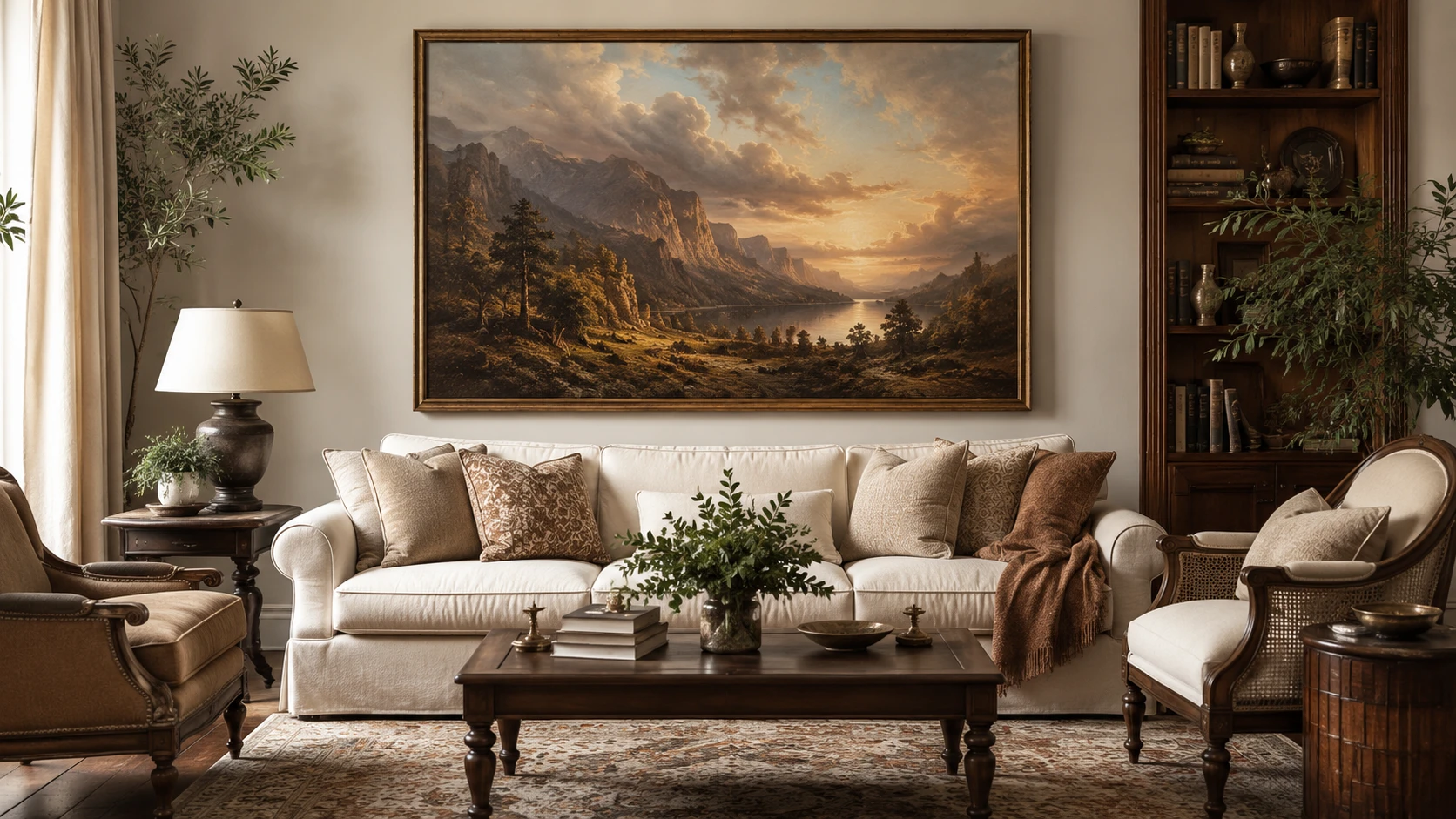
The living room is the most natural home for a Romantic statement piece. It’s usually the largest wall space you have and the room where you and your guests spend the most time.
Best spots:
- Above the sofa. This is prime real estate for a large landscape. Aim for a piece that spans about two-thirds the width of the sofa, hung so the bottom edge sits roughly 8–10 inches above the back.
- Over the mantel. A dramatic Romantic scene above a fireplace reinforces the room’s natural focal point and adds instant warmth.
- A large blank wall. A single oversized landscape can anchor the whole room and make the space feel bigger and more open.
Romantic landscapes suit living rooms especially well because their sense of depth and open space makes the room feel more expansive.
The Bedroom
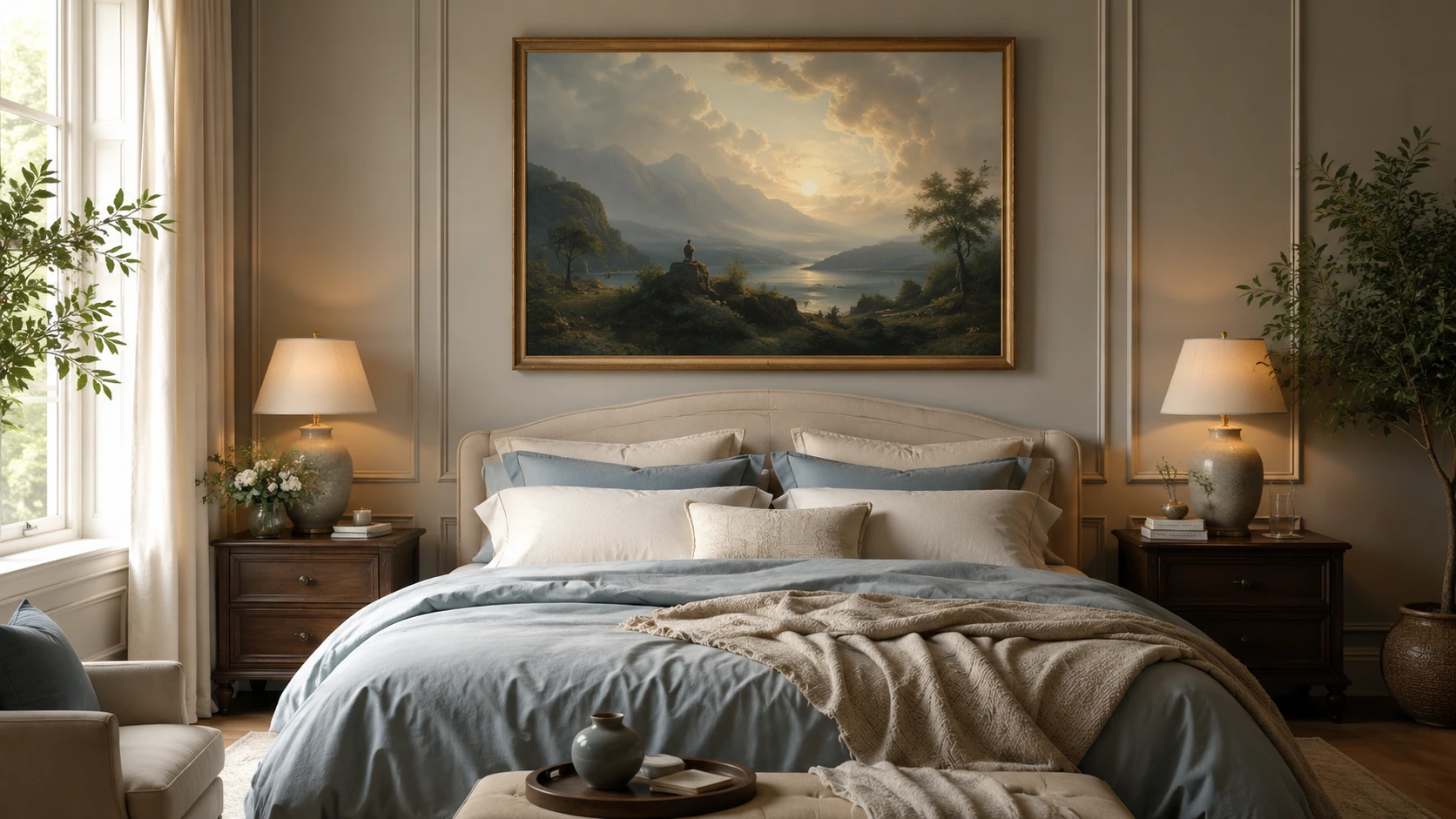
The bedroom is where Romantic art’s calming, dreamy quality really pays off. Softer, more atmospheric pieces—gentle landscapes, hazy skies, quiet moonlit scenes—help create a restful retreat.
Best spots:
- Above the headboard. A serene horizontal landscape here is a classic choice that frames the bed beautifully.
- On the wall you see when you wake up. Hang a calming piece where it’s the first thing you take in each morning.
Lean toward soothing palettes—soft blues, greens, warm neutrals—rather than the most dramatic, high-contrast works, so the room stays relaxing.
The Entryway or Hallway
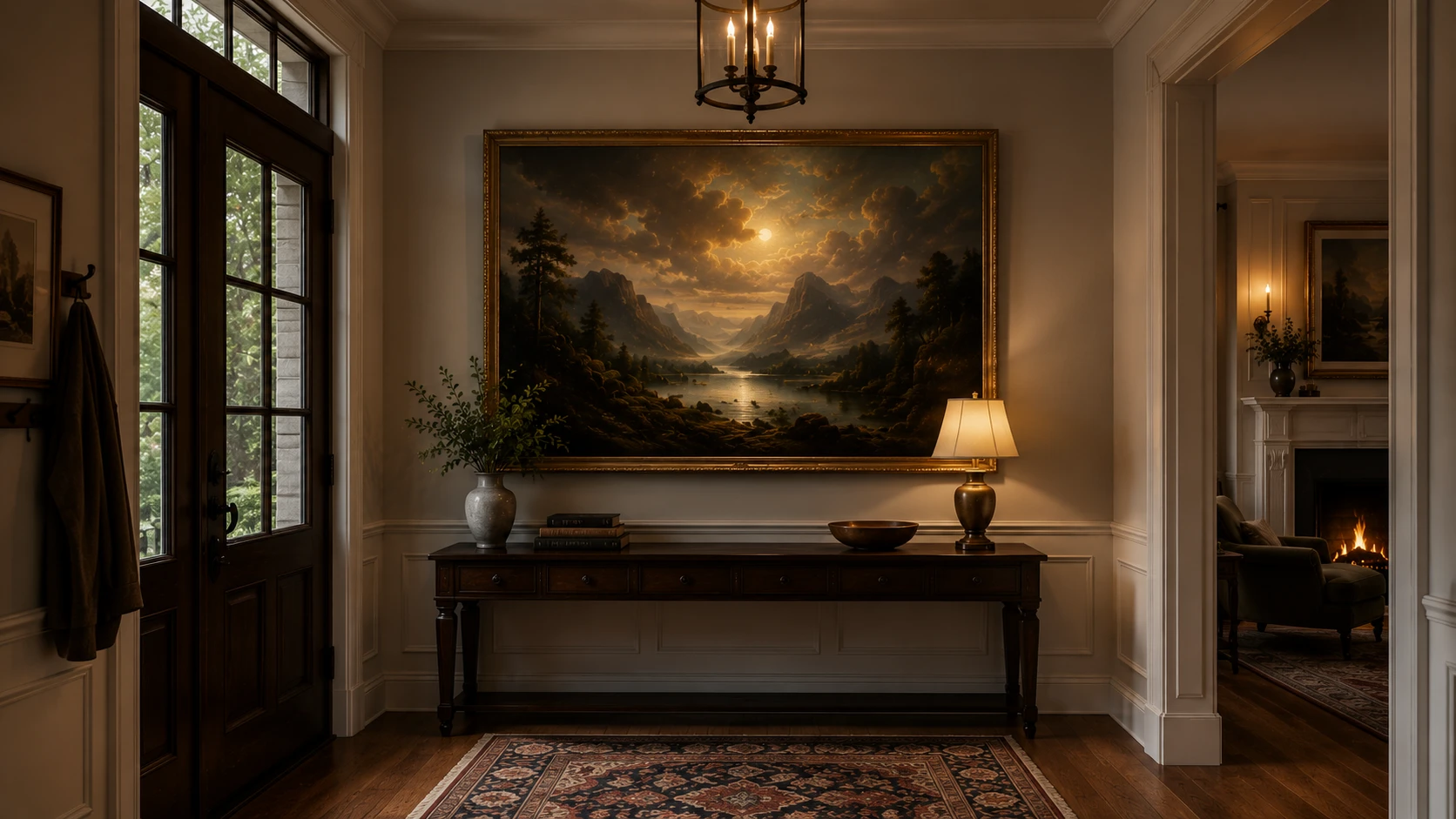
Your entry sets the tone for the whole home, and a Romantic piece makes a memorable first impression. Because hallways and entryways are transitional spaces, they can handle more dramatic, attention-grabbing art.
Best spots:
- The wall directly facing the front door. This is the first thing people see—make it count with a striking landscape or moody scene.
- Along a hallway. A series of smaller Romantic pieces hung at consistent height guides the eye down the hall and adds interest to an often-neglected space.
The Dining Room
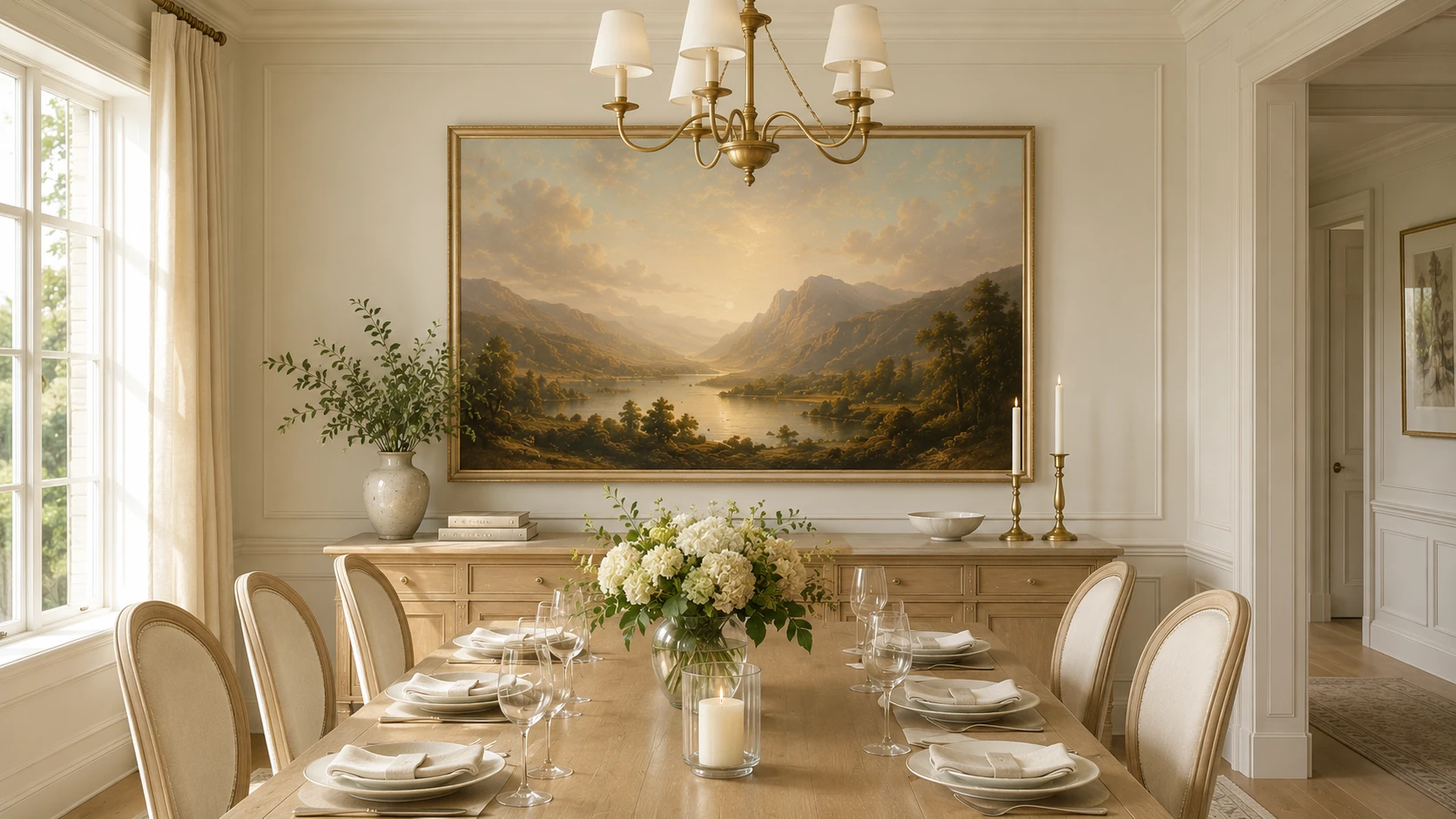
Romantic art and dining rooms are a classic pairing. The style’s warmth and grandeur create an atmosphere of occasion that makes gathering and entertaining feel special.
Best spots:
- The main wall visible from the table. A rich landscape here becomes a natural backdrop for meals and conversation.
- Above a sideboard or buffet. This anchors the furniture and completes the room’s look.
Because dining rooms are often used in the evening, Romantic pieces with warm tones and dramatic light look especially beautiful under soft, low lighting.
The Home Office or Study
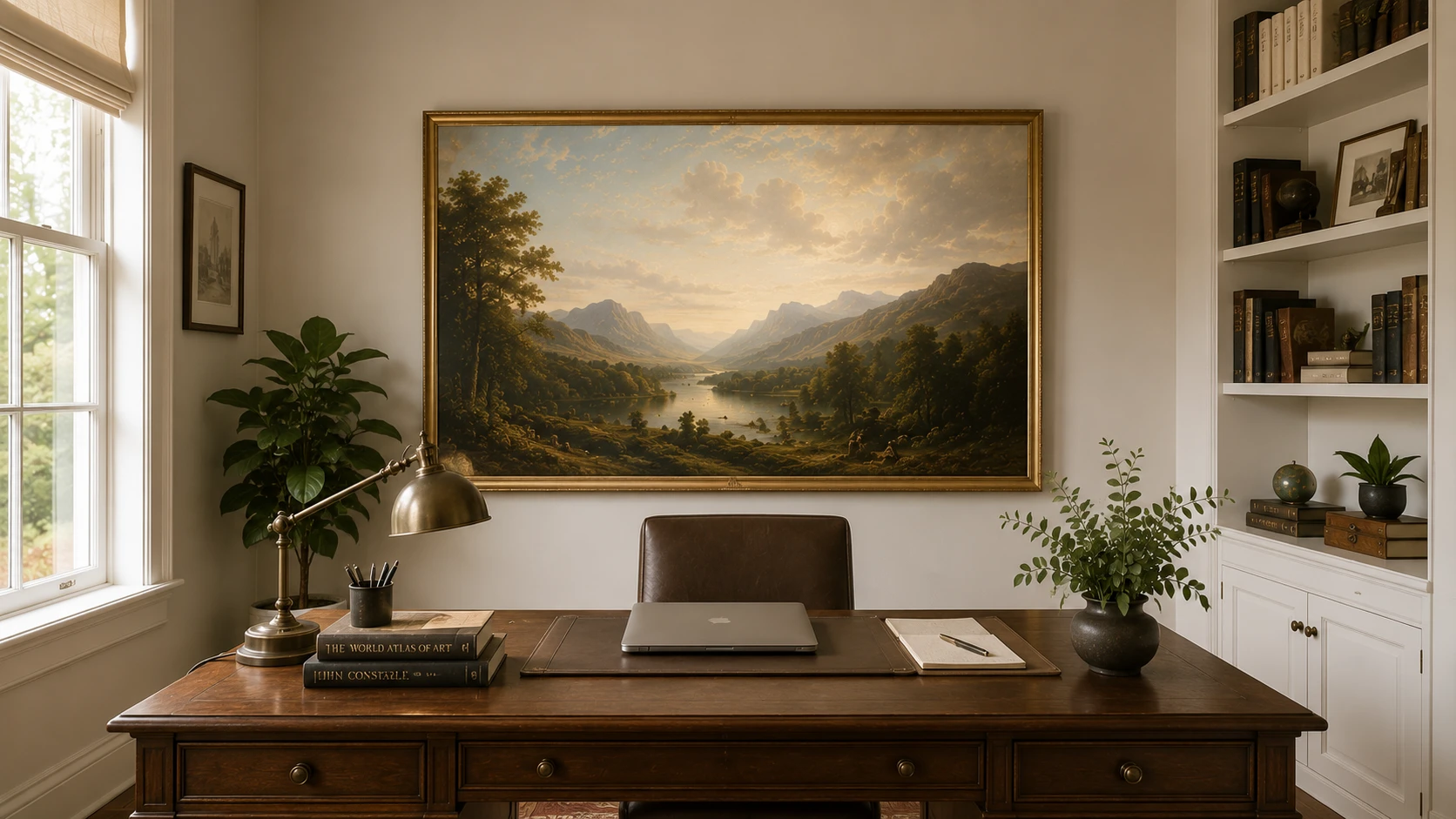
Romantic art suits a workspace surprisingly well. Nature scenes are calming and can offer a mental “window” during a long day, while the movement’s contemplative mood supports focus and reflection.
Best spots:
- On the wall behind your desk. If you take video calls, a tasteful landscape here also makes a professional, appealing backdrop.
- On the wall you face while working. A serene scene gives your eyes a restful place to land between tasks.
The Stairway
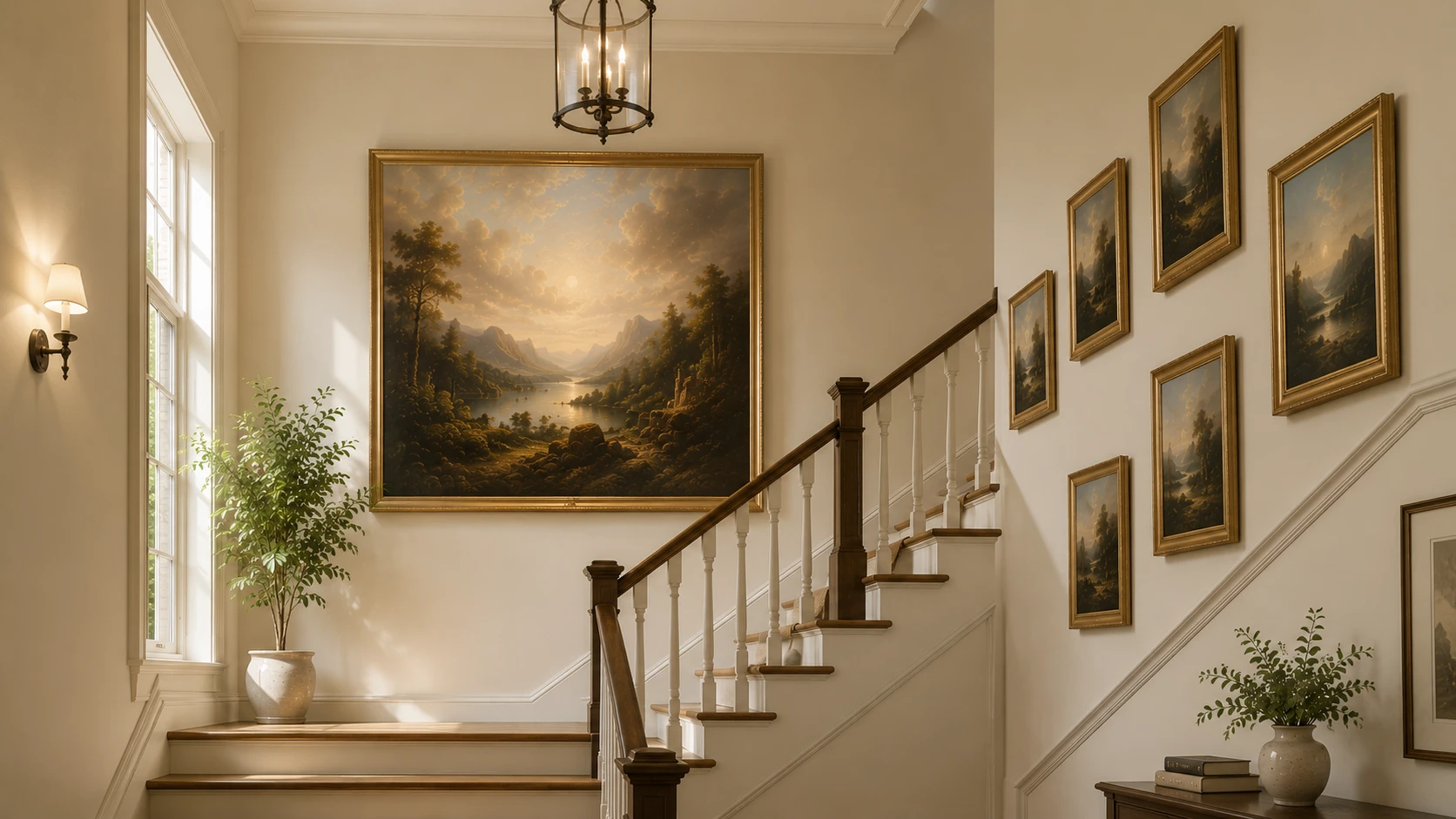
The stairwell is one of the most underused walls in many homes, and its height makes it perfect for art.
Best spots:
- A single large piece on the main landing wall makes a bold statement in a big vertical space.
- A staggered arrangement of pieces that follows the angle of the stairs turns the climb into a small gallery experience.
Quick Placement Tips for Any Room
No matter where you hang your Romantic art, a few universal rules help:
- Height matters. Center a piece around 57–60 inches from the floor—roughly eye level and the standard galleries use. Over furniture, hang it so the bottom sits 8–10 inches above the top of the piece below.
- Size up, don’t down. The most common mistake is choosing art that’s too small. When in doubt, go bigger.
- Mind the light. Romantic art is full of subtle light and shadow, so good lighting—natural light or a warm picture light—brings out its depth. Avoid direct, harsh sunlight, which can fade art over time.
- Give it breathing room. Don’t crowd a beautiful piece with clutter. A little empty space around it lets the art command attention.
Final Thoughts
The beauty of Romantic art is how naturally it fits into nearly every room of the home—calming in the bedroom, grand in the living room, welcoming in the entryway, and inspiring in a study. The key is matching the mood of the piece to the mood of the room, then hanging it at the right height with good light and room to breathe.
Start with one painting you love, find the wall where it feels most at home, and let it bring a little emotion and timeless beauty to your everyday space.