




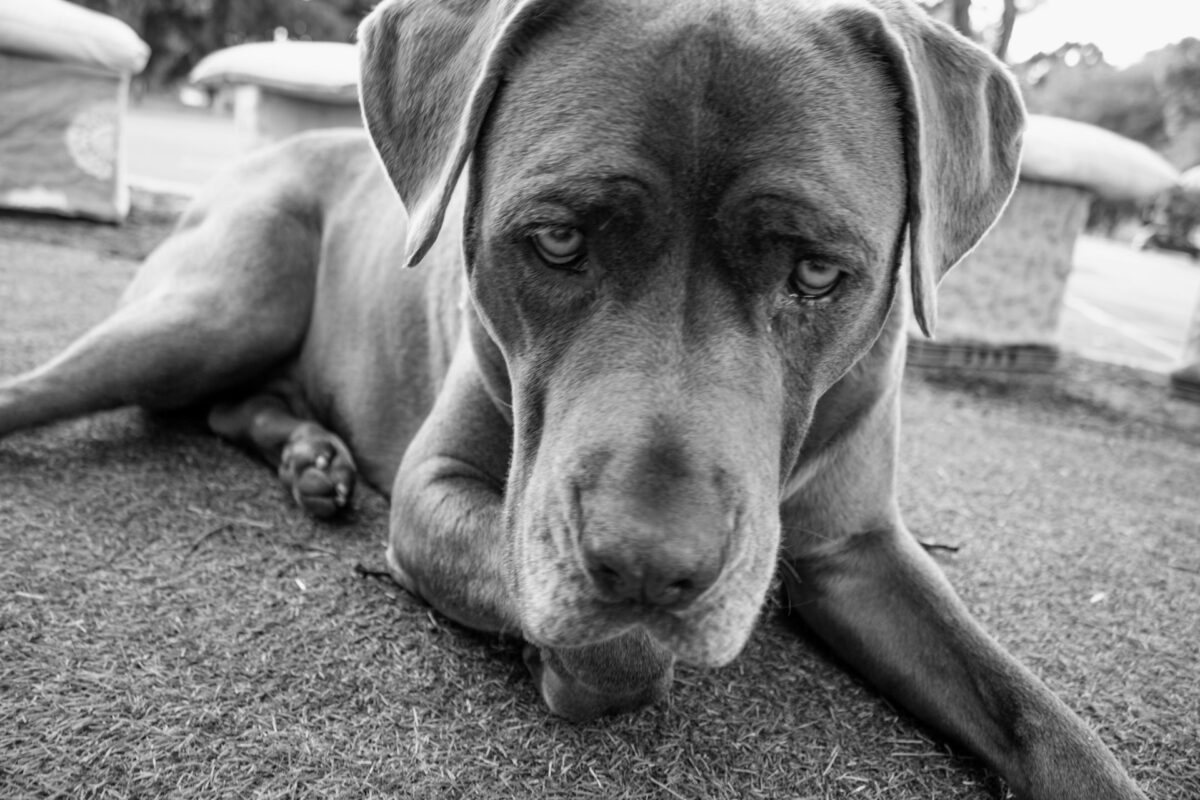

My neighbor’s Great Dane, Moose, went through four beds in a single year.
Not because he chewed them, but because he weighed more than a grown man and the foam inside those beds gave up by March.
The fifth bed cost more than the first four combined, and it is still holding shape two winters later. That math matters more than the sticker price.
A dog over 90 pounds spends most of the day asleep. Large and giant breeds often sleep 12 to 14 hours in a 24 hour stretch, and they do it on joints that carry serious load every time they stand up. A flat, thin cushion does not just look sad. It stops doing its job. If your dog is stiff in the morning or circles the floor before lying down, the bed is probably the problem, not old age. This is exactly why so many owners of mastiffs, Rottweilers, and Saint Bernards end up shopping for a large orthopedic dog bed instead of whatever the pet aisle had on sale.
Here is the part most shoppers get wrong. They buy a “large” bed that measures big on the outside and collapses on the inside. Size is the easy number to check. Support is the number nobody prints on the box.
What Actually Holds Up Under 120 Pounds
Two things decide whether a bed survives a giant breed: foam density and cover construction. You can test the first with your own hand in a store. Press your palm into the middle of the bed and hold it for five seconds. Good orthopedic foam pushes back slowly and springs up when you let go. Cheap filler foam stays dented, and that dent is where your dog’s hip will sit every night.
I would pick a dense orthopedic foam core over a thicker but softer cushion every single time. Thickness sells beds. Density keeps them alive. Most beds marketed for big dogs use foam rated well below what a 100 pound dog needs, which is why they flatten within months.
Cover construction matters just as much, and it is where the real differences show up. Look for these in any bed you’re considering:
- A cover that zips off and goes in a home washing machine, because big dogs shed and drool at a volume small dog owners do not deal with
- Reinforced stitching at the seams, since that is where cheap beds split first
- A waterproof liner between the foam and the cover, which saves the foam from accidents and from a wet coat after a rainy walk
- A non skid bottom, because a 130 pound dog launching off a sliding bed is a household hazard
Odor is the sneaky factor. Foam that soaks up moisture starts to smell, and no amount of baking soda fixes a core that never fully dries. A removable, washable cover with a waterproof layer underneath solves most of that problem before it starts.
Does Your Dog Need Orthopedic Foam or Just a Bigger Cushion?
Not every large dog needs the same bed. Age, breed, and sleep style all shift the answer, and buying the heaviest option for a young, healthy dog is money you did not need to spend.
| Your Dog | What to Prioritize | Why
|
|---|---|---|
| Under 2 years, very active | Durable cover, medium density foam | Joints are fine, destruction risk is high |
| 5 to 8 years, slowing down | Dense orthopedic foam, full length | Morning stiffness usually starts here |
| Senior, or post surgery | Thick orthopedic core, low entry height | Easier to step onto, less pressure on hips |
| Chewer, any age | Chew resistant cover and seams | Repair costs add up fast on standard fabric |
Veterinarians see the results of bad bedding all the time. The Merck Veterinary Manual notes that large and giant breeds carry a higher risk of joint conditions like hip dysplasia, which is one reason bedding that distributes weight evenly matters more for them than for a terrier. A supportive surface does not treat anything. It just stops stacking extra pressure on joints that are already working hard.
If your dog is limping, yelping when picked up, or reluctant to climb stairs, that is a vet visit, not a shopping trip. Get the diagnosis first, then buy the bed that fits it.
The Sizing Mistake That Costs You Twice
Measure your dog lying flat, nose to tail, then add at least six inches. A dog that curls up still stretches out sometimes, and a bed that fits a curled dog will be too short by morning. Breed size also matters in ways people forget. According to the American Kennel Club, giant breeds are generally defined as dogs weighing around 100 pounds or more as adults, and many of them keep growing past their first birthday. A bed bought at eight months may be undersized a year later.
That is an argument for buying once and buying up a size, not for buying cheap and replacing yearly. I’ve watched people spend $400 across three beds because none of them fit right, when one properly sized bed would have cost less and lasted longer.
A Five Minute Bed Audit You Can Do Today
Before you spend anything, run this check on the bed your dog already has. It takes five minutes and it will tell you the truth.
- Press the middle of the bed for five seconds. If your handprint stays, the foam is done.
- Lift a corner. If the whole bed sags like a hammock, there is not enough structure left.
- Check the seams along the front edge, where dogs step in and out. Splits start there.
- Smell the foam, not the cover. A sour smell means moisture got into the core.
- Watch your dog lie down. If they circle more than twice or shift positions repeatedly, they are not comfortable.
Any two of those failures together mean it is time to replace the bed. One alone might just be normal wear.
What the Authorities Say About Big Dog Rest
Sleep quality in large dogs is not just a comfort issue. The American Veterinary Medical Association points out that rest and recovery are part of how dogs manage their overall physical condition, and large breeds burn through a lot of energy just moving their own body weight around. A dog that sleeps poorly wakes up grumpy, stiff, and less willing to exercise, which makes the next day worse.
You will notice it in behavior before you notice it in the joints. More pacing. Less interest in the evening walk. Snapping at the other dog in the house. Owners usually blame training or mood. The bed rarely makes the suspect list, and it probably should.
Spending Decisions, Ranked
If you only have so much to spend, here is the order I’d follow. Foam quality first, because that is the part you cannot fix later. Cover washability second, since a dirty bed gets thrown out faster than a worn one. Waterproof liner third. Looks and color last, every time.
Big dogs are expensive in every category, and beds are no exception. But a bed is one of the few purchases where spending more upfront genuinely reduces what you spend over the next five years. Moose is proof. So is every owner who has ever stood in a pet store holding a shredded cover, wondering how it happened again.
So check your dog’s bed tonight. Press the foam, check the seams, watch how long it takes them to settle. If it fails the test, start with the foam and work outward. Your dog cannot tell you their hips ache, but they can show you. What is your current bed saying?