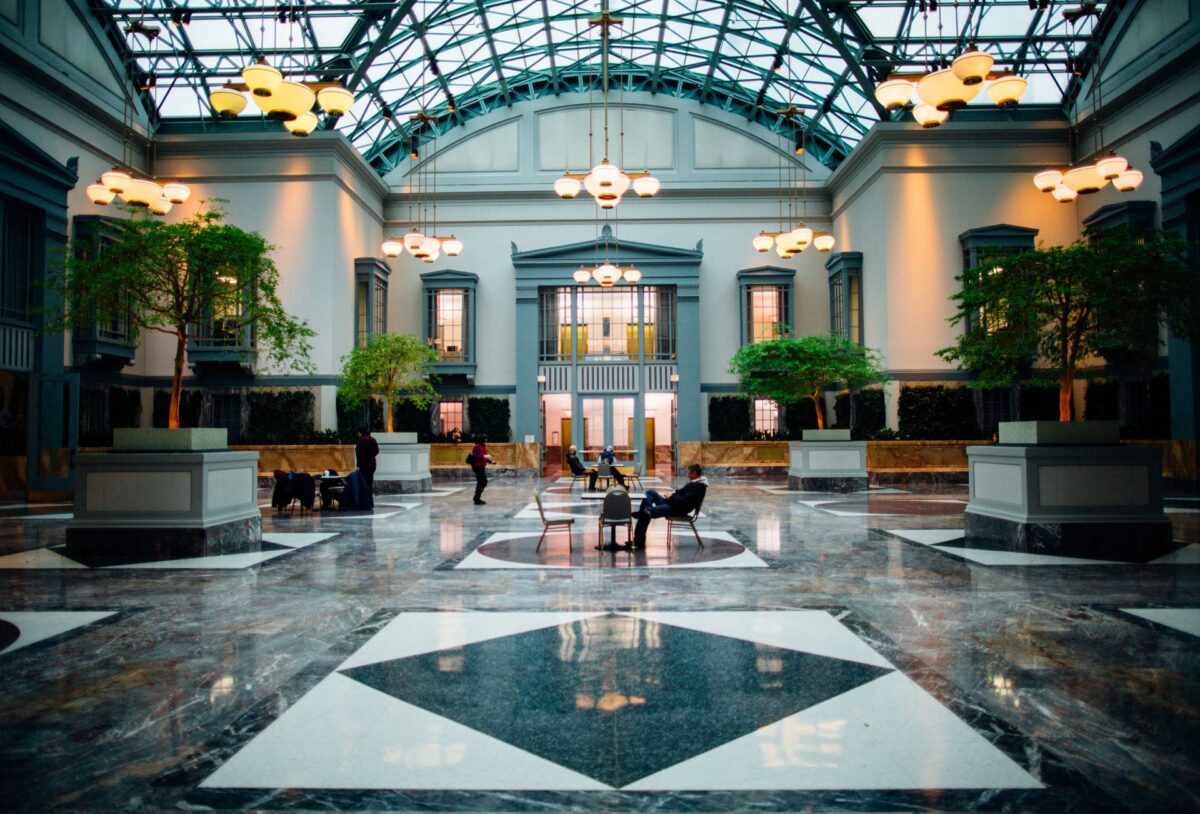

Think about the last hotel that really impressed you. Chances are, your experience began long before you reached your room. Perhaps it was a beautifully designed entrance filled with natural light, a striking piece of artwork behind the reception desk, or the gentle music playing as you stepped inside. Whatever caught your attention, something about the space made you feel that you had arrived somewhere special.
Hotel lobbies have become much more than places to collect a room key. They are increasingly designed as welcoming social spaces, reflecting the personality of a property and setting expectations for the rest of a guest’s stay. Behind the most memorable examples is a combination of creative thinking, thoughtful design, and careful attention to how people experience their surroundings.
Making a First Impression That Lasts
A hotel lobby introduces guests to the property before they’ve spoken to a member of staff or explored their room. The colours, furniture, lighting, and overall layout all communicate something about the hotel’s identity. A contemporary city hotel might feature clean architectural lines, statement lighting, and modern artwork. A coastal boutique hotel could take a completely different approach, using natural materials, soft furnishings, and colours inspired by its surroundings.
Neither style is inherently more appealing. What matters is creating an environment that feels appropriate for the hotel and the experience it wants to offer. There’s also a genuine opportunity for hotels to improve these spaces.
According to J.D. Power’s 2026 North America Third-Party Hotel Management Guest Satisfaction Benchmark, only 43% of surveyed guests perceived their hotels’ common areas as inviting, while 48% considered them modern.
The research, based on feedback from 5,642 guests staying at branded hotels managed by large third-party operators, highlights the opportunity to make shared hospitality spaces more appealing. For designers, the challenge is to create something that feels visually distinctive while remaining comfortable and practical for the people using it.
Bringing the Destination Into the Design
Some of the most interesting hotel lobbies take inspiration from the places surrounding them. Rather than creating an interior that could belong to almost any hotel, designers incorporate details that reflect local culture, architecture, and artistic traditions. A boutique property in New Mexico, for example, might feature handcrafted ceramics, earthy colours, and artwork from regional artists. A hotel in a historic European city could incorporate architectural details or materials that reference the area’s heritage.
These touches help establish a connection between the hotel and its destination. Artwork is particularly effective because it gives guests something to discover. A collection of photographs documenting a neighbourhood’s history or a sculpture created by a local artist can provide a talking point while adding personality to the surroundings.
The key is authenticity. Decorative elements feel more meaningful when there is a genuine connection to the location, rather than when they have been selected simply to follow a design trend. A thoughtfully designed lobby can therefore become an introduction to the destination itself, encouraging guests to explore and appreciate the place they’ve come to visit.
Designing Spaces That Invite People to Stay
Modern hotel lobbies often serve several purposes at once. A guest might pass through on the way to breakfast, another may be waiting for friends, while someone travelling for work could be looking for a comfortable place to open their laptop. Designing for these different activities requires more thought than arranging a few sofas around a reception desk. Many hotels now create smaller areas within their lobbies, each with a distinct purpose.
Comfortable armchairs might form an informal lounge, while communal tables provide space for working or socialising. A nearby coffee bar can give visitors another reason to spend time in the area. Furniture placement helps define these spaces without necessarily requiring walls or partitions. Rugs, plants, changes in flooring, and carefully positioned lighting can create subtle boundaries while maintaining an open and welcoming environment.
Movement is equally important. Guests arriving with luggage should be able to find reception easily without navigating crowded seating areas. Accessible routes, clear signage, and sufficient space for mobility aids also need to be considered from the beginning. The most successful designs balance visual appeal with usability, creating a lobby that feels inviting rather than simply impressive to look at.
Using Lighting to Change the Atmosphere
Lighting can dramatically influence how a hotel lobby feels, even when everything else remains unchanged. During the morning, natural light and brighter interior lighting can create a fresh, welcoming environment as guests leave for the day or gather for breakfast.
In the evening, warmer lighting may help the same space feel more intimate and relaxed. Designers can achieve these changes by combining different sources of light rather than relying entirely on overhead fixtures.
Table lamps, wall lighting, illuminated architectural features, and carefully positioned accent lights can bring depth and character to a room. Lighting can also draw attention to particular details, whether that’s an artwork, an architectural feature, or a beautifully designed seating area.
However, atmosphere shouldn’t come at the expense of practicality. Reception desks, stairs, entrances, and circulation areas still need appropriate illumination so guests and employees can move comfortably. When these considerations are balanced successfully, lighting becomes part of the hotel’s visual storytelling, helping the space adapt throughout the day.
Finding the Right Sound for the Space
While visual design tends to receive the most attention, the sounds guests hear can be just as important to the overall atmosphere. Music, conversations, footsteps, and the gentle activity of a busy reception area all contribute to how a hotel lobby feels.
A luxury property with understated interiors might choose soft jazz or contemporary instrumental music, while a design-led boutique hotel could develop a more distinctive soundtrack that reflects its personality. The intention isn’t necessarily to make guests notice the music. It’s to create a sound that feels naturally connected to the surroundings.
For hotel operators, dedicated music services for business can help maintain this consistency through curated music selections and scheduled playlists that complement different times of day. A relaxed morning soundtrack might gradually transition into something livelier during afternoon check-in, before becoming more subdued as guests settle into the evening.
Thoughtful music programming can also help hotels maintain a recognizable atmosphere across different properties, while allowing individual locations to reflect their surroundings. Volume is another important consideration. A soundtrack that feels pleasant in a quiet lobby may become overwhelming when several guests are checking in and conversations fill the room. Acoustics, speaker placement, and the materials used throughout the space all affect how music is experienced.
The objective is to make sound part of the wider design, complementing the hotel’s identity without interfering with conversation or guest comfort.
The Small Creative Details That Bring Everything Together
Memorable hotel lobbies are rarely defined by one impressive feature alone. Instead, it’s often the relationship between smaller details that creates a sense of cohesion.
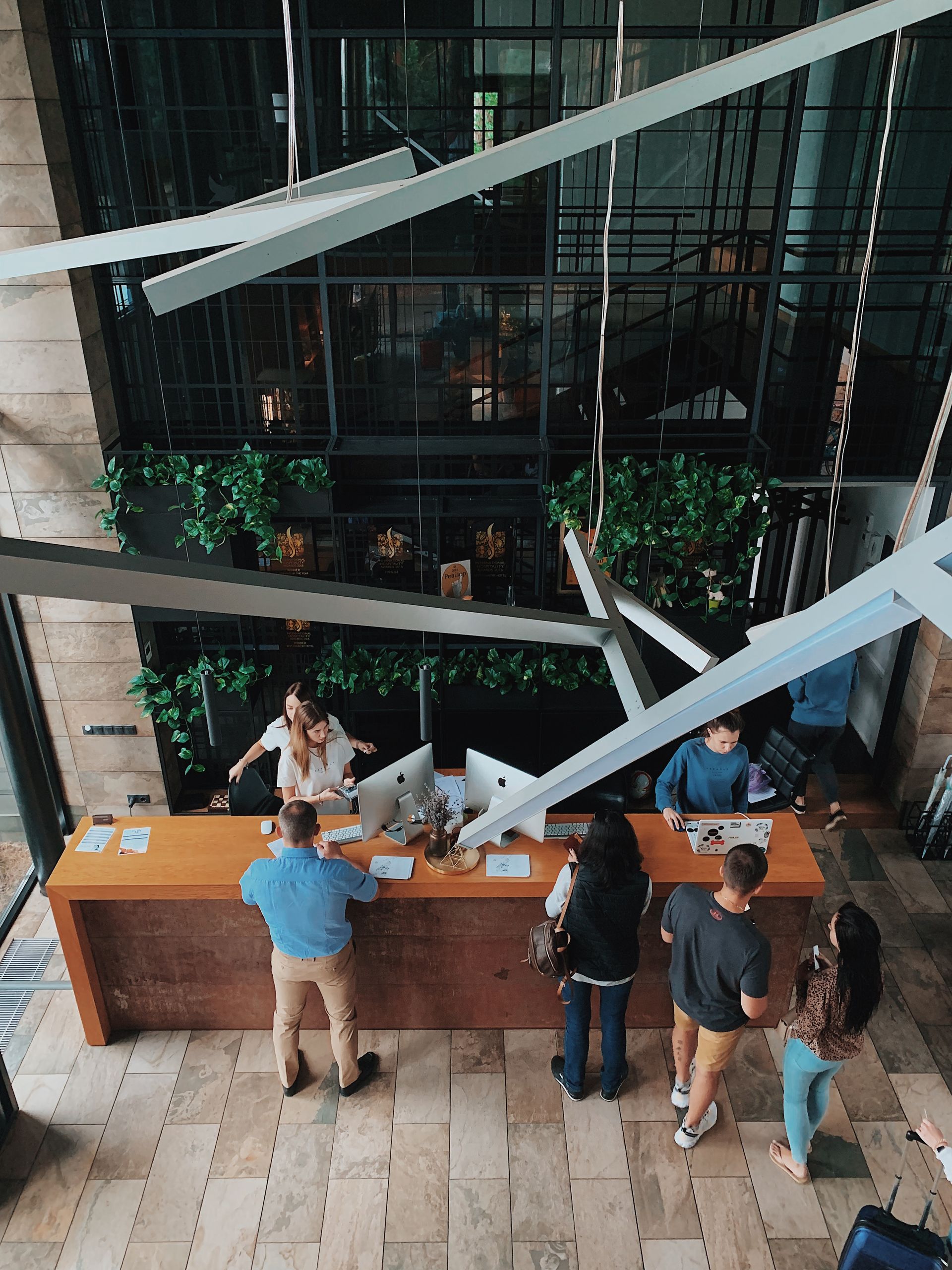
A carefully selected piece of furniture might complement the colours of nearby artwork. Natural materials could connect the interior to the surrounding landscape, while soft lighting and understated music reinforce the atmosphere. Even practical features can become part of the design. A reception desk might be incorporated into an elegant architectural structure rather than appearing as a conventional counter. A small library of locally inspired books could give guests something interesting to explore while waiting.
Plants and natural materials can introduce texture and soften an otherwise formal interior. These details are most effective when they serve a purpose rather than simply filling empty space. There is also an important human element. A beautiful lobby can still feel unwelcoming if the reception process is confusing or guests struggle to find assistance.
Creative design should make the experience easier, allowing the surroundings and the people working within them to complement one another.
Creating a Lobby Guests Remember
A memorable hotel lobby doesn’t have to be enormous, extravagant, or filled with expensive designer furniture. Sometimes, the most distinctive spaces are those where every element feels carefully considered. The artwork reflects the destination, the furniture encourages people to feel comfortable, and the lighting and music create an atmosphere that changes naturally throughout the day.
These details work together to give the hotel a personality that extends beyond its rooms and amenities. For designers and hotel operators, the most valuable starting point is understanding how they want guests to feel when they arrive. A peaceful retreat, a lively cultural destination, and a sophisticated city hotel will each require different creative choices.
When those choices reflect a clear identity and genuinely support the guest experience, the lobby becomes more than somewhere to pass through. It becomes a place guests want to spend time in, photograph, talk about, and remember long after their stay has ended.